
Personal training checklist 2026: streamline success

Managing clients, tracking progress, juggling equipment, staying certified, and marketing your services can overwhelm even experienced personal trainers. A well-structured personal training checklist tailored to your business simplifies workflows, enhances client safety, and drives measurable results. This guide breaks down essential checklist components for 2026, helping you choose or build a system that boosts efficiency and positions your training business for growth.
Table of Contents
- How To Choose The Best Personal Training Checklist For Your Business
- Client Session Preparation And Documentation Essentials
- Essential Equipment Every Personal Trainer Needs In 2026
- Certification And Qualification Checklist For Personal Trainers
- Client Program Customization And Progress Tracking Tools
- Automation And Marketing Tools To Streamline Your Training Business
- Summary Comparison And Situational Recommendations
- Streamline Your Training Business With TrainingPro
Key takeaways
How to choose the best personal training checklist for your business
Your personal training checklist must prioritize client safety and effective progress monitoring. Effective checklists integrate client intake forms, health assessments, session notes, and progress tracking to maintain tailored programs. Without these elements, you risk inconsistent client experiences and potential safety issues.
Include equipment and venue logistics for varied training environments. Whether you train clients at gyms, outdoors, or in home studios, your checklist should account for portable equipment, environmental factors, and setup requirements. This flexibility ensures consistent service quality regardless of location.
Ensure your checklist aligns with certification and compliance requirements. Maintaining current credentials, insurance documentation, and continuing education records protects your business legally and professionally. Many trainers overlook this administrative component until renewal deadlines approach.
Incorporate marketing and administrative automation where possible. Modern personal training software can handle client scheduling, billing, lead capture, and follow-up communications automatically. This integration reduces manual tasks and prevents scheduling conflicts.
Adapt your checklist to your business size, client base, and goals. A mobile trainer working with five clients needs different systems than a studio owner managing 50 clients. Scale your checklist complexity based on actual business demands, not theoretical best practices.
Pro Tip
Start with a basic checklist covering safety and session prep, then add complexity only when specific problems emerge. Overcomplicating early creates administrative burden without proportional benefits.
Many trainers face common challenges including time management, client retention, and business growth. A strategic checklist addresses these pain points systematically by standardizing repeatable processes and freeing mental energy for coaching.
Client session preparation and documentation essentials
Use client intake forms to gather health history and fitness goals before sessions. Comprehensive intake documentation identifies contraindications, injury histories, and movement limitations that inform safe program design. Update these forms quarterly as client conditions evolve.
Document session progress notes and modifications clearly for consistency. Session preparation checklists reduce errors in client communication and ensure quality across different training venues. Record sets, reps, weights, and client feedback immediately after sessions while details remain fresh.
Conduct safety equipment checks and prepare the workout environment ahead of time. Arrive 10 minutes early to inspect equipment condition, verify adequate space, and arrange stations logically. This preparation minimizes session interruptions and demonstrates professionalism.
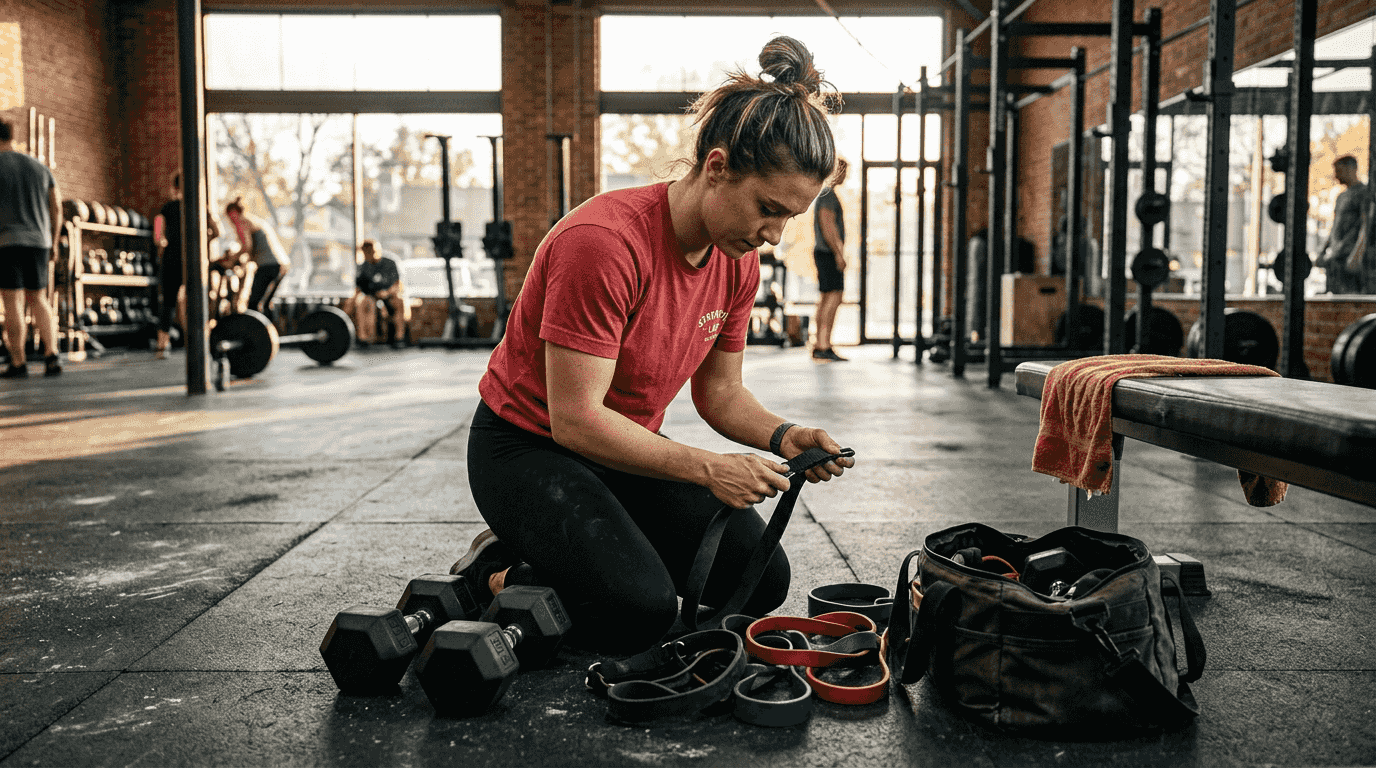
A structured session prep checklist minimizes errors and enhances client satisfaction. Clients notice when trainers appear disorganized or forget previous workout details. Consistent documentation builds trust and enables data-driven program adjustments over time.
Pro Tip
Create session templates for common client goals like strength building, weight loss, or athletic performance. Templates provide structure while leaving room for individual modifications, speeding up your planning process significantly.
Starting a personal training business requires systems that scale with client growth. Early investment in documentation habits prevents chaotic catch-up work later when your schedule fills.
Essential equipment every personal trainer needs in 2026
Top portable equipment includes resistance bands, suspension trainers, exercise mats, dumbbells, and foam rollers. Comprehensive equipment checklists prioritize portable, durable, and versatile items that cover diverse client needs across venues. These tools enable full-body workouts without facility dependence.
Important equipment criteria balance portability, durability, safety, and versatility. Heavy equipment limits mobility, while flimsy gear breaks quickly under regular use. Invest in commercial-grade resistance bands and adjustable dumbbells that withstand daily sessions.
Cost-effective options help beginners build quality kits without overspending. Start with essential items totaling $300 to $500 rather than purchasing every available tool. Add specialized equipment only when specific client needs justify the investment.
Transport and storage considerations support mobile or in-studio trainers. Invest in a durable equipment bag with compartments that protect gear during transit. Studio trainers need organized storage systems that keep equipment accessible but contained.
Many trainers believe bulky equipment is necessary for effective training. Versatile portable tools actually cover most client scenarios effectively. Suspension trainers alone enable hundreds of exercise variations across all fitness levels.
Pro Tip
Purchase equipment in neutral colors and avoid branded gear that looks cheap. Professional-looking equipment reinforces your expert positioning and justifies premium pricing.
Developing your personal training career means investing strategically in tools that serve multiple client types rather than niche specialty items.
Certification and qualification checklist for personal trainers
Top certifications include NASM, ISSA, NPTI, and Fitness Mentors, each offering distinct advantages. Certified trainers with recognized credentials have higher client trust, with the fitness sector expected to grow 14% from 2022 to 2032. This growth creates opportunities for properly credentialed professionals.
Compare industry recognition, cost, specialization flexibility, and CEU requirements when selecting credentials. NASM and ISSA lead in gym recognition and online training applications. NPTI offers intensive hands-on education ideal for career changers seeking comprehensive foundation knowledge.
Alignment with career goals matters more than credential prestige alone. Online trainers benefit from certifications emphasizing remote coaching and program design. Trainers pursuing sports performance need credentials with biomechanics and athletic development focus.
Certification choice enhances client trust and business credibility immediately. Displaying recognized certifications on your website and marketing materials differentiates you from uncertified competitors. Many insurance providers require specific certifications for liability coverage.
Obtaining proper personal trainer certification establishes your professional foundation and opens doors to facility employment, insurance coverage, and higher-paying client opportunities.
Client program customization and progress tracking tools
Customizable workout templates save programming time and support client specificity. Templates provide structure for common goals while allowing modifications for individual limitations, preferences, and equipment access. This balance enables efficient personalization at scale.
Wearable devices provide real-time data on heart rate, calories, and activity levels. Fitness trackers like Garmin Venu 3 and Fitbit Charge 6 offer accurate monitoring beneficial for remote client progress tracking. These devices sync data automatically, eliminating manual logging friction.
Software platforms integrate program design with communication and progress tracking seamlessly. Modern personal training software centralizes client information, workout delivery, form video review, and messaging in unified systems. This integration prevents information silos and communication gaps.
Remote monitoring keeps clients accountable and engaged between sessions. Real-time activity data enables proactive coaching interventions when clients fall behind targets. This consistent touchpoint dramatically improves adherence compared to weekly check-ins alone.
Using these tools improves outcomes and client satisfaction measurably. Clients appreciate data-driven feedback showing tangible progress toward goals. Quantified improvements in strength, endurance, and body composition build motivation and justify training investment.
Pro Tip
Integrate wearable data with your client management platform to automate progress reports. Weekly automated summaries showing workout completion rates and biometric trends save hours while keeping clients engaged.
Selecting the best personal training software depends on your specific business model, client communication preferences, and technical comfort level.
Automation and marketing tools to streamline your training business
AI tools automate workout program design and personalized client communication efficiently. Modern platforms generate customized programs considering client goals, available equipment, injury history, and training experience in minutes. This automation maintains personalization while dramatically reducing planning time.
Client management software centralizes scheduling, billing, and progress tracking in one system. Automated appointment reminders reduce no-shows by 40% to 60%, protecting your revenue. Integrated billing eliminates manual invoice creation and payment follow-up.
Marketing automation captures leads and nurtures prospects with branded forms and emails. Automated lead magnets like free workout plans or fitness assessments collect contact information from website visitors. Drip email campaigns maintain engagement until prospects book consultations.
Automation reduces administrative workload, freeing time for training and growth. Trainers typically spend 10 to 15 hours weekly on administrative tasks that software handles automatically. Reclaiming this time enables serving more clients or developing new service offerings.
Improved client retention stems from consistent, professional engagement enabled by automation. Clients receive timely birthday messages, milestone celebrations, and check-in prompts without manual effort. This consistent touchpoint builds loyalty and reduces churn.
TrainingPro fitness business software delivers comprehensive automation across program creation, client management, and marketing in one platform. The AI-Powered Workout Builder specifically addresses the time-consuming program design challenge most trainers face.
Summary comparison and situational recommendations
Selecting optimal checklist components depends on your specific training context and business stage. Mobile trainers prioritize portable equipment and flexible scheduling tools. Studio owners need comprehensive client management and waitlist features.
For mobile trainers, equipment portability and session flexibility matter most. Invest in the highest-quality portable gear and scheduling software with strong mobile functionality. Your checklist should emphasize equipment maintenance and transport logistics.
Career-growth-focused trainers should prioritize recognized certifications and continuing education. NASM and ISSA provide the most specialization pathways and industry recognition. Your checklist must include CEU tracking and credential renewal dates.
Trainers managing large client bases need robust automation and client management tools. AI-driven program creation and automated communication become essential at scale. Your checklist should standardize client onboarding, progress reviews, and billing processes.
Integrating a comprehensive checklist into your workflow reduces errors, improves efficiency, and enhances client experiences consistently. Start with safety and session prep basics, then layer in business systems as your practice grows.
Review your certification and career path annually to ensure your credentials and systems align with evolving business goals.
Streamline your training business with TrainingPro
Implementing an effective personal training checklist becomes effortless with the right technology foundation. TrainingPro combines AI-powered workout creation, comprehensive client management, and marketing automation in one platform designed specifically for fitness professionals.
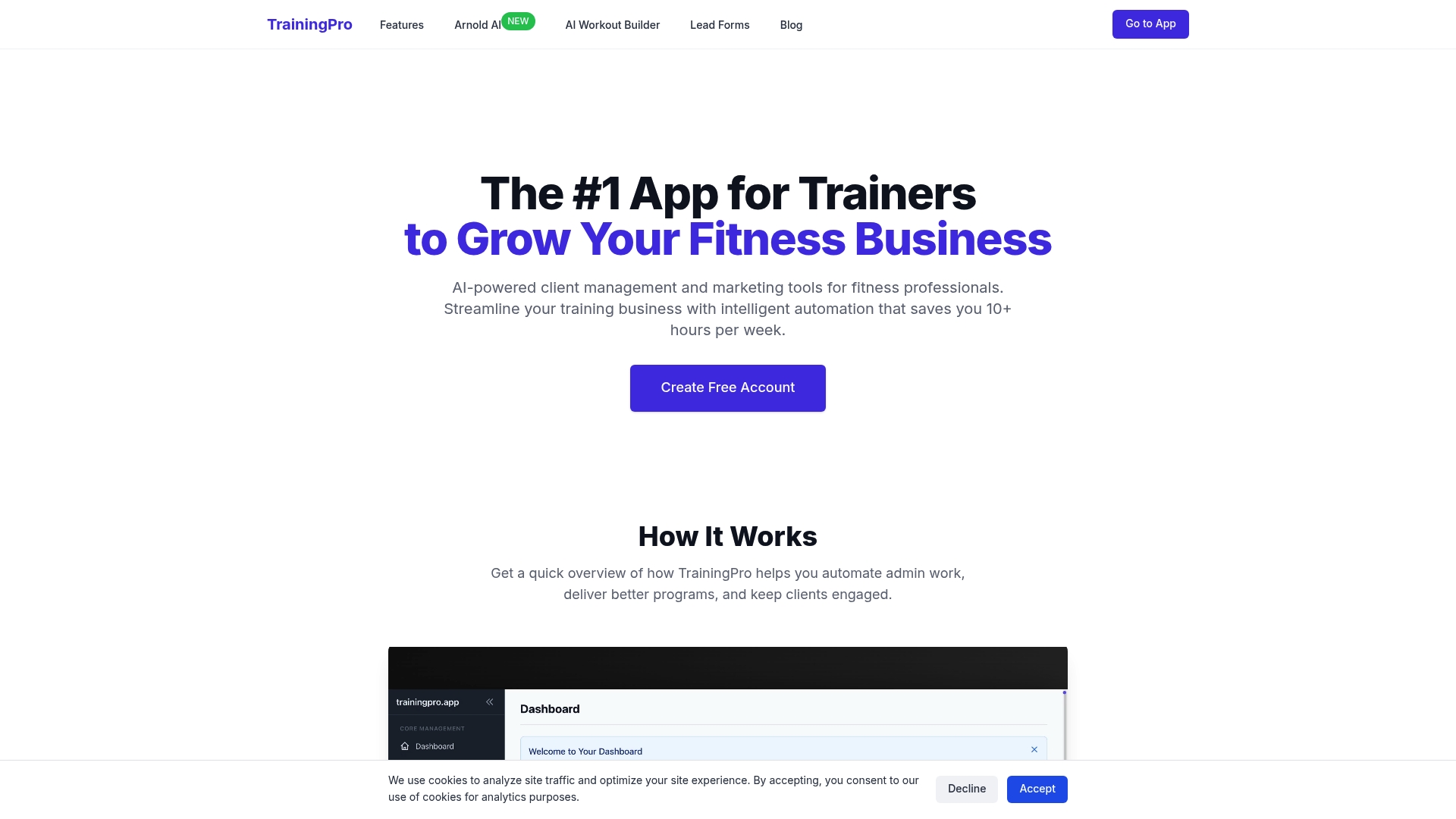
Create personalized workout programs in minutes using AI Workout Builder technology that considers client goals, limitations, and available equipment. Manage scheduling, billing, and client communication centrally without juggling multiple apps. Grow your client base automatically with Lead Generation Forms and branded marketing pages.
Trainers using TrainingPro save over 10 hours weekly on administrative tasks, freeing time to focus on coaching and client results. The platform handles the checklist execution automatically, ensuring nothing falls through the cracks as your business scales.
Ready to Transform Your Fitness Business?
Join thousands of trainers using TrainingPro to automate admin, grow their client base, and focus on what they love—coaching.
Start your 14-day free trial • Cancel anytime
Frequently asked questions
A comprehensive checklist covers client intake forms, session preparation, equipment verification, certification compliance, and business automation. Essential items include health assessments, progress tracking systems, safety protocols, insurance documentation, and marketing tools. The checklist should scale with your business size and adapt to your specific training environment, whether mobile, studio, or online.
Implement customizable workout templates and integrate fitness tracker data into your client management platform. Use software that centralizes program delivery, form video review, and biometric data in one system. Automated progress reports showing workout completion rates and metric trends keep clients engaged while saving you hours of manual data compilation weekly.
NASM and ISSA lead in industry recognition and offer the most specialization pathways for career advancement. Both certifications are widely accepted by gyms, insurance providers, and online training platforms. Select your certification based on specific career goals, with NASM excelling in corrective exercise and ISSA offering strong online training emphasis.
AI-driven workout builders generate personalized programs in minutes rather than hours. Client management platforms automate scheduling, billing, appointment reminders, and progress tracking. Marketing automation tools handle lead capture, email nurturing, and client onboarding sequences. These systems collectively save 10 to 15 hours weekly on administrative tasks.
Prioritize versatile, durable items that enable full-body workouts across all fitness levels. Essential portable equipment includes resistance bands, suspension trainers, exercise mats, and adjustable dumbbells. Invest in commercial-grade equipment with professional appearance. Your entire mobile kit should fit in one transport bag while covering strength, cardio, mobility, and recovery needs.


