
Optimize your fitness consultation workflow in 2026

Running effective fitness consultations shouldn’t feel like juggling flaming kettlebells. Yet many trainers spend hours on paperwork, struggle with inconsistent client assessments, and miss crucial details that could transform results. An optimized consultation workflow changes everything. It saves you time, delivers personalized client experiences, and builds the professional foundation that turns first meetings into long term partnerships. This guide walks you through preparation, execution, and continuous improvement strategies that streamline your consultation process using modern tools and AI driven automation.
Table of Contents
- Key takeaways
- Understanding the problem: why optimize your fitness consultation workflow?
- Preparation: tools and prerequisites for an efficient consultation
- Execution: step-by-step fitness consultation workflow
- Verification and continuous improvement of your consultation workflow
- Explore TrainingPro tools to transform your consultation workflow
- Frequently asked questions
Key Takeaways
Understanding the problem: why optimize your fitness consultation workflow?
Disorganized consultations cost you more than time. When you’re scrambling through paper forms, forgetting to ask critical health questions, or manually entering data while your client waits, you’re damaging the professional image that attracts premium clients. Many personal trainers report that inefficient consultation workflows reduce client satisfaction and limit business growth. The ripple effects are real: missed injury histories lead to unsafe programming, incomplete goal discussions result in misaligned expectations, and lengthy intake processes create friction before training even begins.
Common inefficiencies plague the industry. Trainers often collect client information through multiple disconnected channels: text messages, email threads, verbal conversations, and scattered paper forms. This fragmentation makes it nearly impossible to get a complete picture of each client’s needs, goals, and limitations. You end up asking the same questions twice or discovering crucial information weeks into a training relationship. Inconsistent assessment methods compound the problem. Without standardized protocols, you can’t accurately track progress or compare baseline measurements across your client base.
These workflow breakdowns have direct financial consequences. Lost revenue happens when consultations run over scheduled time, forcing you to compress or cancel other appointments. Potential clients walk away when the onboarding experience feels chaotic or unprofessional. Current clients lose trust when you forget details they’ve already shared or deliver cookie cutter programs that ignore their specific circumstances. A personal training checklist 2026 approach brings structure to chaos.
“The consultation sets the tone for the entire client relationship. Get it right, and you’ve built a foundation of trust and professionalism that supports long term retention.”
Optimizing your workflow transforms these pain points into competitive advantages. You present as the organized professional who respects client time and delivers personalized attention. You capture comprehensive information efficiently, enabling truly customized programming. You create repeatable systems that maintain quality as you scale your business. Most importantly, you free up mental energy to focus on what matters most: connecting with clients and designing programs that deliver results.
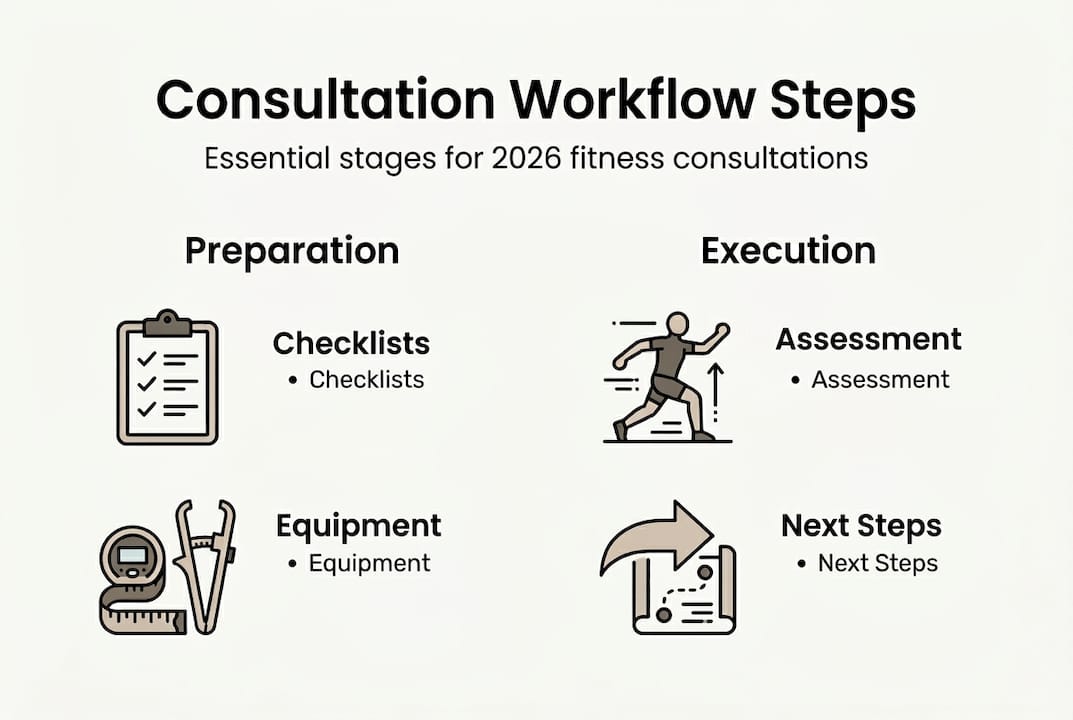
Preparation: tools and prerequisites for an efficient consultation
Successful consultations start long before you meet face to face. Digital preparation eliminates the awkward clipboard shuffle and gets clients invested in their own success. Integrating client inquiry forms and AI-based assessment tools reduces onboarding time by up to 30%. Start by implementing online intake forms that clients complete before their scheduled consultation. These forms should capture essential health history, current fitness levels, previous training experience, injury background, and specific goals. When clients submit this information 24 to 48 hours in advance, you have time to review, identify red flags, and prepare thoughtful questions.
Your technology stack doesn’t need to be complicated, but it should be intentional. At minimum, you need a reliable device for in-session data entry, whether that’s a tablet, laptop, or smartphone with a large screen. Cloud based platforms ensure you can access client information anywhere and maintain secure backups. AI powered assessment tools analyze the pre-consultation data to flag potential contraindications, suggest appropriate fitness tests, and even generate preliminary program frameworks you can customize during the consultation.
Pro Tip
Create a consultation prep checklist that you review 30 minutes before each appointment. This ensures you’ve studied the client’s intake form, prepared relevant assessment equipment, and identified any special considerations that might affect your approach.
Organize your physical space to support efficiency. Arrange assessment equipment in a logical sequence that matches your consultation flow. Keep measurement tools calibrated and ready. Have a dedicated area for private discussions where clients feel comfortable sharing sensitive health information. Your environment should communicate professionalism while feeling welcoming and non-intimidating.
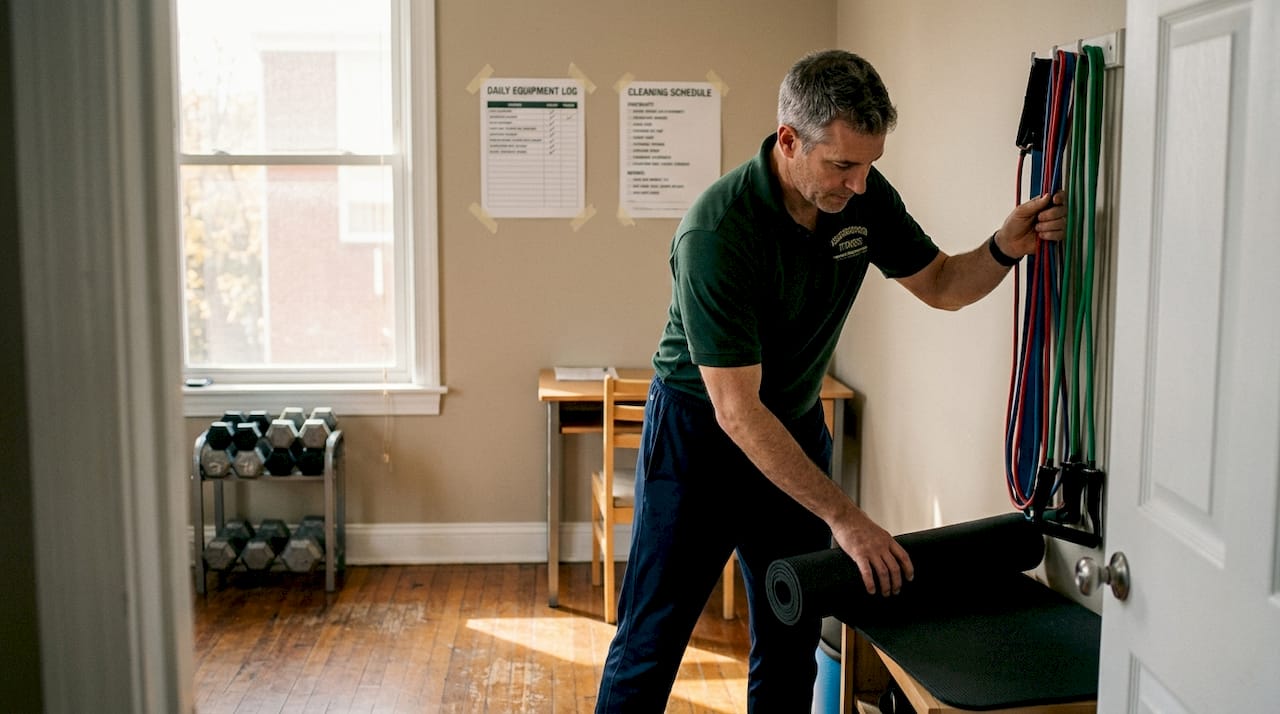
Document your consultation process in a standard operating procedure. This written guide ensures consistency whether you’re conducting your tenth consultation or your thousandth. It also makes training additional staff members straightforward if you expand your business. Include scripts for common scenarios, decision trees for addressing specific client situations, and templates for post-consultation follow up communications.
Execution: step-by-step fitness consultation workflow
Your consultation begins the moment your client walks through the door. Start with a genuine welcome that puts them at ease, then transition into a structured conversation about their goals. Ask open ended questions that reveal not just what they want to achieve, but why it matters to them. Understanding the emotional drivers behind fitness goals enables you to design programs that maintain motivation during challenging phases. Structured consultation workflows help trainers deliver consistent evaluations and personalized training plans efficiently. This goal clarification phase typically takes 10 to 15 minutes but provides the foundation for everything that follows.
The assessment phase requires particular attention to detail. Use standardized protocols that provide objective, repeatable measurements. This might include a step-by-step calisthenics routine for bodyweight movement assessment, cardiovascular testing appropriate to the client’s fitness level, and functional movement screens that identify mobility limitations or asymmetries. Document everything in real time using your digital platform. This eliminates transcription errors and ensures you don’t forget crucial details when writing up the program later.
Pro Tip
Record baseline measurements with photos or videos when appropriate and with client consent. Visual documentation provides powerful motivation when clients review their progress months later and can’t remember where they started.
AI tools transform the program design phase from a time consuming manual process into a collaborative refinement session. Input your assessment data, and the AI generates a comprehensive program that accounts for the client’s goals, injury history, available training time, and equipment access. Rather than starting from scratch, you’re now editing and personalizing an already solid foundation. This approach saves 60 to 90 minutes per consultation while delivering more thorough programming than most trainers could create manually in the same timeframe.
End every consultation with clear next steps. Your client should leave knowing exactly when they’ll see you again, what they should do before that session, and how to contact you with questions. Send a follow up email within 24 hours that summarizes your discussion, outlines their program, and reinforces the commitment they’ve made to their goals. This immediate follow through demonstrates professionalism and keeps momentum high during the critical period between consultation and first training session.
Verification and continuous improvement of your consultation workflow
Your consultation workflow isn’t a set it and forget it system. Regular evaluation identifies bottlenecks, reveals opportunities for improvement, and ensures your process evolves with industry best practices and client expectations. Regularly reviewing consultation processes enables trainers to identify bottlenecks and improve client satisfaction. Start by implementing a simple post-consultation feedback mechanism. Send clients a brief survey 48 hours after their consultation asking about their experience, clarity of communication, and confidence in their program. This feedback provides invaluable insights into what’s working and what needs adjustment.
Track key performance metrics that reveal workflow efficiency. Measure average consultation duration and compare it against your scheduled time blocks. If consultations consistently run over, you’re either underestimating required time or including unnecessary elements. Monitor conversion rates from consultation to paid training packages. Low conversion might indicate pricing issues, but it could also signal that your consultation process isn’t effectively communicating value or building sufficient trust. Track client retention beyond the first month. Poor retention often traces back to misaligned expectations or inadequate goal clarification during the initial consultation.
Experiment with incremental improvements rather than overhauling your entire process at once. Try a new assessment protocol with five clients before making it standard. Test a different AI tool for program generation on a trial basis. Adjust your intake form questions based on gaps you’ve noticed in client information. Small, measured changes let you evaluate impact without risking your entire consultation quality.
“The best consultation workflows balance structure with flexibility. You need consistent processes that ensure quality, but also the adaptability to meet each client’s unique needs and communication style.”
Create a quarterly workflow review ritual. Block two hours to analyze your consultation metrics, review client feedback, and identify specific improvements for the next quarter. This dedicated reflection time prevents you from getting stuck in outdated patterns and ensures continuous evolution. Share insights with other trainers in your network. Their perspectives often reveal blind spots in your own process and introduce innovative approaches you haven’t considered. The fitness industry moves quickly, and consultation best practices evolve as new technologies emerge and client expectations shift. Staying current requires intentional effort and openness to change.
Explore TrainingPro tools to transform your consultation workflow
You’ve learned the framework for optimizing consultations. Now it’s time to implement these strategies with tools designed specifically for fitness professionals. TrainingPro app for trainers brings together everything you need in one platform: client management, AI-powered program design, automated marketing, and seamless communication tools. The AI workout builder analyzes client data and generates personalized programs in minutes, transforming your consultation from a manual programming session into a collaborative refinement process.
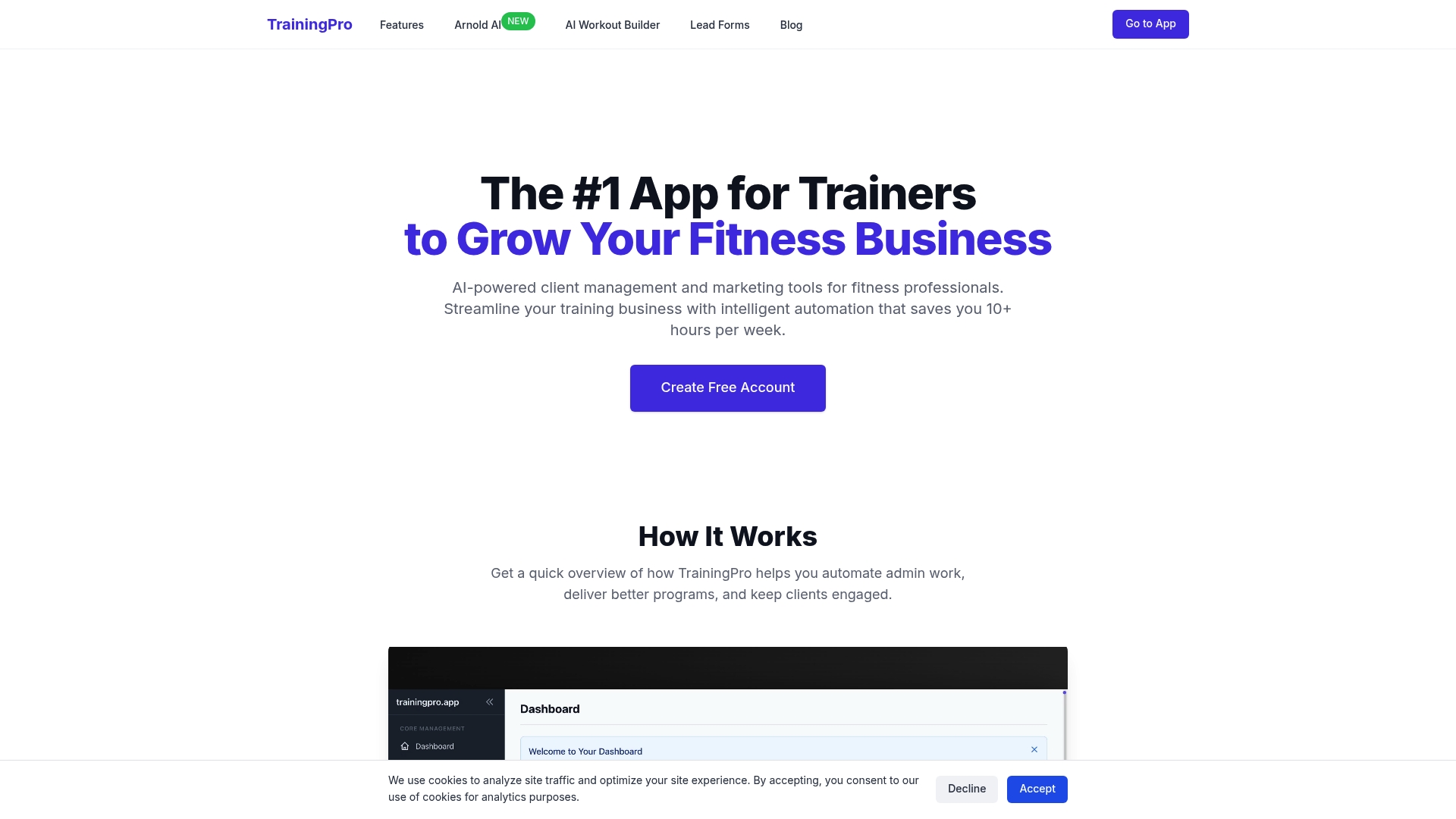
Streamline your client onboarding with lead generation forms that capture comprehensive information before consultations even begin. This preparation gives you time to review client backgrounds, identify potential challenges, and arrive at each consultation ready to deliver immediate value. The platform saves trainers over 10 hours weekly through automation and AI-driven workflows, letting you focus on building relationships rather than managing paperwork. Start your free trial today and experience how modern tools transform consultation efficiency while improving client outcomes.
Frequently asked questions
Clear structure combined with comprehensive client data collection forms the foundation of effective consultations. You need standardized processes that ensure consistency across all clients while remaining flexible enough to address individual circumstances. Consistency in execution builds client trust and enables accurate progress tracking over time. Without structure, consultations become unpredictable and miss critical information that affects program safety and effectiveness.
AI tools analyze client data rapidly, identifying patterns and contraindications that might take humans significantly longer to spot. They generate personalized program frameworks that account for goals, injuries, experience level, and available equipment in minutes rather than hours. This automation reduces manual errors and frees you to focus on building rapport and explaining programming rationale. AI handles the computational heavy lifting while you provide the human expertise and motivation that clients truly value.
Begin with digital client intake forms that collect information before scheduled consultations, giving you preparation time. Add scheduling software that eliminates back and forth communication about appointment times. Implement AI-based program builders that transform assessment data into customized training plans efficiently. Mobile devices and cloud platforms enable on-the-go access to client information and ensure secure data backup. Start simple and add complexity as your practice grows and your workflow needs evolve.
Recommended
- Personal training checklist 2026: streamline success | TrainingPro
- Scale your fitness business with automation in 2026 | TrainingPro
- Business growth strategies for trainers in 2026 | TrainingPro
- AI-Powered Workout Builder Guide | Transform Your Fitness Business | TrainingPro
- Step by step calisthenics routine: build strength in 2026 - Gripnatic
Ready to Transform Your Fitness Business?
Join thousands of trainers using TrainingPro to automate admin, grow their client base, and focus on what they love—coaching.
Start your 14-day free trial • Cancel anytime


