
Why track fitness progress: boost client engagement

Many personal trainers believe they can remember client progress without formal tracking systems, trusting their memory and observation skills. This common misconception costs trainers valuable opportunities to demonstrate concrete results, personalize programming effectively, and retain clients long term. Tracking fitness progress enhances client motivation by providing visual proof of improvements, strengthening retention, and enabling data-driven program adjustments that prevent plateaus. This guide reveals why systematic progress tracking is essential for maximizing client engagement and results in 2026.
Table of Contents
- Why Tracking Fitness Progress Boosts Client Motivation And Retention
- How Tracking Enables Personalized Program Adjustments And Prevents Plateaus
- Evidence Linking Tracking To Improved Client Health Outcomes
- Balancing Tracking Benefits With Risks: Avoiding Client Anxiety And Over-Tracking
- Enhance Your Client Tracking With Trainingpro In 2026
Key takeaways
| Point | Details |
|---|---|
| Motivation boost | Visual progress data increases client adherence and retention through concrete evidence of gains. |
| Personalized adjustments | Systematic tracking enables trainers to tailor programs dynamically and prevent plateaus. |
| Evidence-based results | Research links tracking to 4.9% weight loss and improved fitness markers over six months. |
| Balanced approach | Avoid client anxiety by focusing on trends rather than daily data fluctuations. |
Why tracking fitness progress boosts client motivation and retention
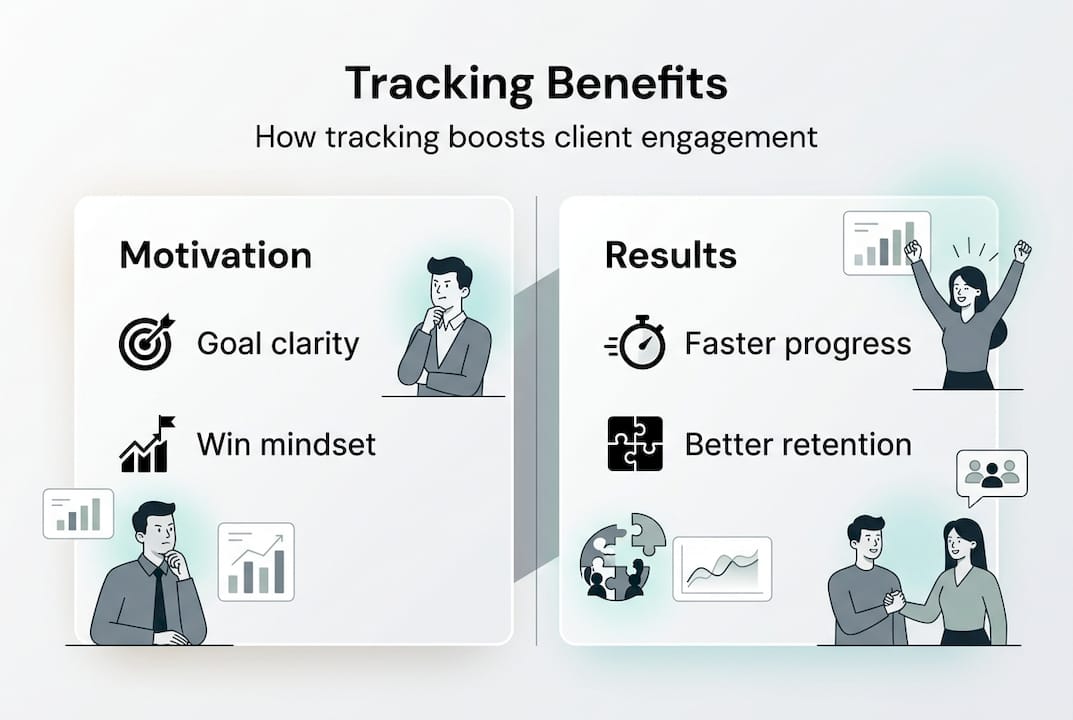
Showing clients they added 40 pounds to their squat or lost two inches from their waist creates undeniable proof of progress. This visual evidence transforms abstract effort into tangible wins that fuel motivation. When clients see concrete numbers improving week over week, they engage more deeply with their training programs and stick around longer.
Data-driven trainers differentiate themselves in a crowded market. Clients who receive regular progress updates feel valued and understood, leading to stronger relationships and more referrals. Tracking fitness progress enhances client motivation, retention, and engagement by providing visual proof of improvements, such as strength gains or body measurement reductions. This professional approach builds trust and positions you as a serious coach who delivers measurable results.
Automation tools make tracking seamless without adding administrative burden. Modern platforms allow you to log workouts, capture measurements, and generate visual reports in minutes. This efficiency lets you focus on coaching while still maintaining comprehensive client records that inform better programming decisions.
Implementing systematic tracking creates multiple business benefits:
- Increased client retention through demonstrated progress and accountability
- Higher referral rates when clients share their impressive transformation data
- Premium pricing justification based on professional, data-driven coaching approach
- Reduced churn by identifying and addressing plateaus before clients lose motivation
Pro Tip
Share monthly progress summaries with clients highlighting their top three achievements. This simple practice reinforces wins, maintains motivation during challenging periods, and reminds clients why they invested in your services.
"Clients don't remember every workout, but they never forget seeing their first pull-up or hitting a new personal record. Tracking captures these milestone moments and turns them into powerful retention tools."
Effective client retention strategies combine emotional engagement with objective data. When you blend celebration of non-scale victories with quantifiable metrics, you create a compelling narrative of transformation that keeps clients committed to their fitness journey.
How tracking enables personalized program adjustments and prevents plateaus
Systematic tracking reveals patterns invisible to casual observation. When you monitor key metrics consistently, you detect subtle plateaus or regression before they derail client progress. This early warning system allows proactive program modifications that maintain momentum and prevent frustration.

Progress tracking enables personalized program adjustments, preventing plateaus and optimizing outcomes through data on strength, body composition, endurance, and subjective measures like RPE and mood. Review this data every four weeks to identify trends and make evidence-based programming decisions. A client whose strength gains stall might need a deload week, while someone reporting poor sleep quality may benefit from reduced training volume.
Track these essential categories for comprehensive client assessment:
- Strength metrics including one-rep max estimates, total volume lifted, and progressive overload trends
- Body composition measurements such as body fat percentage, waist circumference, and muscle mass estimates
- Endurance indicators like heart rate recovery, sustained effort duration, and cardiovascular benchmarks
- Subjective wellness factors including sleep quality, stress levels, energy ratings, and recovery perception
- Performance markers such as movement quality, exercise technique improvements, and functional capacity
Different clients require different tracking approaches based on their goals and circumstances. The table below compares standard metrics with advanced non-scale victories for specialized populations:
Pro Tip
Use rate of perceived exertion (RPE) for subjective load adjustment, especially with older clients or those managing chronic conditions. This simple 1-10 scale helps you calibrate training intensity based on how clients actually feel rather than relying solely on prescribed percentages.
Advanced AI workout program personalization leverages tracking data to generate optimized training plans. When you feed client progress metrics into intelligent systems, you receive evidence-based recommendations for exercise selection, volume adjustments, and periodization strategies that would take hours to calculate manually.
The four-week review cycle creates accountability checkpoints that structure your coaching relationship. Clients know they'll discuss their data regularly, which motivates consistent effort between sessions. This rhythm also prevents you from making reactive changes based on single bad workouts or temporary fluctuations.
Evidence linking tracking to improved client health outcomes
Peer-reviewed research confirms what successful trainers observe in practice. Empirical data shows tracking correlates with better results, such as 4.9% weight loss in six months with Fitbit tracking and improvements in exercise attitudes and well-being. These aren't marginal gains but significant outcomes that directly impact client satisfaction and long-term adherence.
Consistent tracking also increases daily physical activity beyond structured workouts. When clients monitor their movement, they naturally find opportunities to add steps, take stairs, or incorporate active breaks throughout their day. This lifestyle integration multiplies the impact of your training sessions and accelerates progress toward health goals.
Supervised trainer involvement amplifies tracking benefits substantially. Personalized programs with supervised tracking improve motivation, commitment, and health markers over six months. The combination of professional guidance and systematic data collection creates synergy that neither element achieves alone. Your expertise interprets the numbers and translates them into actionable program adjustments.
Key health benefits linked to consistent progress tracking include:
- Sustained weight loss averaging 4.9% over six months with regular monitoring
- Improved cardiovascular markers including VO2max and resting heart rate
- Enhanced muscular strength measured through grip strength and functional assessments
- Better psychological well-being reflected in exercise attitudes and self-efficacy
- Increased daily physical activity through heightened awareness and accountability
"Longitudinal studies demonstrate that clients working with trainers who systematically track progress achieve significantly greater fitness improvements compared to those receiving generic programming without measurement. The data doesn't lie: tracking predicts success."
These outcomes translate directly to trainer business growth strategies because results-driven coaching attracts premium clients and generates organic referrals. When you can point to specific health improvements backed by objective data, you build a reputation as a trainer who delivers measurable transformation rather than just motivation.
The evidence base for tracking continues expanding as wearable technology and digital platforms generate larger datasets. This research validates your professional practices and provides talking points when educating clients about why systematic measurement matters for their success.
Balancing tracking benefits with risks: avoiding client anxiety and over-tracking
Some trainers avoid systematic tracking, citing time constraints or believing they can remember client details without documentation. Some trainers avoid tracking due to time or memory excuses, but risks include obsession, anxiety, and burnout when clients fixate on numbers rather than overall progress. These excuses often mask discomfort with technology or lack of efficient systems rather than legitimate barriers.
Excessive tracking can backfire when clients become obsessed with daily fluctuations or compare themselves negatively to unrealistic standards. A client who weighs themselves multiple times daily or feels anxious about minor setbacks may develop unhealthy relationships with measurement. Your role includes teaching clients to interpret data constructively and maintain perspective on natural variation.
Implement these best practices to maximize tracking benefits while minimizing risks:
- Focus on weekly or monthly trends rather than daily data points to reduce noise and anxiety
- Disable non-essential metrics that don't align with client goals or create unnecessary stress
- Pair quantitative data with qualitative feedback about energy, mood, and life satisfaction
- Educate clients about normal fluctuations in weight, performance, and recovery markers
- Celebrate non-scale victories equally with measurable metrics to maintain balanced perspective
- Schedule regular check-ins to discuss data interpretation and emotional responses to tracking
Pro Tip
Use RPE calibration sessions where clients rate perceived effort and you measure actual output. This practice integrates subjective feelings with objective data, helping clients trust their intuition while still benefiting from systematic measurement.
Avoid over-tracking by focusing on trends rather than daily data and disabling non-essential metrics to reduce client stress. Some clients thrive with comprehensive tracking while others need minimal measurement to stay engaged. Customize your approach based on individual personality, goals, and psychological responses to data.
The personal training checklist should include protocols for identifying when tracking becomes counterproductive. Warning signs include client anxiety about measurements, excessive discussion of numbers versus training quality, or avoidance behaviors when metrics don't meet expectations. Address these issues promptly through conversation and tracking adjustments.
Balanced tracking combines objective measurement with subjective assessment. Ask clients how they feel, what they notice in daily life, and whether training enhances their overall well-being. These qualitative insights provide context for quantitative data and ensure you're optimizing for holistic health rather than just numbers on a screen.
Enhance your client tracking with TrainingPro in 2026
Streamlining progress tracking doesn't require hours of manual data entry or complex spreadsheets. TrainingPro fitness business software automates client progress monitoring while providing intelligent insights that inform better programming decisions. The platform captures workout data, body measurements, and subjective feedback in one unified system accessible from any device.
The AI workout builder creates personalized training programs that adapt based on tracked progress, injuries, and client preferences. This automation saves over 10 hours weekly while delivering superior customization compared to generic templates. Arnold AI considers your client's complete profile when generating optimized exercise selections and progression schemes.
Grow your fitness business with lead generation forms that capture prospect information and automatically nurture relationships through targeted communication. Combined with robust progress tracking, these tools help you demonstrate value to potential clients and retain existing ones through proven results.
Ready to Transform Your Fitness Business?
Join thousands of trainers using TrainingPro to automate admin, grow their client base, and focus on what they love—coaching.
Start your 14-day free trial • Cancel anytime
FAQ
Trainers should track strength indicators like one-rep max estimates, body composition measurements including body fat percentage and waist circumference, endurance markers, and subjective measures such as RPE and mood ratings. Non-scale victories like improved sleep quality, energy levels, and functional capacity provide valuable context beyond pure performance data. The specific metrics depend on individual client goals, but comprehensive tracking combines objective measurements with subjective wellness indicators.
Review client progress data every four weeks to identify plateaus, celebrate wins, and make evidence-based program adjustments. This monthly rhythm provides enough data to spot meaningful trends while remaining responsive to client needs. More frequent reviews may be appropriate during intensive training phases or when addressing specific challenges, but avoid making reactive changes based on single workouts or temporary fluctuations.
Over-tracking can lead to anxiety, obsessive behavior, and disengagement when clients fixate on daily fluctuations or unrealistic expectations. Prevent burnout by emphasizing weekly or monthly trends rather than daily data, disabling metrics that don't serve client goals, and integrating subjective feedback alongside quantitative measurements. Educate clients about normal variation and celebrate non-scale victories to maintain balanced perspective on progress.
Some trainers cite time constraints, relying on memory, or discomfort with technology as reasons for avoiding systematic tracking. These excuses often mask lack of efficient systems rather than legitimate barriers, as modern platforms automate data collection and analysis. The real cost of not tracking includes missed opportunities for personalization, inability to demonstrate concrete results, and reduced client retention compared to data-driven competitors.
Subjective feedback including RPE, mood ratings, sleep quality, and stress levels provides essential context for interpreting objective performance data. A client lifting heavier weights but reporting poor recovery and high stress may need volume reduction despite apparent strength gains. Combining quantitative metrics with qualitative insights creates a complete picture of client health and informs more nuanced programming decisions than numbers alone.


