
Client management for fitness pros: boost retention & engagement

You help a client hit their goal weight, finish their first 5K, or finally nail a deadlift. Then they cancel. It feels like a failure, but it's actually one of the most common patterns in the fitness industry. 60% of goal-achievers still leave without a next-step plan, meaning the problem isn't your coaching quality. It's the system around it. Client management is that system, and most trainers either underestimate it or confuse it with something far simpler than it really is. This guide breaks down what client management actually means, why it drives retention, and how to build a process that keeps clients engaged long after their first goal is met.
Table of Contents
- What is client management? Defining the concept
- Why client management matters: Data and benchmarks
- The pillars of effective client management in fitness
- Common client management pitfalls (and how to prevent them)
- Best tools and technology for client management in fitness
- Upgrade your client management with TrainingPro
- Frequently asked questions
Key Takeaways
What is client management? Defining the concept
Ask ten trainers what client management means and you'll get ten different answers. Some say it's scheduling. Others say it's messaging. A few mention software. All of them are partially right, but none of them have the full picture.
Client management is a complete operational system that covers every stage of the client relationship:
- Onboarding: Setting baselines, expectations, and goals from day one
- Engagement: Keeping clients motivated, accountable, and connected between sessions
- Progress tracking: Measuring results and adjusting programs based on real data
- Retention: Proactively addressing drop-off risks before they become cancellations
- Re-engagement: Bringing back clients who've gone quiet or paused
It's not a single tool or a weekly check-in text. It's a structured approach to every touchpoint in the client journey.
Key Insight
"Effective client management isn't about doing more. It's about doing the right things consistently, at the right moments."
The psychology behind it matters too. Self-Determination Theory (SDT) identifies three core drivers of intrinsic motivation: autonomy, competence, and relatedness. When your client management system supports all three, clients don't just stay. They thrive. Pair that with strong client retention strategies and you have a foundation that actually holds.
Why client management matters: Data and benchmarks
Let's talk numbers, because the data here is eye-opening.
According to industry benchmarks, personal training clients last just 3 to 6 months on average, with roughly 50% leaving each year. That's a significant pipeline problem if you're not actively managing relationships.
The good news? Top trainers consistently retain clients effectively at 80% or higher. The difference isn't talent. It's process. Trainers who hit those numbers have systems for communication, accountability, and progress visibility that make clients feel seen and supported at every stage.
Tracking results also plays a direct role. When clients can see their progress clearly, they stay motivated. Trainers who track progress for engagement report stronger retention because clients have a tangible reason to keep showing up.

The bottom line: Poor client management doesn't just cost you clients. It costs you revenue, referrals, and reputation.
The pillars of effective client management in fitness
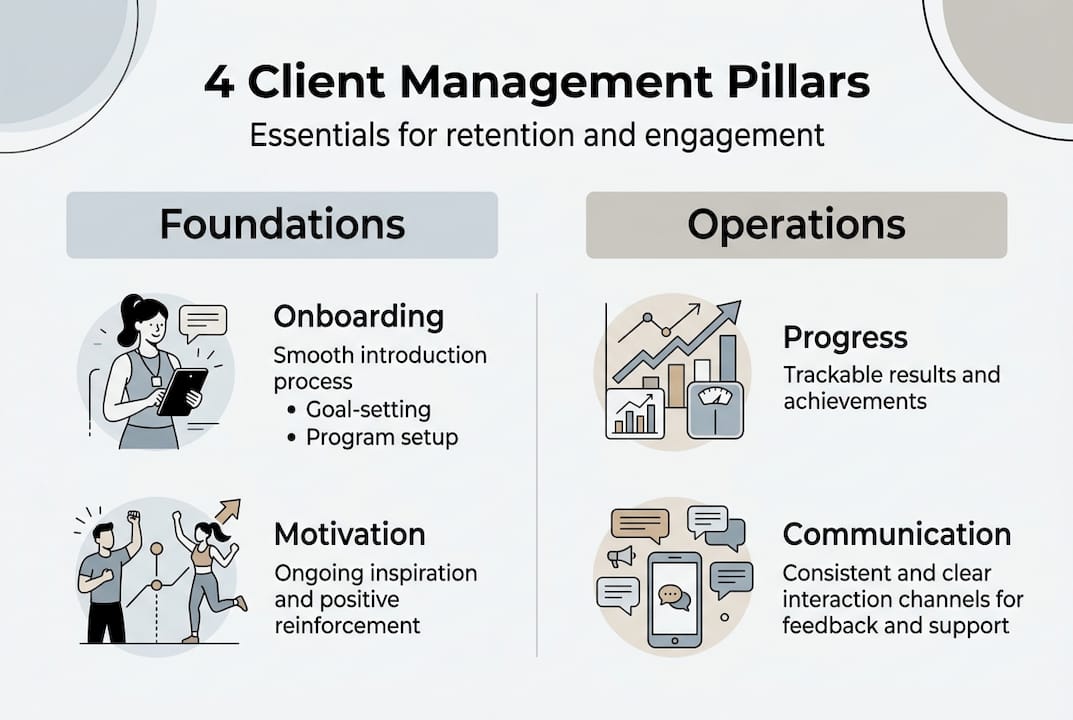
Now that you understand the stakes, here's how to build a system that works. Strong client management rests on four core pillars.
1. Onboarding and goal setting
The first two weeks set the tone for everything. Collect baseline data, clarify goals, and establish communication preferences. Clients who feel organized and understood from the start are far more likely to stay long-term. Use this phase to build trust and set realistic milestones.
2. Motivation and accountability
Motivation fades. Accountability systems don't have to. Use SDT principles to give clients a sense of autonomy (let them choose workout times or exercise variations), build competence (celebrate small wins), and foster relatedness (check in personally, not just professionally). Accountability systems that include regular touchpoints and flexible programming keep clients engaged even when life gets busy.
3. Progress tracking and program updates
Static programs lose clients. When someone plateaus or gets bored, they disengage. Build in regular review points, at least monthly, to assess progress and update programming. This shows clients you're paying attention and keeps training feeling fresh.
4. Communication and re-engagement
Life disruptions happen. A client misses two weeks, then feels too embarrassed to come back. Your re-engagement process should make returning feel easy and welcome. A simple check-in message at the right moment can save a client relationship that would otherwise go cold.
Pro Tip
Use retention frameworks that balance relationship-building with results-focused milestones. Clients stay when they feel both connected to you and confident in their progress.
For a step-by-step operational view, the trainer management checklist is a practical resource to audit your current system.
Common client management pitfalls (and how to prevent them)
Even experienced trainers fall into these traps. Recognizing them is the first step to fixing them.
-
No baseline at onboarding: Without a starting point, you can't show progress. Clients who don't see measurable change lose motivation fast. Collect body composition data, fitness assessments, and lifestyle notes on day one.
-
No next-step plan after goal achievement: This is the biggest churn trigger. 60% of goal-achievers leave because no one gave them a reason to stay. Always have a phase two ready before phase one ends.
-
Generic communication: Sending the same check-in message to every client feels impersonal. Personalize your outreach based on each client's goals, struggles, and communication style. A client training for a marathon needs different messaging than someone managing chronic back pain.
-
Inconsistent tracking and feedback: Sporadic feedback creates uncertainty. Clients wonder if they're on track. Regular, structured feedback loops remove that doubt and reinforce trust.
-
Session-only thinking: If your client management only happens during sessions, you're missing 90% of the week. Engagement between sessions, through messages, check-ins, or app updates, is where retention is actually built.
Pro Tip
Review your client management challenges quarterly. What's slipping? Where are clients going quiet? Small process fixes compound into major retention gains over time.
Best tools and technology for client management in fitness
The right technology doesn't replace your coaching. It amplifies it. Here's what to look for in a modern client management stack:
-
Scheduling and client portals: Reduce friction around booking and communication. Clients should be able to see their schedule, access their programs, and message you without jumping between apps.
-
Progress tracking and reporting: Automated tracking tools let clients log workouts, measurements, and notes. You get a real-time view of their progress without chasing updates manually.
-
AI-driven program builders: These tools help you create personalized programs faster, accounting for injuries, preferences, and training history. Flexible programs also protect your business during trainer turnover by keeping client data centralized and business-owned.
-
Lead gen and re-engagement automation: Capture new leads with branded forms and re-engage lapsed clients with automated follow-up sequences. This keeps your pipeline active without manual effort.
-
Integrated platforms: Fragmented tools create gaps. An all-in-one platform that connects scheduling, tracking, communication, and marketing removes the weak links in your client management chain.
Exploring fitness software solutions purpose-built for trainers will save you hours each week and give your clients a more polished, professional experience. Pair that with smart growth strategies for trainers and you're building a business that scales.
Upgrade your client management with TrainingPro
Everything covered in this guide, from onboarding and progress tracking to re-engagement and automated communication, is built into TrainingPro. It's a platform designed specifically for fitness professionals who want to run a tighter, more profitable business without spending hours on admin.
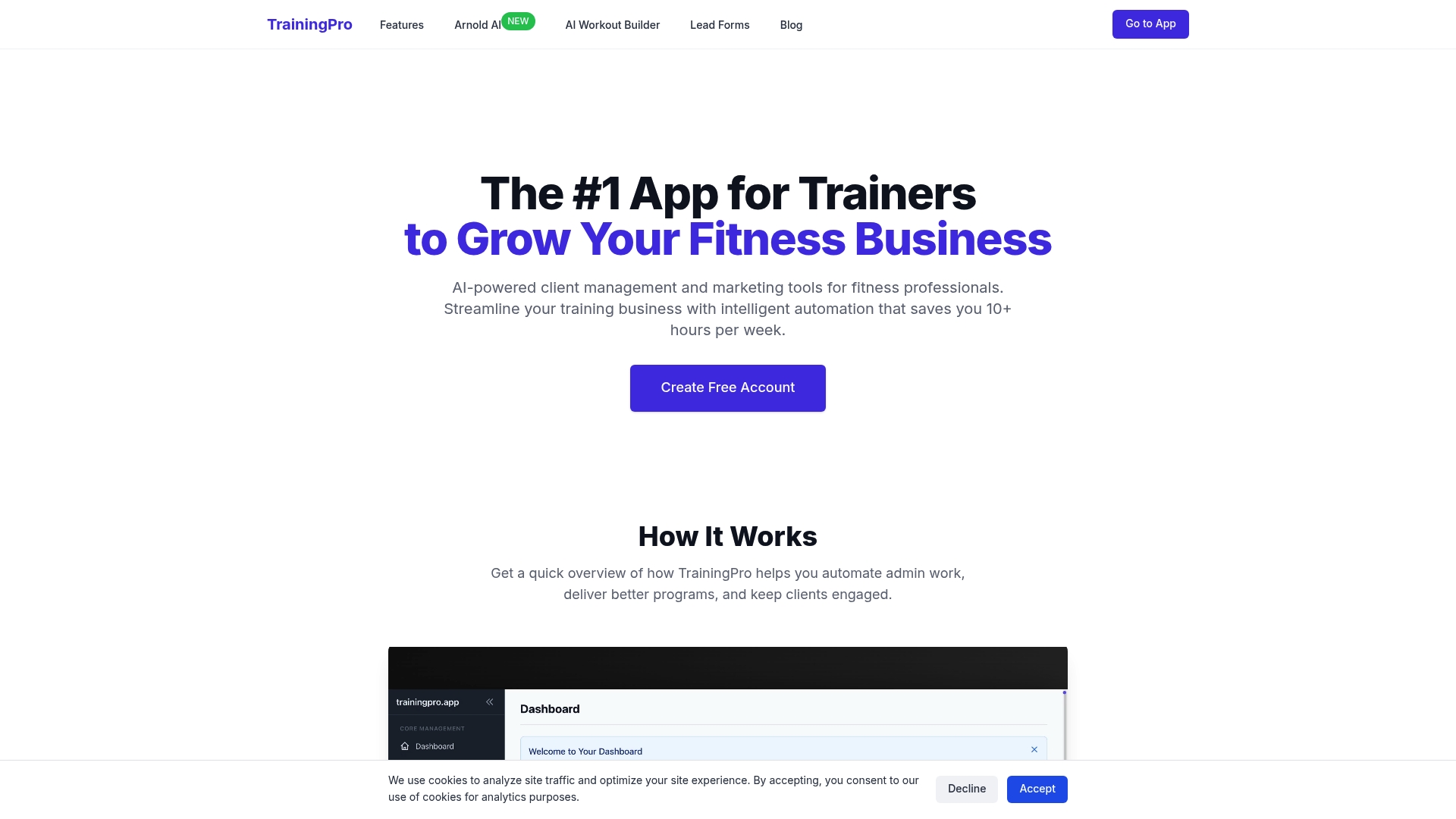
The Arnold AI Assistant builds personalized training programs in minutes, factoring in injuries, goals, and training style. The AI Workout Builder keeps your programming fresh and client-specific at scale. Add in automated check-ins, branded client portals, and lead capture tools, and you have a complete system that works even when you're not. TrainingPro saves trainers over 10 hours weekly, so you can focus on coaching, not chasing. If you're ready to stop losing clients you've already earned, this is where to start.
Ready to Transform Your Fitness Business?
Join thousands of trainers using TrainingPro to automate admin, grow their client base, and focus on what they love—coaching.
Start your 14-day free trial • Cancel anytime
Frequently asked questions
Clear onboarding, ongoing motivation, consistent tracking, and personalized communication are the core pillars. SDT principles, focusing on autonomy, competence, and relatedness, provide the psychological framework that makes these pillars stick.
Most clients work with a trainer for 3 to 6 months, and about 50% leave each year. Top trainers with strong management systems consistently push that number well above 80% annual retention.
The top reason is a lack of perceived progress or no clear plan after initial goals are met. 60% of goal-achievers leave simply because no next step was offered, making proactive goal progression essential.
Absolutely. Digital tools automate engagement, scheduling, tracking, and personalized follow-ups, saving significant time. Centralized platforms also protect client data during trainer transitions, keeping your business running smoothly regardless of staffing changes.


