
Maximize client engagement with mobile wellness apps

Mobile wellness apps are revolutionizing how fitness professionals connect with clients, driving sustained activity through features like self-monitoring and goal-setting. Research shows 79% of app users engage in self-monitoring, making it the top driver for long-term physical activity. Yet many trainers underestimate how these digital tools can amplify program effectiveness when integrated strategically. This article explores evidence-backed methodologies, practical applications, and the critical role trainers play in maximizing app benefits while navigating challenges like dropout rates and technology limitations.
Table of Contents
- Key takeaways
- How mobile wellness apps boost client engagement
- Personalized programming and AI-powered features in wellness apps
- Mobile apps tailored for fitness professionals: features and benefits
- Evidence and challenges: outcomes, user retention, and limitations
- Applying mobile wellness apps in your fitness practice
- Unlock your fitness business potential with TrainingPro
- Frequently asked questions
Key takeaways
| Point | Details |
|---|---|
| Self monitoring impact | Self monitoring drives long term activity by providing continuous feedback and accountability. |
| Trainer app adoption boosts retention | Using apps speeds programming and strengthens client retention when integrated with coaching. |
| Apps complement personalization | Apps complement personalized coaching without replacing human guidance. |
| Privacy and dropout challenges | Dropout rates, technology limitations, and privacy concerns pose real challenges to sustained app use. |
How mobile wellness apps boost client engagement
Mobile wellness apps transform passive clients into active participants through features that make fitness tracking accessible and rewarding. Self-monitoring stands as the dominant engagement driver, with 79% of users logging workouts, nutrition, and progress metrics consistently. This constant feedback loop creates accountability that extends far beyond gym sessions.
Goal-setting features allow clients to establish clear targets and visualize progress over time. Historical tracking shows clients exactly how far they’ve come, reinforcing positive behaviors and building momentum. Social connectivity introduces peer comparison and community support, tapping into intrinsic motivation that outlasts temporary enthusiasm. Gamification elements like achievement badges and streak counters add playful competition that keeps clients returning.
These engagement mechanisms translate directly into business outcomes for trainers. Clients who actively use apps demonstrate higher retention rates and better adherence to programming. The constant touchpoint between sessions maintains relationship strength without requiring additional trainer time. Social features create informal accountability networks where clients motivate each other, reducing the burden on you to provide all encouragement.
Key engagement features include:
- Real-time progress dashboards that visualize workout completion and performance trends
- Push notifications for scheduled sessions and milestone celebrations
- Photo progress tracking that documents physical transformations
- Community challenges that foster friendly competition among clients
- Integration with wearables for automatic activity logging
The data shows sustained engagement correlates with improved physical outcomes and client loyalty. When clients see tangible progress through app visualizations, they attribute success to your programming and remain committed long-term. This creates a virtuous cycle where technology amplifies your expertise rather than replacing it. Smart trainers scale their fitness business with automation by letting apps handle routine tracking while they focus on high-value coaching moments.
Personalized programming and AI-powered features in wellness apps
Artificial intelligence has fundamentally changed how trainers create and adapt workout programs. AI enables personalized adaptive workouts that automatically adjust difficulty based on client performance, fatigue levels, and recovery status. Progressive overload guidance ensures clients advance safely without plateauing or overtraining.
Wearable integration provides data streams that inform real-time programming decisions. Metrics like heart rate variability, sleep quality, step counts, and resting heart rate reveal recovery capacity and readiness to train. This objective data removes guesswork, allowing you to push clients harder when they’re ready or pull back when stress levels spike. Apps synthesize this information into actionable insights without requiring you to manually analyze spreadsheets.
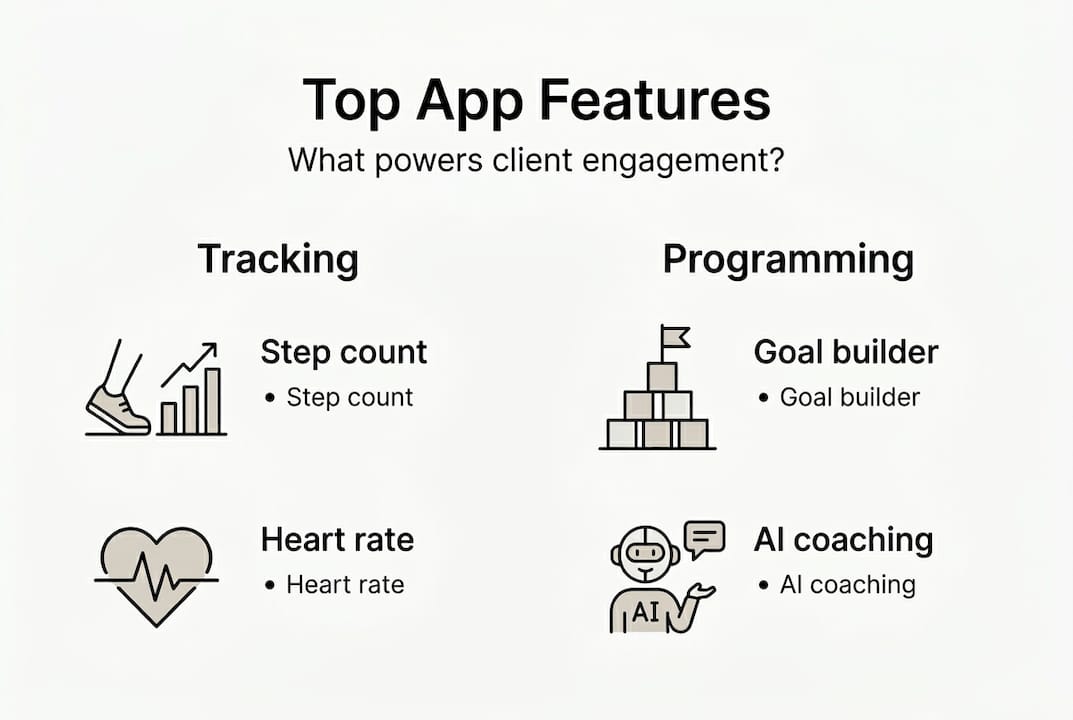
Habit tracking extends beyond exercise to nutrition, hydration, and sleep patterns. AI-powered nutrition adjustments suggest meal modifications based on training intensity and goals, supporting holistic wellness planning. Real-time feedback during workouts corrects form issues and pacing errors, reducing injury risk when you’re not physically present. These features create a virtual coaching presence that maintains quality between in-person sessions.
Core AI capabilities include:
- Exercise substitution based on available equipment and client injuries
- Volume and intensity recommendations derived from performance history
- Deload week scheduling triggered by accumulated fatigue markers
- Nutrition macro adjustments aligned with training phase and body composition goals
Pro Tip
Use AI workout builder tools to create baseline programs in minutes, then customize based on client preferences and limitations. This approach combines automation efficiency with your professional expertise for optimal results.
The most effective apps learn from client behavior patterns, becoming more accurate over time. They identify which exercise variations produce best results for individual body types and training histories. This machine learning capability scales your knowledge, allowing you to manage more clients without sacrificing personalization quality. Download our AI-powered workout builder guide to see exactly how top trainers implement these technologies in their practices.
Mobile apps tailored for fitness professionals: features and benefits
Trainer-specific platforms differ dramatically from consumer fitness apps by prioritizing business operations alongside client programming. Professional apps enable 3.5x faster workout programming through template libraries, drag-and-drop builders, and exercise databases with video demonstrations. This speed advantage lets you serve more clients without working longer hours.
Real-time progress dashboards aggregate client data into visual reports that highlight trends and red flags. You spot adherence issues, performance plateaus, and breakthrough moments at a glance rather than digging through individual logs. Client grouping features support bootcamp-style offerings where multiple people follow the same program with minor variations, dramatically improving your time efficiency.

In-app messaging creates communication channels that feel personal while remaining organized. Automated check-ins trigger at strategic intervals, prompting clients to report progress and challenges. These touchpoints boost retention by maintaining connection without requiring you to remember every follow-up. Nutrition integrations with platforms like MyFitnessPal allow comprehensive coaching within a single ecosystem.
Pro Tip
Prioritize apps with white-label branding options so clients interact with your brand rather than a third-party platform. This strengthens your professional identity and reduces client churn to competitor apps.
The business impact extends beyond time savings to revenue growth. Apps with built-in payment processing, package management, and renewal reminders reduce administrative friction that causes client dropoff. Marketing features like lead capture forms and branded landing pages turn your app into an acquisition tool, not just a retention mechanism. Smart trainers leverage these business growth strategies for trainers to build sustainable practices that thrive without constant hustle. Learning how to create workout programs fast using AI becomes a competitive advantage in crowded markets.
Evidence and challenges: outcomes, user retention, and limitations
Empirical research validates the health impact of mobile wellness apps when used correctly. A randomized controlled trial demonstrated 5.29% weight loss at 6 months among app users compared to 1.76% in control groups, a statistically significant difference. Reward-based apps reduced cardiovascular disease risk by 5%, stroke risk by 9%, and type 2 diabetes risk by 18%. High-activity users saw even greater reductions, with hazard ratios dropping to 0.75 for certain conditions.
However, these benefits come with substantial caveats. Apps lack professional supervision, creating safety risks for clients with injuries or medical conditions. Dropout rates reach 75% within two weeks of download, indicating that initial enthusiasm rarely translates to sustained behavior change. Technology disparities exclude clients without smartphones or data plans, limiting accessibility for underserved populations.
Privacy concerns and data synchronization issues frustrate both trainers and clients. HIPAA and GDPR regulations create compliance burdens, especially for trainers working internationally or with medical populations. Apps cannot replace the nuanced judgment trainers provide when adjusting programs based on subtle cues like stress levels, life circumstances, or motivation fluctuations.
Key limitations include:
- Generic programming that ignores individual biomechanics and injury history
- Overreliance on metrics that miss qualitative factors like enjoyment and sustainability
- Technical glitches that disrupt workout logging and progress tracking
“Apps work best as supplements to professional coaching, not replacements. The combination of technology efficiency and human expertise produces outcomes neither achieves alone.” — Research synthesis on policy and human factors in wellness apps
The evidence points toward hybrid models that combine app convenience with trainer oversight. This approach maximizes technology benefits while minimizing risks through professional judgment and personalized adjustments. Understanding these limitations helps you set realistic client expectations and position yourself as the irreplaceable element in their fitness journey. Compare platforms carefully, as shown in our TrainingPro vs Fitr comparison, to find tools that enhance rather than complicate your coaching.
Applying mobile wellness apps in your fitness practice
Choosing the right app starts with evaluating empirical backing rather than marketing claims. Prioritize platforms with documented outcomes like the 5% weight loss benchmark from controlled trials. Look for apps that emphasize intrinsic motivation and habit formation over gimmicky rewards that fade quickly. Social support features should facilitate genuine peer connection rather than superficial gamification.
Integration strategy matters as much as app selection. Introduce apps gradually, starting with simple tracking before advancing to complex programming features. Train clients on core functions during onboarding sessions, ensuring they understand how to log workouts, report issues, and access your feedback. Set clear expectations about response times for messages and how apps complement rather than replace in-person sessions.
Leverage social connectivity features strategically by creating client groups based on goals, fitness levels, or schedules. Peer comparison motivates without creating unhealthy competition when you frame it around personal progress rather than rankings. Use community challenges sparingly to boost engagement during plateaus or seasonal motivation dips.
Implementation steps:
- Audit your current client communication and programming workflows to identify bottlenecks
- Select an app that addresses your specific pain points rather than offering unnecessary features
- Pilot the platform with a small client group to identify issues before full rollout
- Create standard operating procedures for app use, including messaging protocols and check-in schedules
- Gather client feedback monthly and adjust implementation based on usage patterns
- Combine app automation with personalized coaching moments to maintain relationship strength
Pro Tip
Use automation for routine tasks like workout delivery and progress reminders, but reserve personal communication for celebrating wins, addressing setbacks, and major program adjustments. This balance scales your business while preserving the human connection clients value most.
The hybrid model works because it plays to each element’s strengths. Apps handle data collection, routine scheduling, and basic feedback efficiently. You provide expert interpretation, motivation during tough moments, and program pivots based on life changes. This division of labor lets you serve more clients at higher quality than either pure in-person or pure digital coaching achieves. Implement app for clients that streamline communication while maintaining your professional brand, and use lead generation forms to convert app users into paying clients systematically.
Unlock your fitness business potential with TrainingPro
TrainingPro brings together everything discussed in this article: AI-driven workout programming, automated client engagement, and business growth tools designed specifically for fitness professionals. Our platform helps you create personalized programs in minutes using the same evidence-based methodologies top trainers rely on, saving over 10 hours weekly on administrative tasks.
The AI workout builder adapts to each client’s goals, injuries, and available equipment while you maintain full creative control. Automated check-ins and progress tracking keep clients engaged between sessions without requiring constant manual follow-up. Our comprehensive system includes everything from client app access to marketing automation, letting you focus on coaching while technology handles routine operations. Download our AI-powered workout builder guide to see exactly how successful trainers implement these tools to scale their businesses sustainably.
Frequently asked questions
Self-monitoring tops the list, with 79% of users actively tracking workouts and nutrition. Goal-setting, social connectivity, and progress visualization follow closely, creating accountability loops that sustain motivation. Gamification elements work best when they reinforce intrinsic motivation rather than relying solely on external rewards.
Use apps as supplements to professional supervision, not replacements for expert guidance. Choose platforms with evidence-based programming and clear safety protocols for exercise modifications. Regularly review client app data to spot form issues, overtraining signs, or adherence problems requiring intervention.
Emphasize habit formation over novelty by helping clients integrate app use into daily routines. Social support from peer groups and regular trainer feedback combat the 75% two-week dropout rate. Focus on intrinsic motivation by connecting app activities to clients’ deeper values and long-term goals.
Apps work best for clients comfortable with technology and motivated by self-monitoring. Hybrid approaches help include clients facing tech barriers or preferring human interaction. Offer low-tech alternatives like printed logs for populations without reliable smartphone access or data plans.
Recommended
- TrainingPro — #1 App for Trainers | Fitness Business Software
- AI-Powered Workout Builder Guide | Transform Your Fitness Business | TrainingPro
- 5 Ways to Retain Personal Training Clients | TrainingPro
- Stop Guessing: Introducing Custom Client Check-Ins | TrainingPro
- Enhance Parental Engagement with the eSchools Mobile App
- Wellness Coaching - Esențial Impact – Bunăstare cu doTERRA
Ready to Transform Your Fitness Business?
Join thousands of trainers using TrainingPro to automate admin, grow their client base, and focus on what they love—coaching.
Start your 14-day free trial • Cancel anytime


