
How to create workout programs fast using AI in 2026

Creating personalized workout programs demands hours of careful planning, client analysis, and constant adjustments. Many fitness professionals spend 12 to 15 hours weekly designing programs manually, leaving little time for coaching or business growth. This guide reveals a systematic, AI-powered approach that cuts program creation time by over 70%, helping you deliver highly customized, safe, and effective workouts while reclaiming your schedule.
Table of Contents
- Prerequisites for creating workout programs
- Step 1: Conduct a comprehensive client assessment
- Step 2: Set clear and measurable client goals
- Step 3: Choose exercises based on client profile
- Step 4: Plan program progression and periodization
- Step 5: Leverage AI tools to streamline program creation
- Step 6: Implement client communication and progress tracking
- Common mistakes and how to avoid them
- Expected outcomes and success metrics
- Streamline your workout program creation with TrainingPro
- Frequently asked questions
Key takeaways
| Point | Details |
|---|---|
| Structured client assessment and SMART goals | Comprehensive client evaluation and clear objectives boost adherence rates by up to 50%. |
| Periodized progression strategies | Implementing periodization improves strength gains by 25% compared to non-periodized plans. |
| Exercise adaptation for safety | Modifying programs for injuries reduces injury risk by 40% and enhances client confidence. |
| AI-driven automation benefits | AI tools save trainers over 10 hours weekly while enabling deeper personalization and dynamic adjustments. |
| Effective progress tracking | Regular communication and metric tracking improve client retention by 30% or more. |
Prerequisites for creating workout programs
Before designing workout programs, you need foundational knowledge and tools ready. Understanding human anatomy and exercise physiology helps you select safe, effective movements. Familiarity with muscle groups, joint actions, and energy systems ensures your programming matches client capabilities.
You also need access to client assessment tools and comprehensive health history. Accurate baseline data on fitness levels, injuries, and medical conditions prevents unsafe exercise prescriptions. Digital intake forms streamline this process, capturing personal details, injury history, and training preferences efficiently.
Mastering the SMART goal framework is essential for setting clear, motivating objectives. Specific, Measurable, Achievable, Relevant, and Time-bound goals give clients direction and trainers programming benchmarks. This clarity drives adherence and progress.
Using AI-enabled workout program software transforms your efficiency. These platforms automate exercise selection, progression planning, and injury modifications based on client data. They eliminate repetitive manual work, letting you focus on coaching relationships.
Client intake forms are your programming foundation. Building client inquiry forms that capture detailed personal data, injury histories, training preferences, and goals ensures every program starts with complete information. This upfront investment saves hours of back-and-forth clarification later.
Pro Tip: Create standardized digital intake forms that automatically populate your AI workout builder. This seamless data flow ensures no critical client information gets overlooked during program design.
| Essential Prerequisite | Purpose | Tool/Resource Needed |
|---|---|---|
| Anatomy and physiology knowledge | Safe, effective exercise selection | Certification courses, continuing education |
| Client health history | Identify contraindications and limitations | Digital intake forms, health questionnaires |
| SMART goal framework | Set clear, trackable objectives | Goal-setting templates, client interviews |
| AI workout software | Automate and personalize programming | AI-enabled platforms with client databases |
| Assessment protocols | Establish fitness baselines | Movement screens, fitness tests, tracking tools |
Step 1: Conduct a comprehensive client assessment
Effective workout programs start with thorough client evaluation. You must assess multiple fitness domains to understand current abilities and limitations. Assessing cardio capacity, strength levels, mobility ranges, injury history, and personal goals provides baseline data essential for safe programming.
Document every finding systematically. Record cardiovascular endurance through timed tests or heart rate monitoring. Measure strength baselines with fundamental movement patterns like squats, pushes, and pulls. Evaluate mobility using joint-specific assessments to identify restrictions that require exercise modifications.
Use assessment data to spot contraindications immediately. Previous injuries, chronic conditions, or movement limitations dictate which exercises are safe and which need alternatives. This protective approach prevents setbacks and builds client trust.
Client preferences significantly impact adherence. Some clients love high-intensity training, while others prefer steady-state cardio or strength-focused sessions. Understanding these preferences helps you design programs clients actually enjoy and stick with long term.
Integrating assessment data into AI tools unlocks powerful customization. Modern platforms analyze your inputs and suggest exercise modifications, intensity adjustments, and progression timelines tailored to each client's unique profile. This combination of human insight and AI processing creates truly personalized programs.
Pro Tip: Video record movement assessments when possible. Visual documentation helps you spot asymmetries and track improvements over time, while also providing valuable feedback for clients to see their own progress.
Step 2: Set clear and measurable client goals
Vague goals create vague results. The SMART framework transforms general desires into actionable targets that guide your programming decisions. Specific goals define exactly what success looks like, whether increasing deadlift weight by 50 pounds or running 5 kilometers without stopping.
Measurable components let you track progress objectively. Quantify targets with numbers, distances, times, or percentages. This clarity eliminates guesswork and provides concrete milestones to celebrate.
Achievable goals balance ambition with realism. A completely sedentary client shouldn't aim to run a marathon in six weeks. Setting attainable benchmarks prevents discouragement while maintaining challenge.
Relevant objectives align with client values and lifestyle. A busy parent may prioritize quick, efficient workouts over lengthy gym sessions. Clients with SMART goals show 50% higher adherence than those with vague aspirations, making this alignment critical.
Time-bound deadlines create urgency and structure. Setting specific timelines like 8-week or 12-week phases gives clients finish lines to work toward. Regular goal reviews during these intervals let you adjust targets based on actual progress.
- Specific: Define exact outcomes like "squat 200 pounds for 5 reps" instead of "get stronger."
- Measurable: Use objective metrics such as weight lifted, distance run, body measurements, or performance times.
- Achievable: Set challenging but realistic targets based on current fitness levels and time commitment.
- Relevant: Align goals with client motivations, whether health improvements, athletic performance, or aesthetic changes.
- Time-bound: Establish clear deadlines like 6-week, 12-week, or seasonal training blocks.
Examples of effective SMART goals include increasing barbell back squat from 135 to 185 pounds within 10 weeks, running a continuous 5K in under 30 minutes by 12 weeks, or losing 15 pounds of body fat over 16 weeks while maintaining muscle mass. These concrete targets drive focused programming.
Revisit goals during regular progress checks. Client circumstances change, and objectives should evolve accordingly. This flexibility maintains motivation and ensures programs stay aligned with current priorities. The SMART goal setting framework provides structure while allowing personalization.
Step 3: Choose exercises based on client profile
Exercise selection makes or breaks program effectiveness. You must balance strength training, cardiovascular conditioning, and flexibility work based on client goals and capabilities. A strength-focused client needs compound movements like squats and deadlifts, while an endurance athlete requires more cardio volume with supporting strength work.
Adjust every movement to match injury history and physical limitations. Shoulder injuries may require substituting overhead presses with landmine presses. Knee issues might mean replacing barbell squats with goblet squats or box squats. Modifying programs for clients with injuries reduces injury risk by 40% while maintaining training effectiveness.
Prioritize safety without sacrificing results. Choose exercises that challenge clients within their current capacity while building toward more advanced variations. This progressive approach prevents overload injuries common with aggressive programming.
Incorporate client preferences to boost engagement. If someone hates treadmill running but loves cycling, program bike intervals instead. Exercise adherence improves dramatically when clients enjoy their workouts.
AI tools excel at suggesting modifications and alternatives. Input client injuries, equipment access, and preferences, then receive instant exercise swaps that maintain training stimulus while respecting limitations. AI program modification for injuries streamlines this customization process.
- Select compound movements as program foundations for maximum efficiency and strength development.
- Include unilateral exercises to address strength imbalances and improve functional movement patterns.
- Incorporate mobility work targeting identified restrictions from initial assessments.
- Add cardiovascular training appropriate to client goals, whether HIIT, steady-state, or sport-specific conditioning.
- Program accessory exercises to support main lifts, prevent injury, and address weak points.
- Adjust movement patterns based on injury history, using pain-free alternatives that maintain training stimulus.
Pro Tip: Build an exercise substitution library organized by movement pattern (push, pull, squat, hinge, carry). When injuries arise, you can instantly swap exercises while maintaining program structure and training effect.
Step 4: Plan program progression and periodization
Structured progression prevents plateaus and optimizes long-term gains. Periodization divides training into distinct phases, each with specific focuses and intensity levels. This systematic variation manages fatigue while driving continuous adaptation.
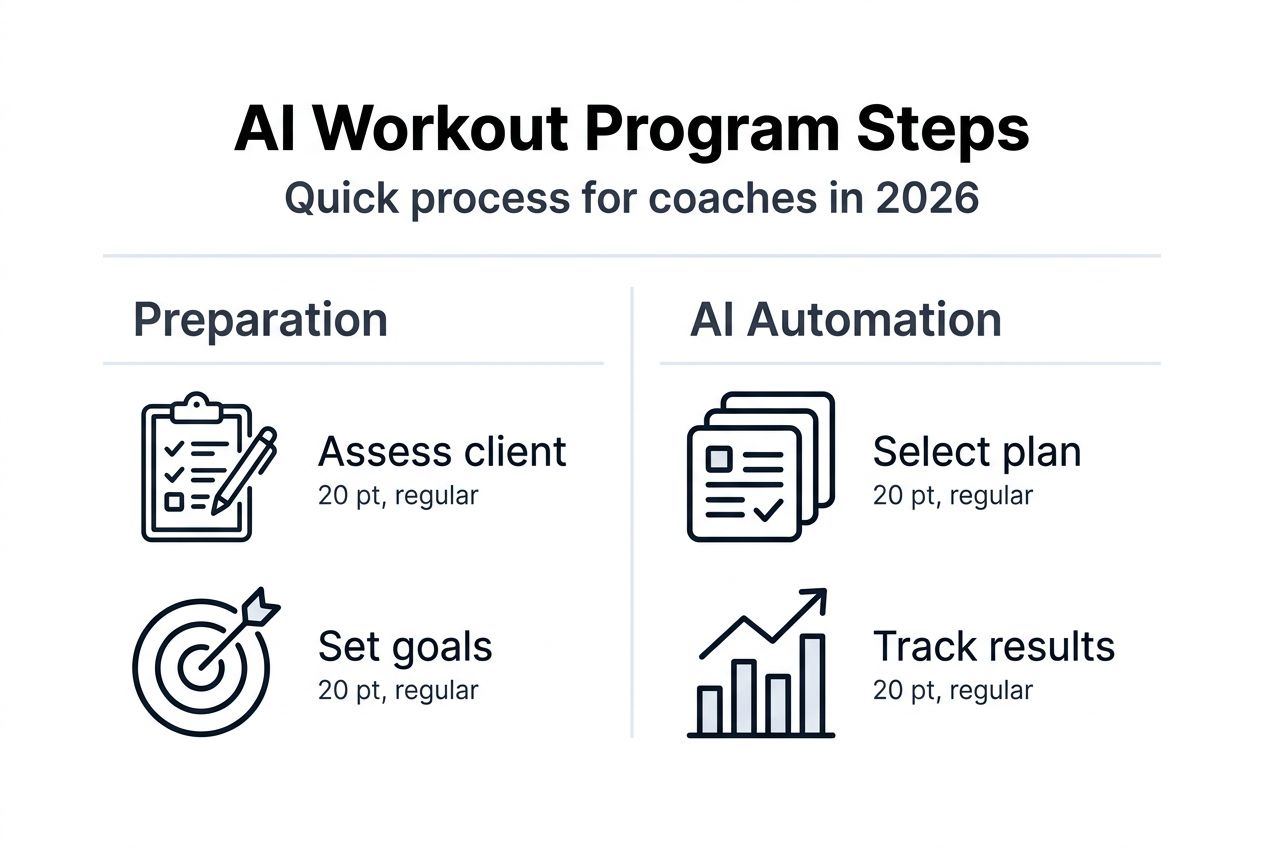
Linear periodization gradually increases intensity while decreasing volume over weeks or months. Undulating periodization varies intensity and volume within each week, providing more frequent recovery opportunities. Block periodization focuses on specific qualities (strength, power, endurance) in dedicated training blocks.
Phase durations typically range from 3 to 6 weeks before planned changes. This timeline allows sufficient adaptation stimulus without excessive monotony. Progression targets depend on training age, with beginners advancing faster than experienced lifters.
Structured workload variation prevents overtraining and injury. Strategic deload weeks every 4 to 6 weeks reduce accumulated fatigue while maintaining fitness. Including periodization improves long-term strength by 25% compared to non-periodized approaches.
Example progression for strength development might start with anatomical adaptation (weeks 1-3), move to hypertrophy focus (weeks 4-8), then shift to maximum strength (weeks 9-12), finishing with a power phase (weeks 13-15). Each phase builds on previous adaptations.
| Periodization Model | Characteristics | Best For | Typical Phase Length |
|---|---|---|---|
| Linear | Gradual intensity increase, volume decrease | Beginners, strength focus | 8-16 weeks |
| Undulating | Daily or weekly variation in intensity and volume | Intermediate lifters, variety seekers | 4-8 weeks per block |
| Block | Concentrated focus on single quality per block | Advanced athletes, specific goals | 3-6 weeks per block |
| Conjugate | Simultaneous development of multiple qualities | Powerlifters, experienced trainees | Ongoing rotation |
- Design mesocycles (4-6 weeks) with specific training emphases like strength, hypertrophy, or power.
- Plan microcycles (weekly) with appropriate volume and intensity distribution across training days.
- Include deload weeks every 4-6 weeks to manage fatigue and prevent overtraining.
- Progress load, volume, or intensity systematically based on client performance and recovery.
- Adjust progression rates for different lifts, recognizing upper body advances slower than lower body.
Periodization in workout programming structures your long-term training vision into actionable phases that keep clients progressing safely toward goals.
Step 5: Leverage AI tools to streamline program creation
AI platforms revolutionize workout programming efficiency. Traditional manual program design requires hours of exercise selection, set/rep scheme planning, and progression mapping. AI automates these tasks while maintaining personalization quality.
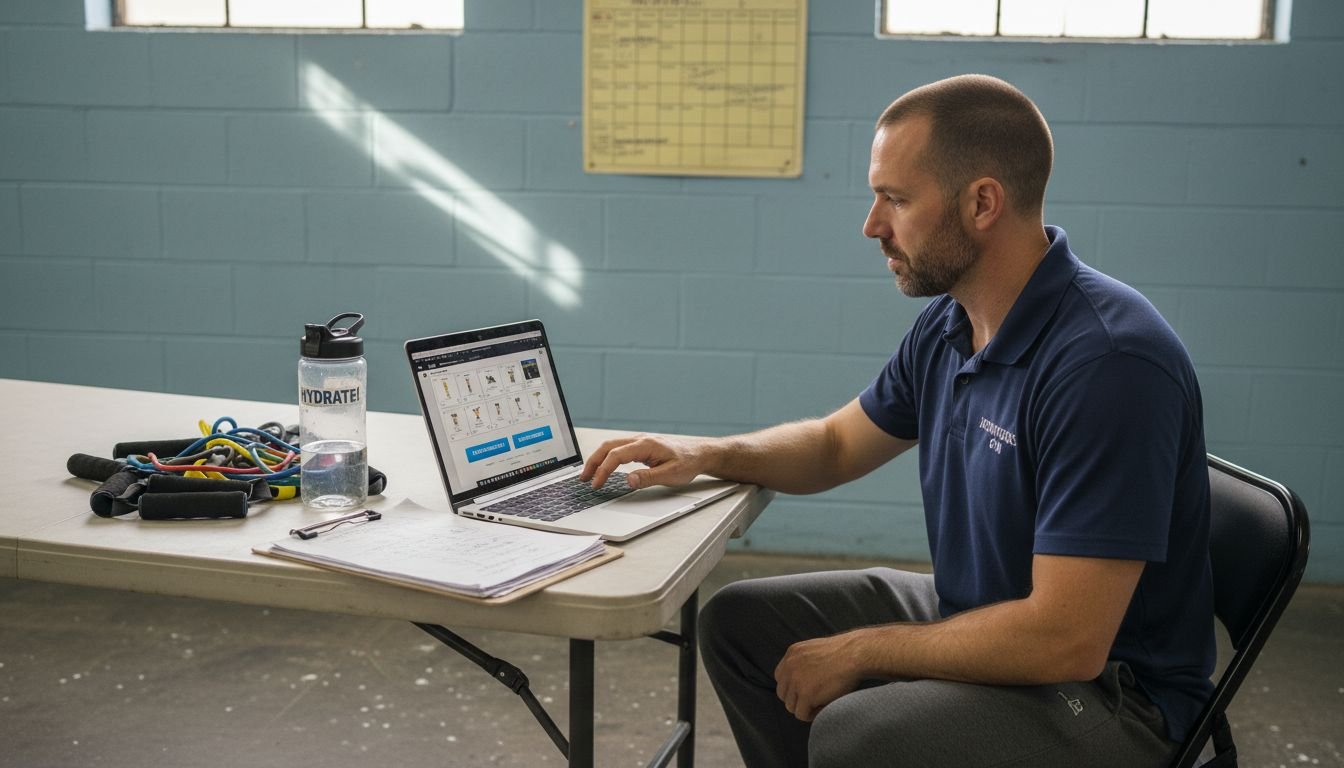
Modern AI analyzes your client data inputs instantly. Feed assessment results, goals, injury histories, and equipment access into the system, and receive complete, customized programs in minutes instead of hours. This automation saves trainers over 10 hours weekly on programming alone.
AI features include intelligent injury adaptations that suggest safe exercise alternatives automatically. Progressive overload automation adjusts weights, reps, and sets based on client performance data. Integration with communication tools lets you deliver programs, track workouts, and gather feedback within one platform.
The technology handles repetitive decision-making, freeing you to focus on relationship building and coaching nuance. AI suggests the exercises, you add the human insight about client motivation, preferences, and real-world constraints.
Embracing AI enhances rather than replaces your expertise. The combination of your professional knowledge and AI processing power creates superior outcomes. Clients receive deeply personalized programs faster, while you gain time for revenue-generating activities like coaching sessions and business development.
- Input comprehensive client data including assessments, goals, injuries, and preferences into AI platforms.
- Review AI-generated program suggestions, making adjustments based on your professional judgment.
- Use automated progression features that adjust training variables as clients advance.
- Access exercise modification suggestions when injuries or equipment changes require program updates.
- Integrate client communication and progress tracking within the same AI-powered system.
- Leverage saved time for client coaching, business growth, and professional development.
Pro Tip: Start with AI-generated program foundations, then add your personal coaching touches like motivational notes, technique cues, or specific recovery protocols. This hybrid approach maximizes efficiency while maintaining the personal connection clients value.
Explore AI workout builder features that transform raw client data into complete, professional programs instantly. The AI-powered workout builder guide shows exactly how to implement these tools for maximum impact. Learn strategies for getting 10x results from AI as a fitness professional through smart automation.
Step 6: Implement client communication and progress tracking
Program delivery is only half the equation. Consistent progress monitoring and communication keep clients engaged and programs optimized. Identify key metrics aligned with client goals: strength gains measured through weight lifted, endurance improvements via distance or time, and body composition changes through measurements or photos.
Integrated messaging features streamline feedback collection. Quick check-ins after workouts reveal how clients felt, whether prescribed loads were appropriate, and if modifications are needed. This real-time data informs immediate program adjustments.
Set regular update frequencies matching client needs and program phases. Weekly progress reviews work well for beginners requiring frequent guidance. Biweekly check-ins suit experienced clients who need less oversight. Monthly comprehensive reviews assess overall progress and adjust long-term programming.
Adapt programs based on tracked results and client feedback. If strength gains stall, reduce volume or add recovery. If clients report excessive soreness, dial back intensity. Responsive programming based on actual data prevents plateaus and overtraining.
Regular check-ins enhance adherence and satisfaction significantly. Clients who receive consistent communication feel supported and accountable. This relationship maintenance directly improves retention rates and referral generation.
- Track primary metrics like weight lifted, reps completed, workout duration, and perceived exertion.
- Monitor secondary indicators including sleep quality, energy levels, recovery status, and motivation.
- Use integrated platforms combining program delivery, workout logging, and trainer-client messaging.
- Schedule recurring check-ins matching client experience level and program intensity.
- Adjust training variables promptly based on performance data and subjective feedback.
- Celebrate milestones and progress wins to maintain client motivation and engagement.
Client progress tracking tools centralize workout delivery, performance logging, and communication in one accessible platform. This integration eliminates scattered spreadsheets and email chains while improving data visibility.
Common mistakes and how to avoid them
Even experienced trainers make programming errors that undermine results. Ignoring client-specific injury modifications causes unnecessary setbacks and erodes trust. Always prioritize safety over aggressive progression, using appropriate exercise alternatives.
Failing to set measurable goals creates directionless programming. Without concrete targets, you cannot design appropriate progression or evaluate effectiveness. Invest time upfront establishing clear SMART objectives.
Neglecting structured progression leads to client plateaus. Random workout variation without systematic overload fails to drive adaptation. Implement periodization principles even in simple programs.
Poor communication decreases client engagement rapidly. Infrequent check-ins make clients feel abandoned, reducing adherence and increasing dropout risk. Schedule regular touchpoints and respond promptly to questions.
Designing overly long workouts kills adherence. Busy clients cannot sustain 90-minute sessions consistently. Program efficient, focused workouts matching realistic time availability.
- Avoid cookie-cutter programs that ignore individual injury histories and movement limitations.
- Never skip goal-setting conversations assuming you know what clients want without asking.
- Resist random workout variation without underlying progressive structure.
- Don't let client communication gaps exceed one week during active training phases.
- Stop programming excessive volume that clients cannot complete consistently.
- Avoid rigid programming that cannot adapt when life disrupts client schedules.
Avoiding injury mistakes in programming requires systematic modification protocols and AI-assisted exercise substitution when needed.
Expected outcomes and success metrics
Realistic benchmarks help evaluate program effectiveness and client progress. Strength and endurance improvements of 20 to 25% over 8 to 12 weeks represent solid progress for most clients. Beginners often exceed these rates, while advanced trainees progress more gradually.
Adherence and retention rates should improve by 30% or more with personalized, AI-enhanced programming. Clients stick with programs they enjoy and see results from. Clear communication and responsive adjustments drive this improvement.
Client satisfaction increases measurably with personalized AI programming. Surveys and testimonials reflect appreciation for customized attention and professional program design. This satisfaction translates to referrals and long-term retention.
Injury recurrence drops approximately 40% with proper modification protocols. Safe exercise selection and progression prevent common training injuries while maintaining training effect. This protective approach builds client confidence.
Time savings for trainers exceed 10 hours weekly with AI automation. Reclaimed hours can expand client capacity, improve coaching quality, or enable business development activities. This efficiency gain directly impacts revenue potential.
| Success Metric | Target Outcome | Measurement Method | Typical Timeline |
|---|---|---|---|
| Strength gains | 20-25% improvement | Weight lifted, reps completed | 8-12 weeks |
| Endurance improvement | 15-20% increase | Distance, time, heart rate recovery | 8-12 weeks |
| Client adherence | 30%+ improvement | Workout completion rate | Ongoing |
| Retention rate | 30%+ increase | Client renewal percentage | Quarterly |
| Trainer time savings | 10+ hours weekly | Time tracking comparison | Immediate |
| Injury reduction | 40% decrease | Incident reporting | 6-12 months |
Streamline your workout program creation with TrainingPro
Implementing everything in this guide becomes effortless with the right platform. TrainingPro's AI workout builder transforms client data into personalized programs instantly, saving you over 10 hours weekly while delivering superior customization.
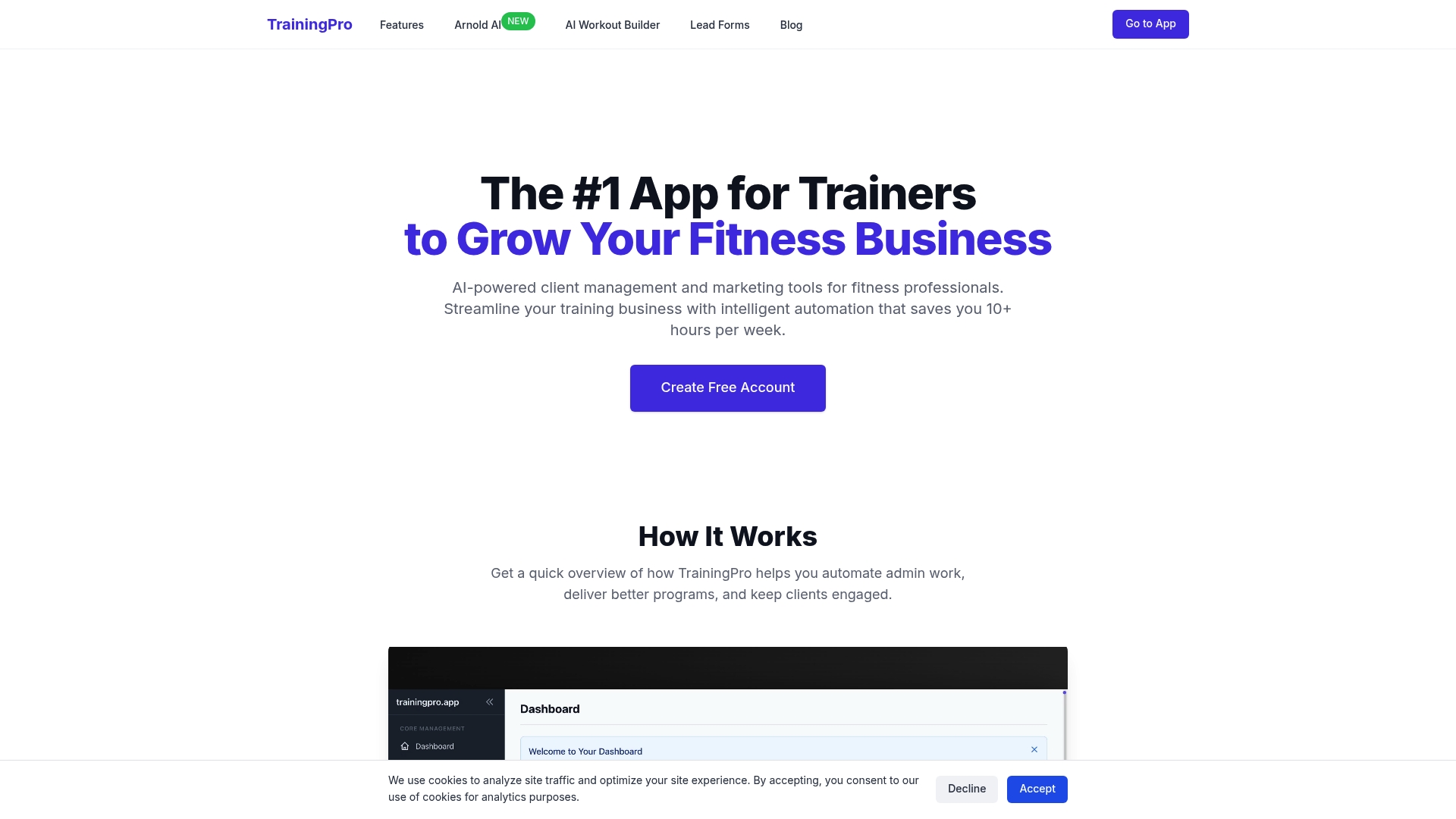
Access injury-adapted programs, automated progression, and integrated client communication in one powerful system. The AI-powered workout builder guide reveals exactly how top trainers leverage these tools to scale their businesses. Share workouts seamlessly through the client workout sharing app, eliminating friction and improving adherence. Stop spending hours on manual programming and start focusing on what you do best: coaching clients to amazing results.
Frequently asked questions
How long does it take to create a personalized workout program using AI tools?
AI tools reduce program creation time by over 70%, saving 10 to 12 hours per week for most trainers. What previously required extensive manual planning now happens in minutes. This efficiency lets you serve more clients or invest saved time in coaching quality and business growth.
What are the essential components to assess before designing a workout program?
Vital assessments include cardiovascular fitness, strength levels, mobility ranges, comprehensive injury history, and clearly defined client goals. Proper documentation of these components informs safe exercise selection and appropriate progression rates. Skipping thorough assessment increases injury risk and reduces program effectiveness significantly.
How can trainers effectively track client progress during a program?
Track key metrics like strength gains, endurance improvements, and body composition changes regularly using integrated digital tools. Use platform messaging features to maintain consistent client feedback loops about workout difficulty, recovery status, and motivation levels. Weekly data reviews let you adjust programs responsively based on actual performance rather than assumptions.
What common mistakes should be avoided in workout program creation?
Avoid neglecting injury modifications, setting unclear goals, ignoring structured progression, and maintaining weak client communication. Additionally, limit session length to match realistic client time availability rather than programming idealized lengthy workouts. These errors directly undermine adherence, safety, and results, damaging your professional reputation and client retention.
Recommended
- AI-Powered Workout Builder Guide | Transform Your Fitness Business | TrainingPro
- AI Workout Builder | TrainingPro | TrainingPro
- How to Get 10x Results from AI as a Fitness Professional | TrainingPro
- AI-Powered Program Modification: What to Do When Your Client Gets an Injury (and Needs a New Plan ASAP) | TrainingPro
Article generated by BabyLoveGrowth


