
Data analytics in fitness coaching: boost results in 2026

TL;DR:
- Combining expertise with structured data enhances client progress and retention.
- Data analytics helps coaches identify plateaus, personalize programs, and prevent injuries faster.
- Human judgment remains crucial for validating insights and making nuanced coaching decisions.
Most fitness coaches are skilled at reading a room, sensing when a client is struggling, and adjusting on the fly. That intuition matters. But relying on gut feel alone leaves real performance gains on the table. The coaches pulling ahead right now are the ones pairing their expertise with structured data. They know which clients are plateauing before it becomes a problem, which programs drive retention, and exactly where to adjust load or volume. This article walks you through what data analytics actually means for fitness professionals, how to apply it without drowning in numbers, and how to build a smarter, more profitable coaching practice.
Table of Contents
- What is data analytics in fitness?
- How analytics transforms coaching: Methods and models
- Unlocking client performance and engagement with analytics
- From data overload to actionable insights: Navigating common pitfalls
- Making data analytics work for your fitness business
- Why human insight still matters in a data-driven fitness world
- Ready to power your coaching business with analytics?
- Frequently asked questions
Key Takeaways
What is data analytics in fitness?
Data analytics in fitness is the process of collecting information about your clients, organizing it, and turning it into decisions you can act on. It is not just about having a spreadsheet of weights lifted. It is about connecting the dots between training load, recovery, nutrition, and progress to see patterns you would otherwise miss.
Common data sources coaches work with include:
- Wearables (heart rate monitors, sleep trackers, GPS devices)
- Workout logs (sets, reps, load, perceived effort)
- Nutrition apps (calorie intake, macronutrient splits)
- Progress photos and body composition scans
- Client feedback forms and mood check-ins
Raw data alone tells you very little. A client logging 3,000 calories daily is just a number. Analytics connects that number to their energy levels, training output, and body composition trend over eight weeks. That is where the insight lives.
This is especially true when you factor in custom training programs, where layering data onto personalized programming creates far more precise adjustments than guesswork ever could.
Sports analytics has proven this across disciplines. Even tennis analytics shows how granular data on movement patterns and shot selection transforms coaching decisions in ways intuition alone cannot replicate.
The science backs this up. Key methodologies include multi-modal data processing, predictive physiological modeling, and adaptive algorithms using machine learning models like Random Forest for performance prediction and feature importance analysis. In plain terms: modern analytics tools can weigh dozens of variables at once and surface the ones that actually move the needle for each client.
“The difference between a good coach and a great one is knowing which data points actually matter and acting on them before the client even notices a problem.”
How analytics transforms coaching: Methods and models
Understanding the definition is one thing. Seeing how analytics reshapes your day-to-day coaching is where it gets practical.
Two machine learning models show up frequently in fitness analytics platforms: Random Forest and XGBoost. Random Forest works by running many decision trees in parallel and averaging the results, which makes it reliable for predicting calorie expenditure or recovery readiness. XGBoost builds trees sequentially, each one correcting the errors of the last, making it strong for classification tasks like predicting whether a client will hit their goal or churn.
The numbers are compelling. Random Forest achieves a mean absolute error of 156.42 calories and an R² of 0.857 for calorie prediction, while XGBoost hits over 80% accuracy for net promoter score (client satisfaction) prediction.
Here is a simple workflow you can apply right now:
This is exactly the kind of workflow that AI-powered workout creation tools are built to support, and pairing them with solid workout tracking features closes the loop between data collection and program delivery.
Evidence-based models do not replace your coaching instinct. They sharpen it by showing you where to look first.
Unlocking client performance and engagement with analytics
Once you have the mechanics in place, the payoff shows up in client results and retention. Coaches using analytics consistently report faster plateau identification, more confident program adjustments, and stronger client relationships.
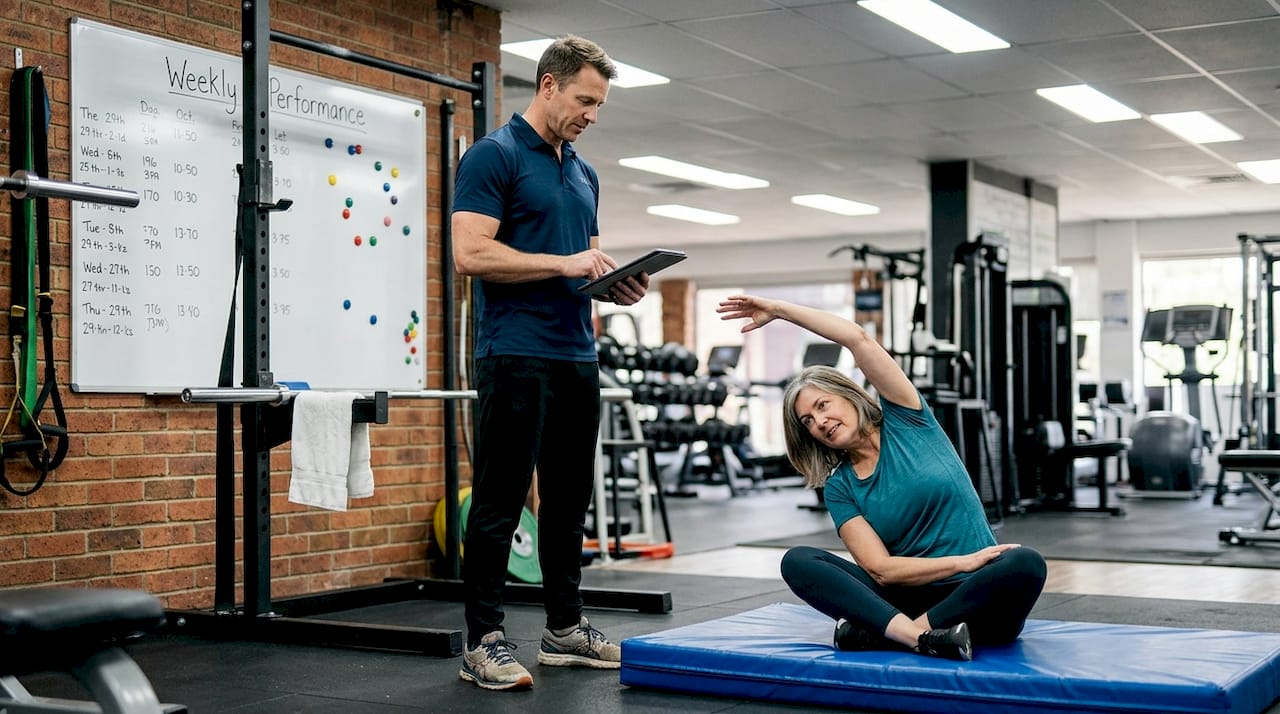
The benefits for you as a trainer are concrete:
- Spot plateaus early by tracking rolling averages in strength or endurance metrics
- Adapt plans faster using objective data rather than waiting for a client to voice frustration
- Improve retention by showing clients visible, quantified progress
- Reinforce accountability through data-backed check-ins that keep clients engaged between sessions
Analytics also plays a critical role in injury prevention. When biometric data flags unusual fatigue patterns or asymmetries in movement data, you have an early warning system. Program customization tips built around injury risk data let you adjust load before a problem becomes a setback, and having a clear injury program modification process ready means you respond faster when issues do arise.
For a broader look at how fitness apps comparison tools stack up in supporting these analytics workflows, it is worth reviewing what features actually matter for day-to-day coaching.
Pro Tip
Always validate AI-generated recommendations with your own professional judgment. Analytics shifts fitness from intuition to evidence-based, but success requires clean data and human validation for nuances like injury risk that algorithms can miss.
From data overload to actionable insights: Navigating common pitfalls
More data does not automatically mean better coaching. In fact, tracking too many metrics at once is one of the fastest ways to lose clarity and waste time. The goal is signal, not noise.
Common pitfalls coaches run into:
- Poor data hygiene: inconsistent logging, missing entries, or clients self-reporting inaccurately skew every analysis downstream
- Unverified algorithms: using a platform without understanding how its recommendations are generated can lead to misguided program changes
- Ignoring client feedback: quantitative data and qualitative feedback must work together; a client’s stress level or sleep quality often explains what the numbers cannot
- Chasing too many KPIs: tracking 20 metrics dilutes focus; three to five meaningful indicators are far more useful
- Treating analytics as a one-time setup: data analysis requires ongoing review and iteration, not a set-and-forget approach
Pro Tip
Start small. Pick two or three metrics that directly connect to your client’s primary goal. Master those before adding complexity. This is the core advice in resources like AI results tips for fitness professionals getting started with data-driven tools.
Context is everything. A drop in training output might look alarming in isolation. But if that client just started a new job, moved homes, or is managing a minor illness, the data needs to be read through that lens. Success requires clean data and avoiding over-reliance on AI without human validation for nuances like injury risk.
If you want a structured guide to getting more from AI tools in your practice, the AI workout guide is a practical starting point for building your analytics confidence step by step.
Making data analytics work for your fitness business
Knowing the pitfalls is half the battle. The other half is building a practical system that fits your current workflow without requiring a data science degree.
Here is a step-by-step approach to get started:
For coaches ready to move beyond basic tracking, the AI Workout Builder brings key methodologies like multi-modal data processing and adaptive algorithms into a practical, coach-friendly interface.
Supporting your programming with solid performance nutrition data adds another layer of precision, especially for clients with body composition or athletic performance goals.
Why human insight still matters in a data-driven fitness world
Here is something most analytics articles will not tell you: the coaches who get the best results from data are the ones who trust it least blindly.
That might sound counterintuitive, but think about it. An algorithm sees patterns across thousands of data points. It does not know that your client just went through a difficult personal situation, or that they are quietly dreading their next weigh-in. It cannot read the hesitation in their voice when they say they feel fine.
Elite coaches use analytics to scale their personalization, not to outsource their judgment. When the data says increase load but the client looks depleted in front of you, you adjust. That is not ignoring the data. That is using it correctly.
We have seen coaches make the mistake of trusting every algorithm output as gospel, only to miss an overtraining signal that a five-minute conversation would have caught. Analytics require human validation for nuances like injury risk, and that validation is your professional edge.
The data tells you where to look. Your expertise tells you what you are actually seeing. That combination, not one or the other, is what separates good coaching from exceptional coaching. For real examples of how this plays out, real-world injury pivots show exactly where human judgment caught what the data missed.
Lean on analytics. Never lean on them as a crutch.
Ready to power your coaching business with analytics?
If this article has shown you anything, it is that data analytics is not a luxury for elite sports scientists. It is a practical, accessible tool that any fitness professional can use to coach smarter, retain more clients, and grow a stronger business.
TrainingPro is built specifically for coaches who want to put these principles into action without the complexity. From the AI Workout Builder that applies adaptive programming to each client, to the free AI workout builder guide that walks you through getting started, every tool on the TrainingPro platform is designed to make analytics work for you, not the other way around. Start with one tool, one client, and one clear goal. 👇
Ready to Transform Your Fitness Business?
Join thousands of trainers using TrainingPro to automate admin, grow their client base, and focus on what they love—coaching.
Start your 14-day free trial • Cancel anytime
Frequently asked questions
Coaches should focus on training volume, client adherence, progress photos, and recovery metrics for the greatest effect on outcomes. Multi-modal data includes workout logs, physiological data, and behavioral trends that together give the clearest picture of client progress.
Yes, by identifying patterns in biometric and performance data, coaches can spot potential injury risks and adjust workouts proactively. That said, analytics require human validation for nuances like injury risk that algorithms alone cannot reliably catch.
Modern models like XGBoost and Random Forest are highly capable when fed clean data. Random Forest and XGBoost achieve an R² of 0.857 for calorie prediction and over 80% accuracy for client satisfaction forecasting respectively.
The most common pitfall is relying solely on AI without considering context or validating results with professional judgment. Over-reliance on AI without human validation is the single biggest risk to getting real value from analytics tools.
Recommended
- Business growth strategies for trainers in 2026 | TrainingPro
- Why track fitness progress: boost client engagement | TrainingPro
- Top 6 fitness business models to boost growth in 2026 | TrainingPro
- Fitness program customization: boost client results in 2026 | TrainingPro
- Predictive analytics in fantasy sports: smarter strategies


