
Top 6 fitness business models to boost growth in 2026

TL;DR:
- The ideal fitness business model aligns with your strengths, target clients, and automation tools.
- Hybrid, boutique, and niche models, leveraging SaaS automation, show high margins and client retention.
- Testing small-scale implementations and using AI-driven automation are key to sustainable growth in 2026.
Picking the wrong fitness business model costs you more than revenue. It costs you time, client trust, and the operational momentum you need to scale. With SaaS platforms and AI automation reshaping how trainers deliver and manage services, the gap between profitable and struggling fitness businesses is widening fast. The right model aligns your strengths, your target clients, and your tech stack. This guide breaks down the top fitness business models for 2026, compares their margins and automation potential, and gives you a clear framework to choose the one that fits your goals.
Table of Contents
- How to evaluate fitness business models
- 1. Gym membership and 24-hour access models
- 2. Boutique studios and specialized concepts
- 3. Hybrid and digital-first fitness models
- 4. Niche and corporate wellness business models
- Head-to-head comparison for 2026
- Our perspective: Where the real fitness gains happen in business models
- Level up your fitness business with automated solutions
- Frequently asked questions
Key Takeaways
How to evaluate fitness business models
Before you commit to a model, you need a clear evaluation framework. Jumping into a boutique studio concept because it looks profitable, or copying a competitor’s membership structure, rarely leads to sustainable growth. Smart model selection starts with honest self-assessment and market awareness.
Here are the core criteria to evaluate any fitness business model:
- Your client base: Are you serving general fitness clients, a niche demographic, corporate teams, or a digital-first audience? Each requires a different delivery structure.
- Cost structure: Weigh your startup and ongoing costs against the recurring revenue potential. Some models need heavy upfront investment; others scale lean.
- Engagement channels: Consider how you’ll keep clients connected, whether through in-person sessions, app-based coaching, or community platforms.
- Automation readiness: SaaS solutions can streamline operations, enhance retention, and enable scalable engagement. The more automation-friendly your model, the more efficiently you can grow.
- Revenue predictability: Recurring revenue models reduce financial stress. One-off session models require constant lead generation.
According to expert research, the most resilient fitness businesses in 2026 are those combining strong community with digital infrastructure. You can also explore optimizing fitness operations with software and AI tools to see how automation fits your current setup.
Pro Tip
Don’t overcommit to one model before testing it. Start with a hybrid or niche approach on a small client group, measure retention and revenue, then scale what works.
1. Gym membership and 24-hour access models
With evaluation criteria in mind, let’s look at foundational models using automation for predictable results.
The gym membership model is built on recurring fees for facility access, often with tiered options that match different client needs and budgets. It’s the most established structure in the industry and generates predictable monthly cash flow.
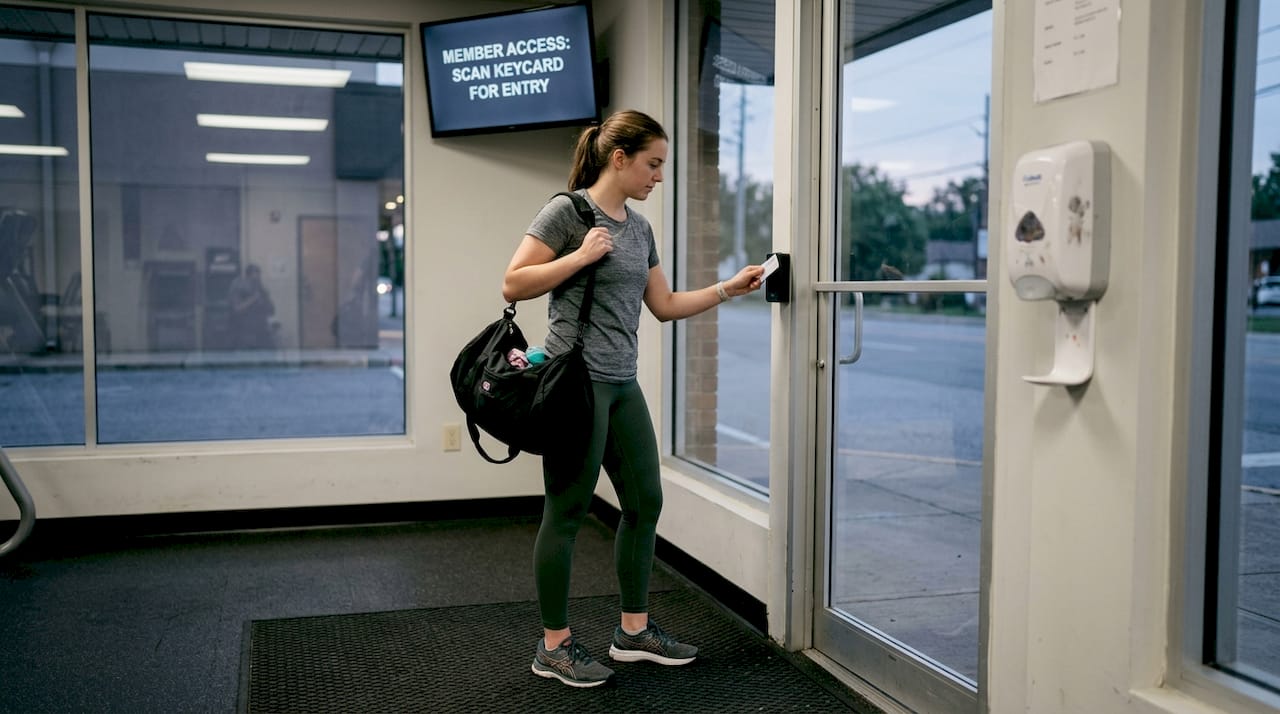
24-hour access gyms take this further by removing staffing from the equation. Automated entry systems, keycard or app-based access, and self-service check-ins keep overhead low. NOX Gym is a strong example of how unmanned access models can operate efficiently at scale.
Pros and cons at a glance:
- Predictable monthly revenue and broad market reach
- Lower engagement risk with tiered digital add-ons
- Higher setup and facility costs
- Retention challenges without active programming
For trainers exploring in-person vs hybrid trends, the membership model works best when paired with digital touchpoints that keep clients engaged between visits.
Pro Tip
Add tiered digital add-ons like app-based workout plans or virtual check-ins to increase perceived value and reduce churn without adding significant overhead.
2. Boutique studios and specialized concepts
Next, explore how niche and boutique studios take the personalized approach to another level.
Boutique fitness studios specialize in one discipline, whether HIIT, yoga, cycling, or Pilates, and build premium experiences around it. The focus creates strong brand identity and community loyalty that traditional gyms struggle to replicate.
Pricing typically runs $30 to $40 per class, and margins can reach 20 to 50% when the community and programming are strong. Pilates as a specialized niche is a great example of how rehabilitation-adjacent fitness concepts attract loyal, high-value clients.
“Boutique studios achieve 20 to 50% margins but require relentless community-building and consistent brand delivery to sustain them.”
Scheduling SaaS and community apps are essential here. They handle class bookings, waitlists, and client communications automatically, freeing you to focus on programming and client experience. Browse personal training business ideas and niche studio concepts for inspiration on building a specialized offering.
3. Hybrid and digital-first fitness models
After boutique models, let’s examine hybrid and digital-first innovations driving 2026’s growth.
The hybrid model combines in-person sessions with online coaching, streamed classes, and app-based programming. It’s the most SaaS-compatible structure available, and it dramatically improves client lifetime value by increasing touchpoints.
Digital bundling, pairing in-person sessions with app access and virtual check-ins, boosts retention rates by up to 30%. That’s a significant lift when you consider the cost of acquiring new clients versus keeping existing ones.
How to roll out a hybrid model:
- Select a SaaS platform that supports both in-person scheduling and digital program delivery.
- Package your offers clearly: in-person only, digital only, or combined access.
- Communicate the value of each tier to clients using automated email or app notifications.
- Use AI scheduling to personalize client programs and automate follow-up communication.
- Track engagement metrics monthly and adjust your packages based on what clients actually use.
The hybrid personal training guide walks through this in more detail. For trainers already using tech, fitness automation strategies can help you layer automation onto your existing workflow without rebuilding from scratch.
Pro Tip
Use AI-powered scheduling and program automation to personalize each client’s experience at scale. This is where hybrid models outperform every other structure in terms of efficiency.
4. Niche and corporate wellness business models
Finally, review models that target underserved demographics and corporate partnerships for long-term revenue.
Corporate wellness and niche models focus on specific populations, such as seniors, women, post-rehab clients, or businesses seeking employee wellness programs. These models generate steady, lower-churn revenue because the relationships are contract-based and the client need is ongoing.
B2B corporate wellness contracts are especially attractive. Companies pay for employee access to fitness programming, and SaaS platforms make it easy to manage contracts, track health outcomes, and report results to HR teams. Personalized physiotherapy approaches show how outcome-focused programming builds long-term client relationships in adjacent wellness markets.
“Niche and B2B wellness models offer some of the most sustainable revenue in fitness because you’re solving a specific, ongoing problem for a defined audience that keeps coming back.”
Key advantages of niche and corporate models:
- Lower client churn due to contract structures and specialized programming
- Easier to position as a premium, outcome-focused service
- SaaS tools simplify outcome reporting and relationship management
- Stable monthly revenue that doesn’t rely on constant new client acquisition
If you’re considering this direction, niche market strategies offers a practical starting point for identifying your ideal demographic and building a targeted offer.
Head-to-head comparison for 2026
Now that each model is detailed, see how they rank against each other for 2026.
Key takeaways by trainer profile:
- New trainers: Start with a niche or hybrid model. Low overhead, high flexibility, and strong automation support.
- Established trainers: Boutique or corporate wellness models offer the best margin and retention combination.
- Operators with facilities: Traditional or 24-hour access models with digital add-ons maximize asset utilization.
- SaaS-first trainers: Hybrid and digital-first models are built for your workflow and scale fastest with automation.
The right model isn’t the most popular one. It’s the one that fits your resources, your clients, and your capacity to deliver consistently.
Our perspective: Where the real fitness gains happen in business models
With all the frameworks on the table, here’s the perspective that cuts through the noise.
High margins look great on paper. But a boutique studio running at 45% margin with declining class attendance is a business in trouble. The models that consistently outperform aren’t always the ones with the best numbers on day one. They’re the ones built around genuine client relationships and supported by smart technology.
Most trainers underestimate how much SaaS amplifies what’s already working. It won’t fix a poor client experience or a misaligned offer. But when your programming is strong and your clients are engaged, automation multiplies that impact across every touchpoint.
The hybrid model and niche models consistently outperform because they’re adaptable. They let you meet clients where they are, adjust programming based on real data, and build loyalty that doesn’t depend on proximity or convenience.
Our honest advice: pilot your chosen model with a small client group, measure retention and revenue at 90 days, and iterate before scaling. The trainers who grow fastest in 2026 aren’t the ones who picked the trendiest model. They’re the ones who tested, learned, and adapted quickly.
Pro Tip
Set a 90-day review cycle for any new model you launch. Measure client retention, session frequency, and revenue per client. Then adjust one variable at a time.
Level up your fitness business with automated solutions
Ready to put these business model insights into action? The right SaaS platform makes the difference between a model that looks good on paper and one that actually delivers.
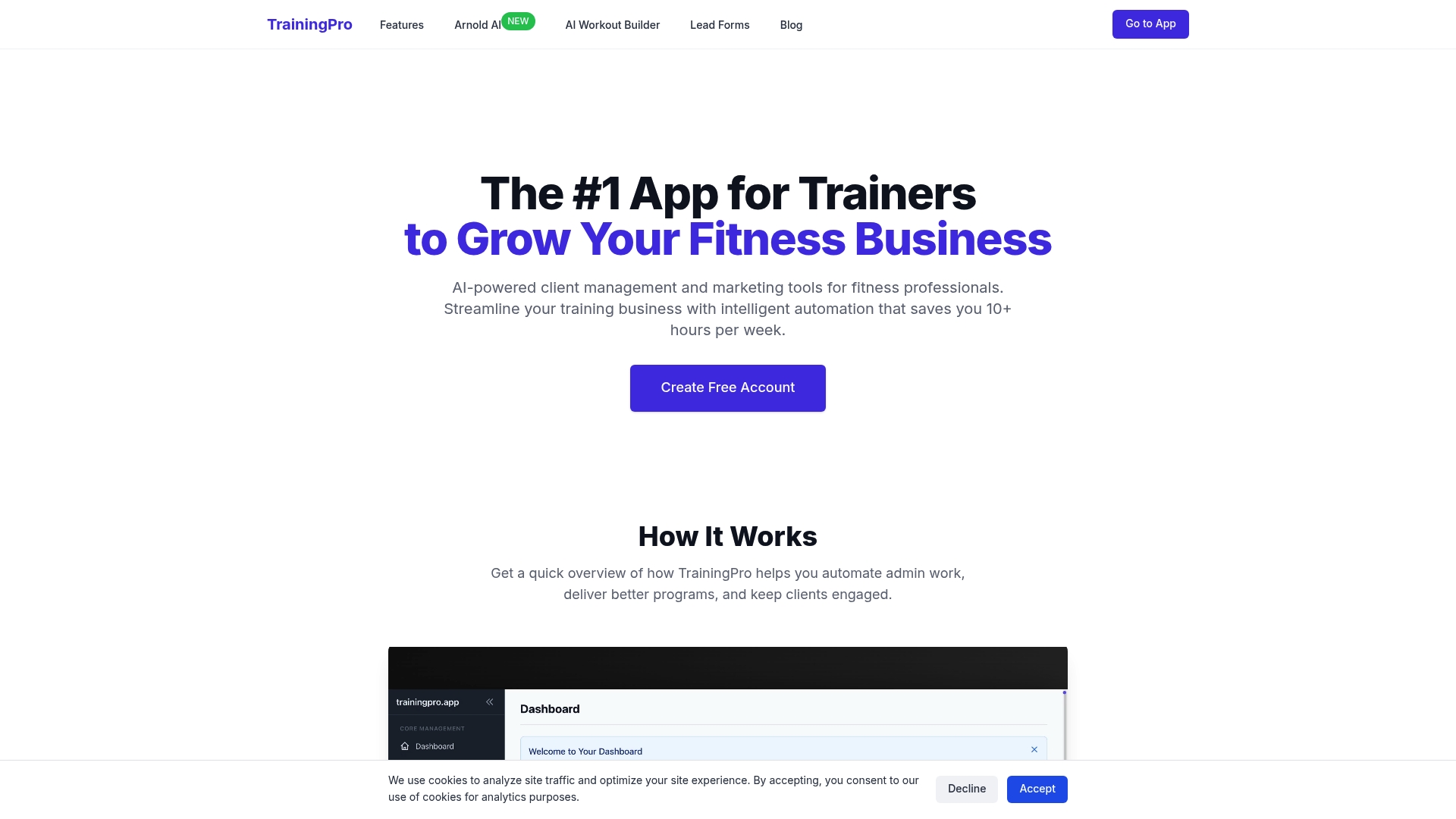
TrainingPro is built specifically for fitness professionals who want to automate memberships, build hybrid experiences, and keep clients engaged without burning extra hours. From the AI-powered workout builder to full client management tools, TrainingPro gives you the infrastructure to run any of these models efficiently. Download the AI eBook for business transformation to see exactly how AI and automation can be layered into your chosen model for real, measurable growth in 2026.
Frequently asked questions
Boutique studios and personal training models yield the highest margins, ranging from 20% up to 50%, thanks to premium pricing and strong client retention built around specialized programming.
A hybrid model blends in-person sessions with digital coaching, letting clients join workouts both online and onsite while SaaS automation handles scheduling, communication, and program delivery.
SaaS solutions automate scheduling, membership management, and client communications, allowing trainers to scale efficiently while maintaining personalized service across a larger client base.
24-hour access gyms offer steady, predictable income with higher setup costs but typically deliver lower margins and weaker client engagement than boutique studios focused on community and specialized programming.
By specializing in a specific demographic or B2B need and using SaaS for outcome tracking, trainers can grow stable revenues through targeted programming, long-term contracts, and consistent client results.
Recommended
- Scale your fitness business with automation in 2026 | TrainingPro
- Business tools every trainer needs for growth in 2026 | TrainingPro
- 20 Personal Training Business Ideas for 2026 | TrainingPro
- Business growth strategies for trainers in 2026 | TrainingPro
- Social media strategy tips to boost engagement in 2026
Ready to Transform Your Fitness Business?
Join thousands of trainers using TrainingPro to automate admin, grow their client base, and focus on what they love—coaching.
Start your 14-day free trial • Cancel anytime


