
Why use custom training programs: boost client results
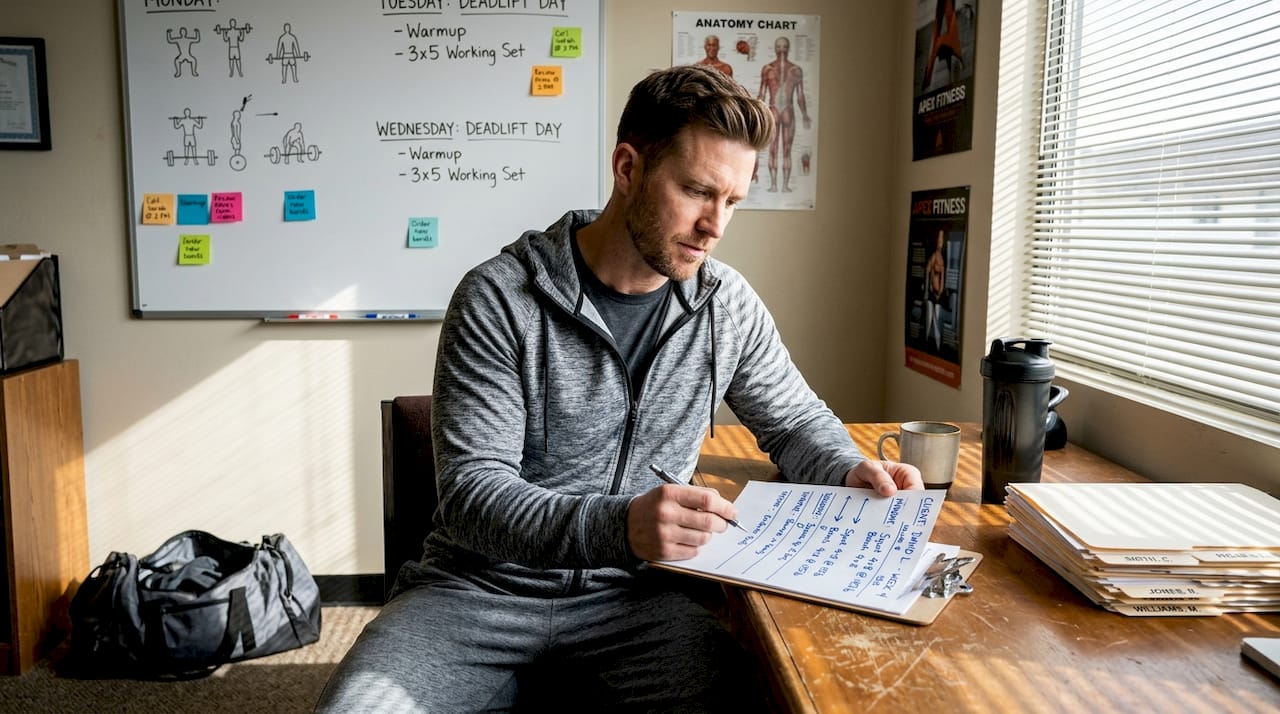
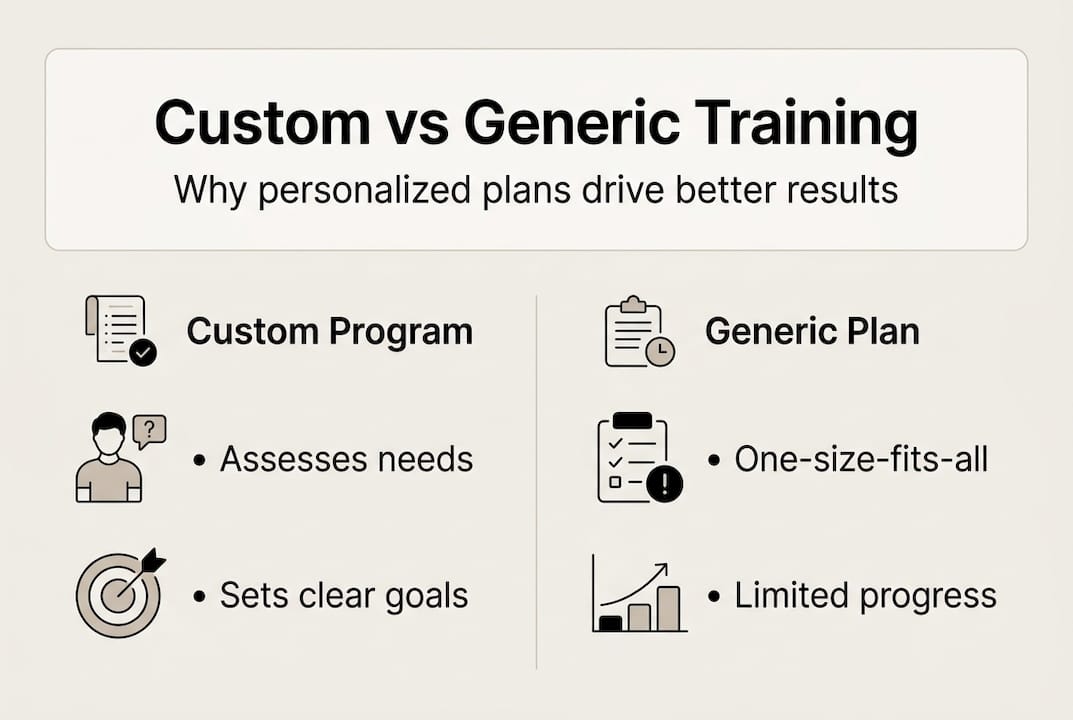
Most trainers believe a solid template workout plan serves their clients well. Yet customized training programs deliver better results by accounting for individual injury history, lifestyle demands, and biomechanics. Generic plans often lead to plateaus, frustration, and preventable injuries. AI-driven tools now enable fitness professionals to create truly personalized programs at scale, combining data-driven precision with expert coaching judgment. This guide explores why custom training programs outperform generic approaches, how AI enhances personalization, and practical steps to implement these strategies in your business.
Table of Contents
- Why Customized Training Programs Outperform Generic Plans
- How Ai And Technology Enhance Personalized Program Design
- Challenges, Limitations, And The Role Of Human Oversight In Custom Training
- Practical Steps To Implement Effective Custom Training Programs
- Elevate Your Client Programs With Trainingpro
- Frequently Asked Questions
Key takeaways
Why customized training programs outperform generic plans
Generic workout templates create a false sense of efficiency. Trainers copy-paste the same split routine or periodization scheme across dozens of clients, assuming similarities in age or goals justify identical programming. This approach ignores critical individual factors like previous injuries, movement limitations, recovery capacity, and daily stress levels. The result? Clients hit plateaus within weeks, develop compensatory movement patterns, or sustain avoidable injuries that derail progress entirely.
Customized training programs deliver better results because they account for the variables that actually determine training response. A 45-year-old desk worker recovering from a shoulder impingement requires vastly different exercise selection, loading parameters, and progression timelines than a 28-year-old athlete preparing for competition. Generic plans cannot address these distinctions meaningfully. Research shows 78% of home exercisers prefer customizable plans, revealing strong client demand for individualization that generic templates fail to satisfy.
Effective customization considers multiple layers:
- Injury history and current pain or limitations
- Lifestyle factors including sleep quality, work demands, and stress levels
- Specific performance or physique goals with realistic timelines
- Biomechanical assessments revealing movement compensations or asymmetries
- Training age and previous exercise experience
These factors interact in complex ways. A client with chronic low back pain may need modified hip hinge patterns, core stability work, and careful load management that a template squat program would exacerbate. Customization allows you to program around limitations while still driving progress toward goals. This targeted approach improves adherence because clients experience fewer setbacks and see consistent results that validate their investment.
Pro Tip
When assessing new clients, document specific risk factors like joint pain, previous injuries, or movement restrictions. Use this information to create exclusion lists for exercises that could aggravate existing issues, then build programs around safe, effective alternatives.
The efficiency gains from customization compound over time. Clients waste less effort on exercises poorly suited to their needs and spend more time on movements that directly address their limitations and goals. This focused approach accelerates progress while reducing injury risk, creating a virtuous cycle of improved results and sustained motivation. For a detailed framework on building personalized training program creation guide, explore proven assessment and programming strategies.

How AI and technology enhance personalized program design
Artificial intelligence transforms custom programming from a time-intensive manual process into a scalable, data-driven system. Traditional personalization required trainers to spend hours analyzing client information, cross-referencing exercise databases, and manually adjusting variables for each individual. AI-powered platforms now complete these tasks in seconds while integrating real-time biometric data and performance feedback that humans cannot process at scale.
Modern AI systems leverage multiple data streams to optimize programming decisions. How personal trainers build custom programs with AI reveals inference times under 0.8 milliseconds, enabling instant program adjustments based on heart rate variability, bar velocity metrics, and rate of perceived exertion. These biomarkers provide objective measures of recovery status, fatigue accumulation, and training readiness that guide daily workout modifications.
Key metrics AI systems analyze include:
- Heart rate variability (HRV) indicating autonomic nervous system recovery
- Bar velocity and power output revealing neuromuscular fatigue
- Rate of perceived exertion (RPE) capturing subjective training stress
- Sleep quality and duration affecting recovery capacity
- Training volume and intensity trends over weekly and monthly cycles
Machine learning models identify patterns in this data that predict optimal training responses. If a client’s HRV drops significantly after a high-volume week, the AI can automatically reduce intensity or prescribe additional recovery work. When bar velocity remains high across sets, the system may increase load to maintain progressive overload. These micro-adjustments happen continuously, creating truly dynamic programs that adapt to each client’s current state.
The technical process follows a stepwise approach:
- Initial assessment captures client goals, limitations, training history, and baseline performance data
- AI generates a foundational program structure based on evidence-based programming principles and individual factors
- Ongoing measurement tracks performance metrics, biofeedback, and adherence patterns during each workout
- Adaptation algorithms modify future sessions based on accumulated data and predicted training response
This cycle repeats continuously, refining programming decisions with each data point. The system learns which exercises, rep ranges, and intensities produce optimal responses for each individual. Over time, the AI develops increasingly accurate predictions of how clients will respond to specific training stimuli.
Pro Tip
While AI excels at processing objective data, combine algorithmic recommendations with your coaching intuition and client communication. Technology handles the analytical heavy lifting, but your expertise in reading client motivation, addressing fears, and providing encouragement remains irreplaceable.
For trainers looking to implement these capabilities, exploring resources on creating workout programs with AI provides practical guidance. Additionally, building comprehensive AI-powered exercise libraries ensures your programming system has access to diverse movement options that match client needs and preferences.
Challenges, limitations, and the role of human oversight in custom training
AI-driven customization offers powerful capabilities but carries significant limitations that trainers must understand and mitigate. The technology operates only as effectively as the data it receives and the algorithms that process that information. Incomplete client assessments, biased training data, or flawed model assumptions can produce unsafe or ineffective programming recommendations that harm rather than help clients.
One critical limitation involves safety and context awareness. AI systems occasionally suggest exercises inappropriate for clients with specific injuries or movement restrictions because the algorithms lack complete understanding of biomechanical nuances. A client with anterior shoulder instability might receive overhead pressing variations that exacerbate the condition if the AI doesn’t properly weight injury history in its decision-making process. AI-generated vs certified trainer programming study demonstrates that AI lacks the human insight needed for complex cases involving comorbidities, requiring hybrid models that combine trainer expertise with algorithmic efficiency.
Many platforms claiming to offer personalized training actually deliver static templates with superficial customization. These systems ask a few screening questions, then slot clients into predetermined program categories based on broad classifications like beginner, intermediate, or advanced. True personalization requires ongoing assessment and program modification based on individual response patterns, not one-time questionnaires feeding into rigid templates. This distinction matters because static plans fail to adapt as client needs evolve, leading to the same plateaus and injuries that generic programs cause.
Human trainers excel in areas where AI currently struggles:
- Interpreting complex client situations involving multiple injuries or health conditions
- Reading non-verbal cues and emotional states that affect training readiness
- Providing motivation, accountability, and behavior change support
- Making judgment calls when data conflicts or presents ambiguous signals
- Educating clients on movement quality and technique refinement
Research on autoregulation in training programs reveals limited implementation in published studies, suggesting significant room for improvement in adaptive programming approaches. Most AI systems still rely heavily on predetermined periodization schemes with modest adjustments rather than truly responsive, day-to-day modifications based on comprehensive biofeedback.
Pro Tip
Use AI to handle the scalable, data-intensive aspects of program design like exercise selection, volume calculations, and progression timelines. Reserve your expertise for complex decision-making, safety validation, client communication, and the coaching nuances that build trust and drive long-term adherence.
The optimal approach combines AI efficiency with human oversight through a hybrid model. Technology generates initial program recommendations, tracks client data, and suggests modifications based on performance patterns. Trainers review these recommendations, validate safety and appropriateness, make adjustments based on qualitative factors the AI cannot assess, and deliver the coaching support that transforms programs into results. For practical implementation strategies, review this hybrid personal training guide and explore best practices for AI program modification injury guide.
Practical steps to implement effective custom training programs
Building truly personalized training programs requires a systematic approach that balances comprehensive assessment, intelligent tool selection, and ongoing program refinement. The following framework provides actionable steps for fitness professionals ready to elevate their programming beyond generic templates.
Start with thorough client assessment that captures both objective and subjective information. Conduct movement screens to identify limitations, asymmetries, or compensatory patterns. Document injury history with specific details about affected tissues, pain patterns, and activities that aggravate symptoms. Assess current fitness levels across relevant domains like strength, cardiovascular capacity, mobility, and body composition. Most importantly, establish clear, measurable goals with realistic timelines that account for client lifestyle factors and training availability.
Leverage AI-powered software to accelerate program creation and modification. Modern platforms can generate comprehensive training programs in minutes based on assessment data, then continuously adjust variables as clients progress. This technology handles the computational complexity of balancing volume, intensity, frequency, and exercise selection across multiple training cycles. The time savings allow you to manage larger client rosters without sacrificing personalization quality.
Implement evidence-based programming principles tailored to individual needs:
- Progressive overload through systematic increases in load, volume, or density
- Periodization structures that vary training stress and allow for adaptation
- Exercise selection matching client goals, preferences, and movement capabilities
- Recovery management based on training age, lifestyle stress, and biofeedback
Track client progress through multiple metrics beyond just weight on the bar or scale. Monitor performance indicators like bar velocity, training volume, and workout completion rates. Collect subjective feedback on energy levels, muscle soreness, and perceived difficulty. Use this information to validate that your programming decisions produce intended adaptations and make course corrections when progress stalls.
The implementation process follows these steps:
- Complete comprehensive initial assessment covering movement, fitness, history, and goals
- Input assessment data into AI-powered program design software
- Review and refine AI-generated program recommendations based on your coaching expertise
- Deliver program to client with clear instructions and education on the training rationale
- Monitor adherence and performance data throughout the training cycle
- Adjust program variables based on client response and feedback
- Reassess at regular intervals to measure progress and update programming direction
Pro Tip
Educate clients on why their program includes specific exercises, rep ranges, and progression schemes. Understanding the rationale behind programming decisions improves adherence because clients trust the process even when workouts feel challenging or progress seems slow.
Empirical research confirms the effectiveness of this hybrid approach. Effects of personalized fitness programs on outcomes demonstrates 15-23% performance gains with hybrid AI-human training programs, validating the combination of technology efficiency and expert coaching judgment. The study endorses autoregulation and continuous progress tracking as essential components of effective personalization.
For trainers ready to implement these strategies, explore the AI Workout Builder for hands-on experience with intelligent program design. The comprehensive AI workout builder guide provides detailed implementation frameworks. As your programming capabilities improve, consider broader business growth strategies for trainers to scale your impact while maintaining personalization quality.
Elevate your client programs with TrainingPro
TrainingPro combines AI-powered automation with professional coaching tools to help you deliver truly customized training programs at scale. The platform’s intelligent workout builder generates personalized programs in minutes, considering client injuries, goals, training history, and preferences. Arnold AI assists with dynamic program modifications based on client feedback and progress data, while integrated tracking systems monitor adherence and performance metrics automatically.
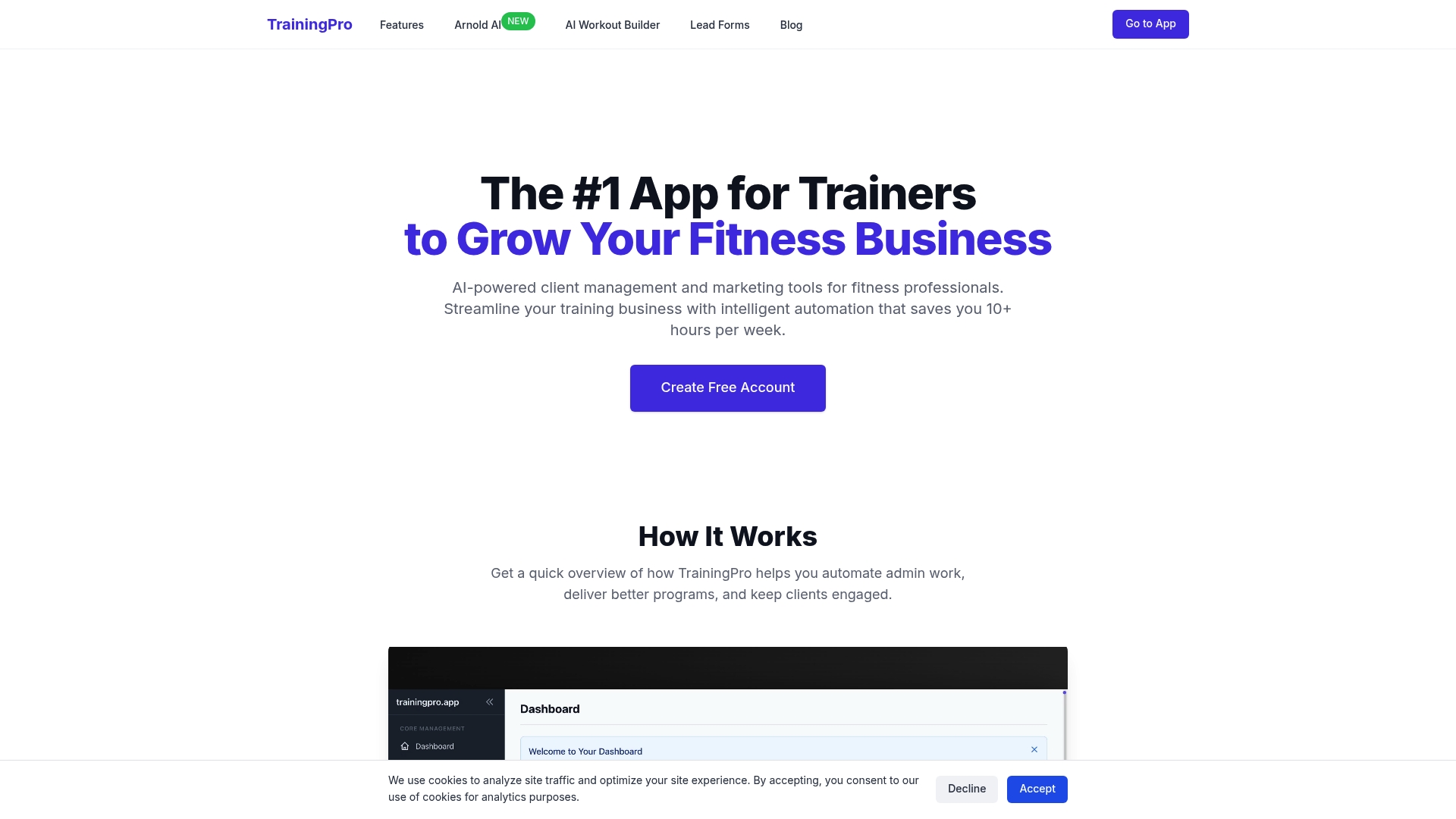
The platform streamlines your entire programming workflow from initial assessment through ongoing adjustments. Manage multiple clients efficiently without sacrificing personalization quality. Access comprehensive exercise libraries with video demonstrations, create branded client experiences, and automate routine communications to focus your time on high-value coaching interactions. Combine AI efficiency with your expertise to maximize client success and grow your training business. Explore the AI Workout Builder to experience intelligent program design firsthand, review the detailed AI workout builder guide for implementation strategies, or discover how Arnold AI Assistant training tool can transform your programming capabilities.
Frequently asked questions
Custom programs address individual factors like injury history, movement limitations, lifestyle demands, and specific goals that generic templates ignore. This individualization improves adherence because clients experience fewer setbacks and see consistent progress. Research confirms customized approaches reduce injury risk while accelerating results compared to one-size-fits-all programming.
AI excels at processing data and generating program recommendations efficiently but lacks the nuanced judgment needed for complex client situations. Technology cannot read emotional states, provide motivation, or make safety calls when information conflicts. Hybrid models combining AI efficiency with trainer expertise deliver superior outcomes by leveraging the strengths of both approaches.
Begin with comprehensive assessments covering movement quality, fitness levels, injury history, and clear goal setting. Use AI-powered software to accelerate program generation while maintaining quality personalization. Track multiple progress metrics and adjust programming based on client response patterns. For detailed frameworks, explore this personalized training program creation guide with proven strategies.
Overreliance on AI without human validation can produce unsafe exercise recommendations for clients with complex injury histories or comorbidities. Incomplete assessment data limits AI effectiveness because algorithms cannot personalize around information they don’t receive. Engagement bias occurs when systems optimize for client preferences rather than actual training needs. Always review AI recommendations through your coaching expertise lens and explore AI program modification injury guide for safety best practices.
Recommended
- Training program creation: personalized approach guide | TrainingPro
- How to create workout programs fast using AI in 2026 | TrainingPro
- Ask Your Trainer to Share Workouts in TrainingPro | TrainingPro
- Personal training checklist 2026: streamline success | TrainingPro
- GolfForever Swing Trainer Plus Review: Strength, Mobility & Pro Workou – Aiming Fluid Golf
Ready to Transform Your Fitness Business?
Join thousands of trainers using TrainingPro to automate admin, grow their client base, and focus on what they love—coaching.
Start your 14-day free trial • Cancel anytime


