
Email marketing for fitness coaches: boost engagement & retention
TL;DR
Automated email marketing is essential for fitness coaches to improve client retention by delivering timely, personalized, and relevant content. It overcomes the limitations of social media by establishing direct, scalable communication channels that address accountability, information gaps, and busy lifestyles. Using the right tools, segmentation, and engaging content, coaches can build systems that nurture relationships and drive ongoing loyalty.
Client drop-off is one of the most frustrating challenges you face as a fitness coach. A client starts strong, then gradually goes quiet, misses sessions, and eventually disappears. The truth is, motivation fades for almost everyone, and if you’re relying on in-person contact alone to keep clients engaged, you’re leaving a major gap in your retention strategy. Automated email marketing fills that gap by delivering timely, relevant touchpoints that keep your clients connected to their goals and loyal to your coaching, even on the days they’re not in the gym.
Key Takeaways
Why email marketing matters for fitness coaches
Let’s be direct: social media is noisy, unpredictable, and algorithm-driven. Your posts may reach 10% of your followers on a good day. Email, on the other hand, lands directly in your client’s inbox, giving you a reliable channel to nurture relationships and deliver real value.
Automated email marketing addresses the core reasons clients disengage:
- Lack of accountability: A well-timed check-in email reminds clients why they started.
- Feeling forgotten: Regular communication signals that you’re invested in their progress.
- Information gaps: Educational content keeps clients engaged between sessions.
- Life getting busy: Automated reminders reduce the friction of staying consistent.
“Providing suggestions for relevant and engaging content to include in retention strategies is one of the most practical ways to keep clients motivated long after the initial excitement wears off.”
Email also outperforms social media for client nurturing because it’s personal. You can send a client a message that speaks directly to their goal, their stage in training, or even their birthday. That level of personalization is simply not scalable on Instagram or Facebook without significant manual effort.
When you combine strong client management tips with an automated email strategy, you create a system that works in the background while you focus on coaching. Segmented lists allow you to send fat-loss content to clients working on body composition, recovery tips to those rehabbing injuries, and performance updates to athletes. The result is messaging that feels tailored rather than generic, which dramatically increases the chance that your client reads, engages, and stays loyal.
The bottom line: Email marketing is not just a “nice to have.” For fitness coaches serious about retention, it’s a core business tool.
Essential tools and requirements for fitness email campaigns
Understanding the value is one thing. Setting up the right infrastructure is another. Before you send your first automated email, you need the right platforms, the right data, and a compliance-ready setup.
Choosing your email platform
Not all email marketing tools are created equal for fitness professionals. You want a platform that integrates with your coaching software, supports automation, and allows for audience segmentation. Here’s a quick comparison to help you choose:
Reviewing essential business tools specifically for fitness coaching businesses reveals that platforms integrated with your client management system eliminate double-entry, reduce errors, and save you hours every week.
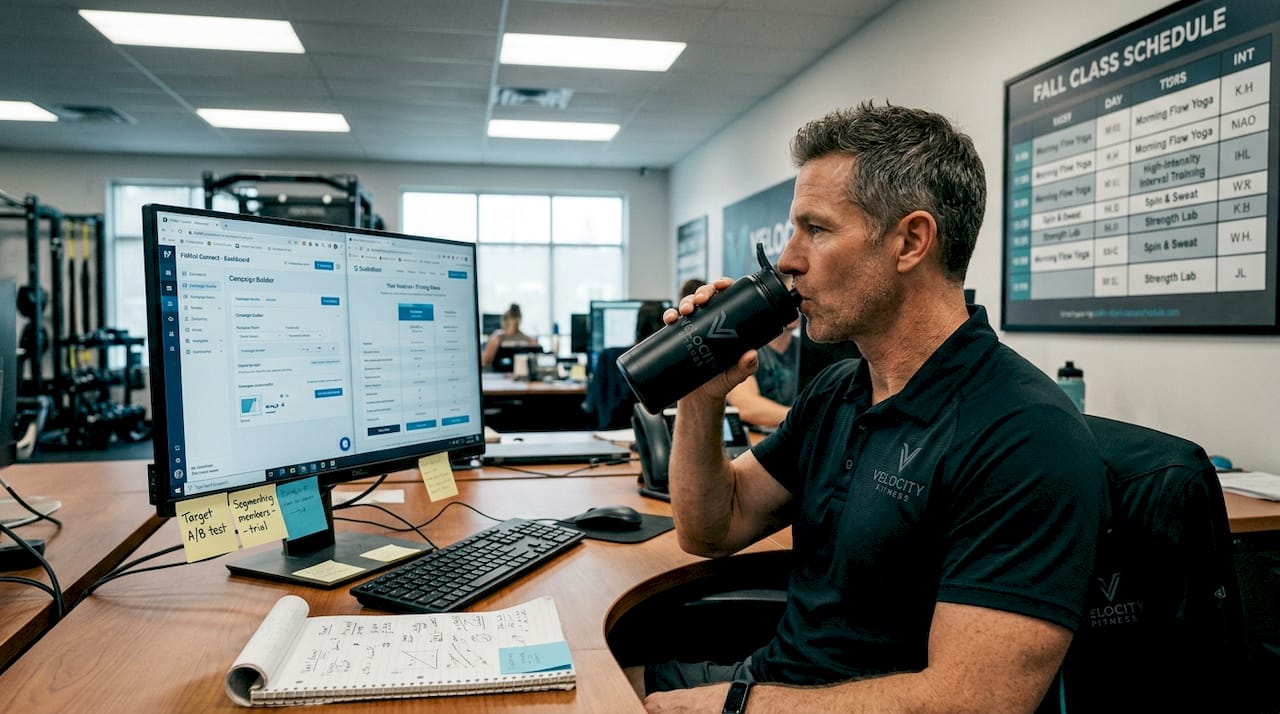
What client data to collect
Before you can personalize, you need the right information. Collect the following at onboarding or via your lead forms:
- Primary fitness goal (weight loss, muscle gain, athletic performance, general health)
- Training experience level (beginner, intermediate, advanced)
- Preferred communication frequency (weekly check-ins vs. less frequent updates)
- Health considerations or injuries (relevant for content personalization)
- Email address and consent to receive marketing messages
Compliance checklist
Email marketing has legal requirements. Stay protected with these steps:
Pro Tip
Add a simple checkbox to your intake form that reads: “I’d like to receive weekly fitness tips, motivation, and exclusive offers from [Your Name].” This captures consent in a frictionless way right at the start of the client relationship.
Step-by-step: Building your automated email marketing workflow
With your tools set up, it’s time to build your automated email system step by step.
-
Create a compelling lead magnet. A lead magnet is something valuable you offer in exchange for an email address. Think: a free 7-day workout plan, a grocery shopping guide, or a short video series on form fundamentals. The more specific the lead magnet is to your niche, the higher the conversion rate. A strength coach targeting busy professionals might offer “10-minute lunchtime workouts.” That specificity signals you understand your audience. You can use lead form templates to build your opt-in forms quickly without needing a designer.
-
Set up your lead capture system. Your lead magnet needs a home. A landing page, a link-in-bio page, or an embedded form on your website all work. The key is that the process is frictionless: someone sees the offer, enters their email, and immediately receives the lead magnet. No confusion, no extra steps.
-
Segment your list from day one. Ask one or two qualifying questions on your opt-in form. Goal-based segmentation (fat loss vs. muscle gain, for example) lets you send targeted content immediately rather than blasting everyone with the same message. Following best practices for fitness coaches means setting up segmentation before your list grows, not after.
-
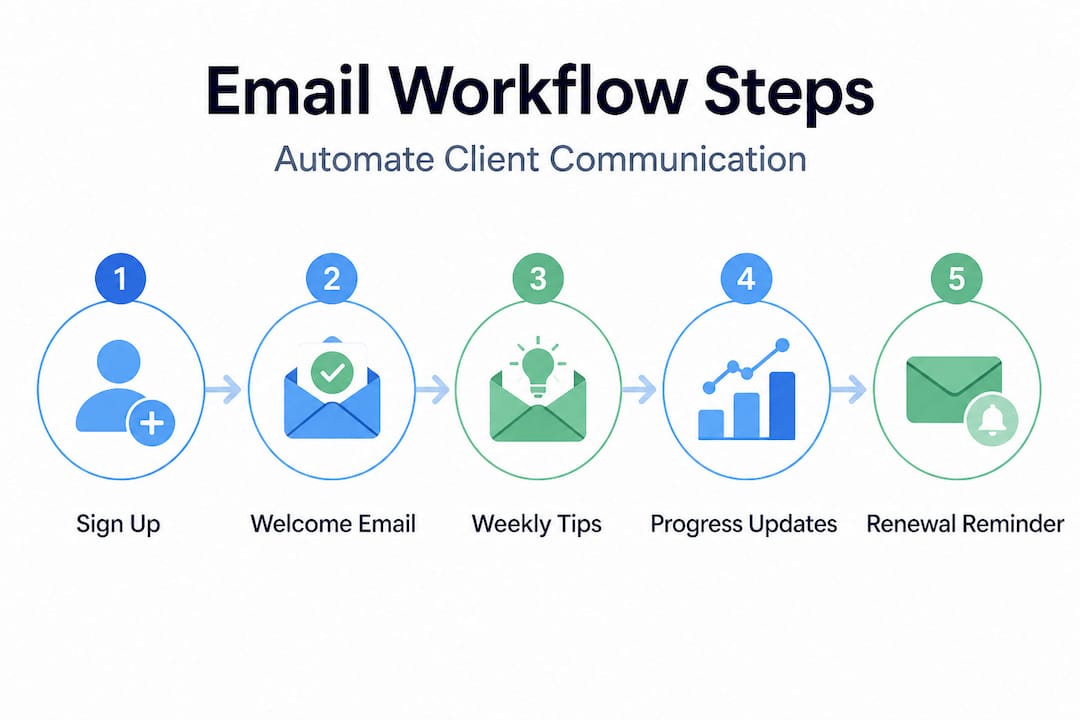
Build an onboarding autoresponder sequence. This is a series of emails that goes out automatically when someone joins your list. A strong onboarding sequence includes:
- Email 1 (Immediate): Deliver the lead magnet and introduce yourself warmly.
- Email 2 (Day 2): Share your coaching philosophy and a quick client win story.
- Email 3 (Day 4): Offer a free resource (a tip sheet, a video) with no strings attached.
- Email 4 (Day 7): Present your core offer with a clear, low-pressure call to action.
-
Create ongoing nurture campaigns. Beyond onboarding, schedule regular newsletters, milestone celebrations, and promotional sequences. Use trainer growth strategies to inform how you structure promotional periods around January, summer, and back-to-school seasons.
-
Test before you launch. Send test emails to yourself. Check every link, review how it looks on mobile, and confirm your unsubscribe footer is working.
Here’s why automation beats manual outreach every time:
Pro Tip
Write all your automation sequences at once during a dedicated “setup day.” Block four to six hours, build your full onboarding sequence, and then your system runs for months without you touching it.
Content ideas that actually increase engagement
Once your workflow is automated, focus on the content that keeps clients opening your emails and coming back for more.
The most engaging fitness emails share one quality: they feel like they were written for that specific person. Even in a broadcast email, specificity wins. Rather than “here are some workout tips,” try “here’s a 5-minute mobility routine for people sitting at desks all day.”
Here are content categories that consistently perform well:
- Weekly workout tips: A single actionable exercise tip or form cue. Keep it short. Clients love this.
- Progress check-ins: A brief invitation to reply with a recent win. This drives two-way engagement and makes clients feel seen.
- Quick nutrition ideas: A simple recipe, a meal prep tip, or a macro breakdown for a popular food. These get shared heavily.
- Client shoutouts: Celebrate client milestones publicly (with permission). This builds community and motivates others.
- Behind the scenes: A quick note on what you’re working on, reading, or learning. This humanizes you.
- Seasonal content: New Year goal-setting, summer shred challenges, holiday survival guides. These tap into timely motivation spikes.
- Milestone emails: Celebrating a client’s 30th session, first pull-up, or six-month anniversary builds an emotional connection.
Leveraging niche content ideas helps you align your email themes with your specific audience so every message lands with relevance. A yoga coach’s content calendar looks very different from a powerlifting coach’s, and that distinction matters.
For send frequency, most coaches do well with a weekly or bi-weekly newsletter. Going beyond two emails per week risks inbox fatigue. Going less than once a month risks being forgotten. A practical rhythm is one value-focused email per week and one promotional or event-driven email per month.
Aim for an 80/20 split: 80% of your emails should deliver pure value, with no sales pitch. The remaining 20% can promote your services, programs, or offers. When you consistently deliver value, your audience is far more receptive when you do ask for something.
Your content library engagement improves dramatically when you repurpose content across formats. A workout tip you record as a short video can become an email summary, a blog post snippet, and a social caption all from the same core idea.
Tracking success: Measuring and optimizing your email results
Effective content is only part of the equation. Understanding your email performance will maximize your impact.
Tracking the right metrics tells you what’s working, what to cut, and where to double down. Here are the core metrics every fitness coach should monitor:
- Open rate: Percentage of recipients who opened your email. Industry benchmarks hover around 20 to 30% for health and fitness. If yours is lower, test different subject lines.
- Click-through rate (CTR): Percentage who clicked a link inside the email. A strong CTR is 2 to 5%. Low CTR usually signals that your call to action isn’t compelling or visible enough.
- Conversion rate: How many recipients took the desired action, like booking a call or purchasing a program. This is your ultimate performance indicator.
- Unsubscribe rate: If this exceeds 0.5% per email, reconsider your frequency or content relevance.
- Reply rate: An underrated metric. Replies signal genuine engagement and create real conversations.
Exploring tracking engagement methods shows that fitness professionals who review analytics monthly are significantly better at adapting their messaging before small problems become big ones.
Optimize continuously. If an email type consistently drives high opens and clicks, create more of it. If a certain day or time gets better results, shift your send schedule. Most platforms let you A/B test subject lines, so use that feature regularly to sharpen your approach over time.
The real reason most fitness email campaigns fail (and the fix coaches overlook)
Here’s an uncomfortable truth: most fitness coaches don’t fail at email marketing because they chose the wrong platform or sent on the wrong day. They fail because every email sounds the same regardless of who receives it.
Sending identical messages to a 60-year-old client recovering from knee surgery and a 25-year-old training for their first triathlon is a fundamental misunderstanding of what email marketing is for. Clients are smart. They notice when content doesn’t apply to them, and they either disengage or unsubscribe.
The real differentiator in 2026 is automation that feels genuinely personal. That means triggering emails based on client behavior, using the data you already have about their goals, and building sequences that respond to where someone is in their journey rather than just what week it is on the calendar. Following industry trends reveals that the top-performing coaches are those who prioritize relevance over reach.
The fix is simpler than you might think. Invest time upfront in segmentation, build separate sequences for your core client types, and let automation do the heavy lifting. Stop measuring success by how many emails you send, and start measuring it by how many meaningful conversations your emails start. Volume is not the goal. Connection is.
Get started with the right tools for email marketing success
You now have the strategy. The next step is having the right system to execute it without adding hours to your week.
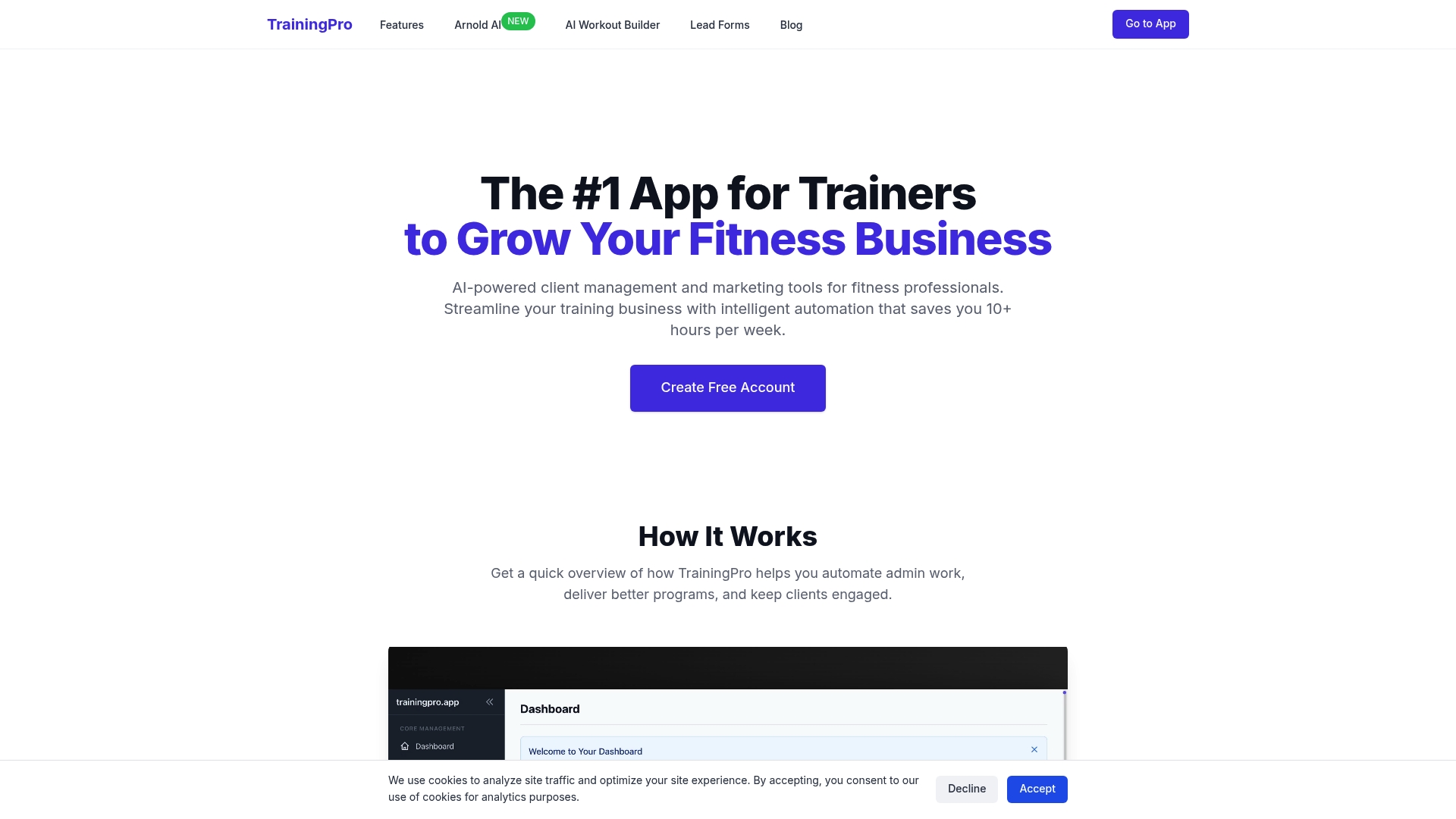
TrainingPro is built specifically for fitness professionals who want to automate the business side of coaching without losing the personal touch. From ready-to-use lead gen forms that capture and segment new leads automatically, to Arnold AI that helps you personalize programming and client communication at scale, TrainingPro gives you the tools to run a smarter, more connected coaching business. Stop piecing together separate tools and start building a system that grows with you.
Frequently asked questions
Weekly or bi-weekly is ideal for most coaches, balancing consistent value delivery with respect for clients’ inboxes. Start with weekly and adjust based on unsubscribe and engagement rates.
Group clients by goals, participation level, and training experience using your platform’s tags or lists, as covered in client engagement strategies. The more specific your segments, the more relevant your emails will feel.
Yes, automation handles repetitive outreach tasks like welcome sequences, reminders, and follow-ups so you can focus on coaching and high-value client relationships. Platforms built for fitness coaches, as reviewed in business tools for trainers, make setup faster than most coaches expect.
Personalized tips, progress tracking updates, and interactive calls-to-action consistently drive the best response. Content that speaks to a specific niche or goal, as highlighted in niche email content, outperforms generic wellness advice every time.
Monitor open rate, click-through rate, and client retention on a monthly basis to evaluate success and guide improvements. Coaches who use engagement tracking consistently are better positioned to catch declining performance before it affects their bottom line.
Recommended
- Engage your fitness clients: proven strategies for lasting retention | TrainingPro
- Boost client retention in personal training: 2026 strategies | TrainingPro
- Streamline Your Fitness Lead Capture Process for More Clients | TrainingPro
- How to grow gym clientele: proven strategies to boost retention | TrainingPro
Ready to Transform Your Fitness Business?
Join thousands of trainers using TrainingPro to automate admin, grow their client base, and focus on what they love—coaching.
Start your 14-day free trial • Cancel anytime


