
Training program creation: personalized approach guide
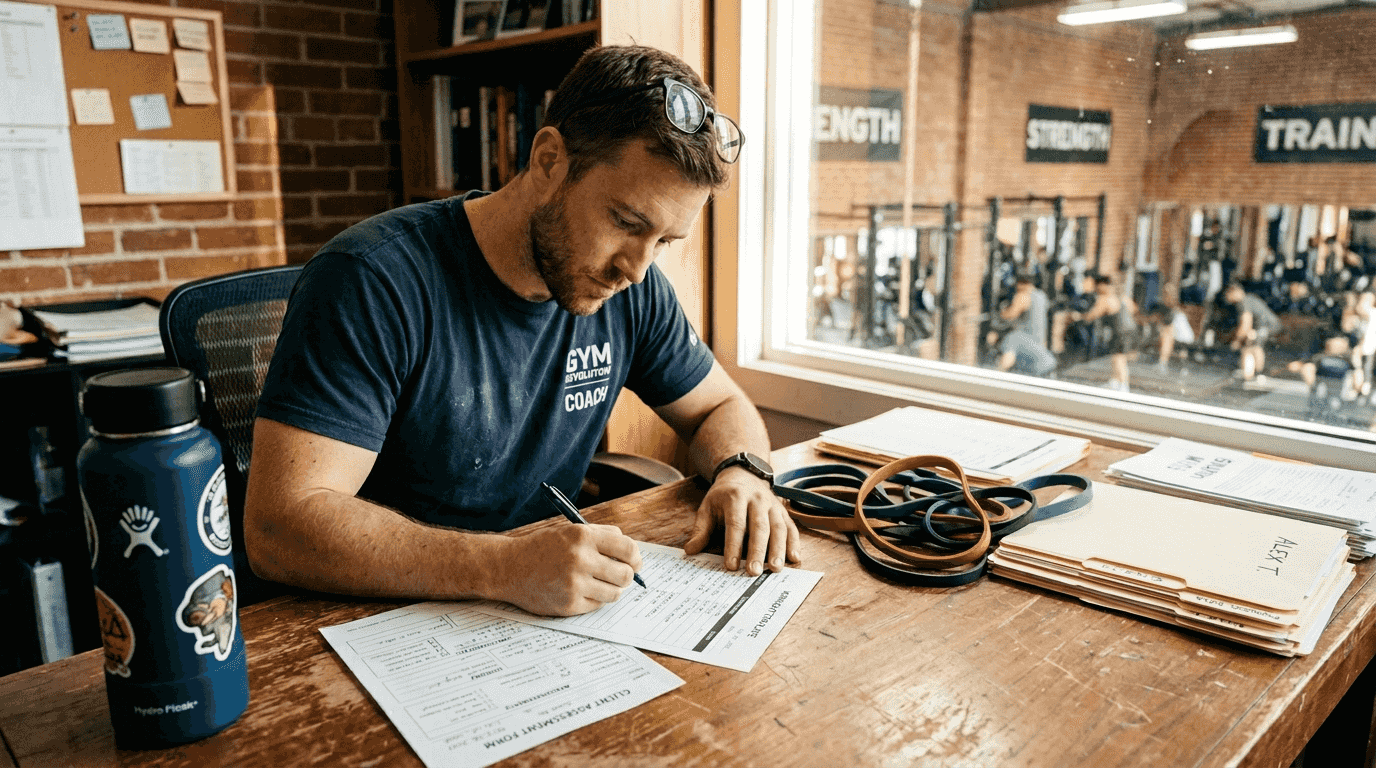
Many fitness professionals believe a generic template can serve all clients equally well. This misconception costs trainers client retention and limits results. Personalized training program creation transforms outcomes by addressing individual needs, goals, and limitations. This guide explores evidence-based principles, technology integration, and practical strategies to help you design programs that keep clients engaged and progressing. You'll learn how AI tools streamline creation while maintaining the personalized touch that drives adherence and success.
Table of Contents
- Understanding Training Program Creation And Its Importance
- Core Principles Of Effective Program Design: Periodization, Overload, And Specificity
- Leveraging Technology And Ai To Streamline Program Creation
- Practical Steps And Common Pitfalls In Training Program Creation
- Enhance Your Training Program Creation With Trainingpro
- Frequently Asked Questions
Key takeaways
| Point | Details |
|---|---|
| Personalization drives results | Customized programs increase client adherence by 20-30% and improve fitness outcomes by 15-25% compared to generic plans. |
| Core principles matter | Periodization, progressive overload, and specificity form the foundation of effective program design for sustainable progress. |
| Technology saves time | AI-powered tools reduce program creation time by 30-80%, allowing trainers to focus on coaching and client relationships. |
| Regular reassessment prevents plateaus | Frequent progress tracking and program adjustments maintain client motivation and ensure continuous adaptation. |
| Balance is crucial | Proper volume and intensity management prevents overtraining while maximizing results for long-term client success. |
Understanding training program creation and its importance
Training program creation involves systematically designing exercise plans tailored to individual client needs, goals, and physical capabilities. This process goes far beyond selecting random exercises or copying templates. You must assess baseline fitness levels, identify limitations like injuries or mobility restrictions, and establish clear objectives that align with what your client wants to achieve.
The evidence supporting personalized approaches is compelling. Personalized training programs result in a 20-30% increase in client adherence and a 15-25% improvement in fitness outcomes compared to generic plans. When clients see programs designed specifically for them, they feel valued and understood. This emotional connection translates directly into better attendance, higher effort levels, and superior results.
Many trainers fall into common pitfalls that undermine their program effectiveness:
- Neglecting regular client reassessment as fitness levels change
- Failing to track progress metrics beyond basic weight or repetitions
- Using cookie-cutter templates without considering individual biomechanics
- Ignoring recovery needs and pushing volume too aggressively
- Not adjusting programs when clients plateau or regress
The complexity versus generic program trade-off presents a real challenge. Highly individualized programs deliver better results but require more time to create and manage. Generic templates save time but sacrifice effectiveness and client satisfaction. This tension drives many trainers toward technology solutions that preserve personalization while reducing administrative burden.
"The best program is the one your client will actually follow. Personalization creates buy-in, and buy-in creates consistency."
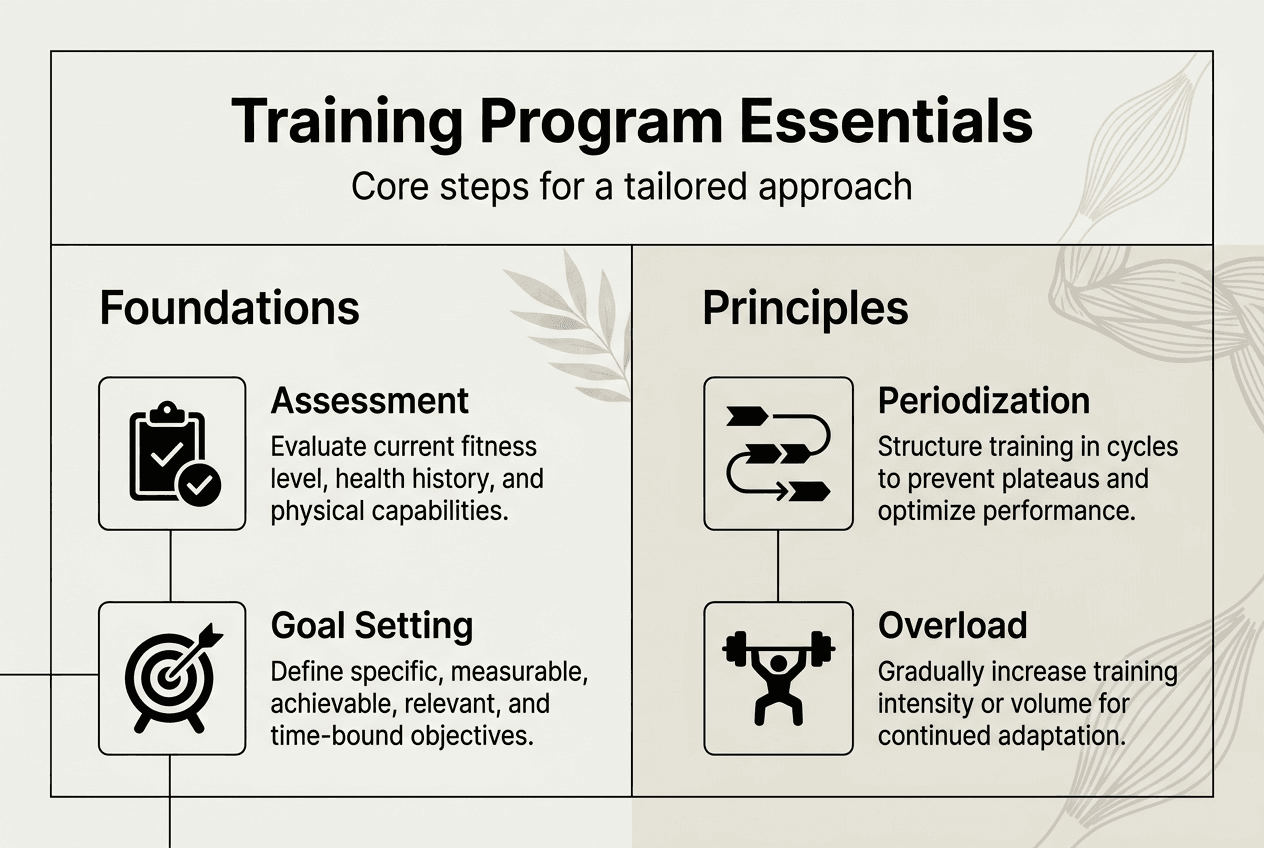
Understanding program creation basics helps you build a systematic approach. Start with comprehensive client intake forms that capture health history, movement limitations, training preferences, and lifestyle factors. Use this information to inform every decision from exercise selection to training frequency. Your assessment should reveal not just what exercises to include, but how to structure progression over weeks and months.
Core principles of effective program design: periodization, overload, and specificity
Periodization involves cyclic manipulation of training variables like volume, intensity, and exercise selection to optimize adaptations while managing fatigue. Instead of training the same way indefinitely, you structure programs into distinct phases that build upon each other. A typical macrocycle might span 12-16 weeks, divided into mesocycles focusing on different qualities.

Research shows periodized programs improve strength and power gains by 10-15% compared to non-periodized approaches. This advantage comes from strategic variation that prevents adaptation plateaus and manages accumulated stress. Your clients experience better results because their bodies receive appropriate stimulus at each training phase.
Progressive overload means gradually increasing training demands to stimulate continued growth and adaptation. You can manipulate several variables:
- Increase weight lifted while maintaining repetitions
- Add repetitions or sets at the same weight
- Reduce rest periods between sets
- Increase training frequency for specific muscle groups
- Enhance exercise difficulty through tempo or range of motion changes
Specificity dictates that adaptations are specific to the imposed demands. If your client wants to run a marathon, deadlifts alone won't prepare them adequately. Applying overload, specificity, and progression principles leads to greater strength, hypertrophy, and endurance gains. Match exercise selection, intensity zones, and movement patterns to the client's specific goals.
A practical mesocycle structure might look like this:
- Anatomical adaptation phase (3-4 weeks): Build work capacity with moderate intensity, higher volume, focus on movement quality and tissue preparation
- Hypertrophy phase (4-6 weeks): Increase training volume with moderate to high intensity, emphasize muscle building and metabolic stress
- Strength phase (3-4 weeks): Shift to higher intensity with lower volume, develop maximal force production capabilities
- Power or peaking phase (2-3 weeks): Reduce volume significantly, maximize intensity, taper for performance or transition to new cycle
- Recovery week: Active recovery with reduced volume and intensity before starting next macrocycle
"Periodization isn't just for athletes. Every client benefits from structured variation that prevents burnout and maintains progress."
Implementing these principles requires understanding your client's training age and recovery capacity. Beginners respond well to linear periodization with steady progression. Advanced clients need more sophisticated undulating models with frequent variation. Consider periodization strategies that match your client's experience level and lifestyle constraints.
Pro Tip
Track training volume using sets times reps times weight as a simple metric. When volume increases by 10-15% weekly without adequate recovery, you risk overtraining. Monitor this closely to balance progression with sustainability.
Leveraging technology and AI to streamline program creation
AI and automation tools transform how trainers create personalized programs without sacrificing quality. AI-powered platforms reduce trainer program design time by 30-40% and increase client capacity by 10-20%. This efficiency gain doesn't mean less personalization. Instead, technology handles repetitive tasks while you focus on nuanced coaching decisions that require human judgment.
The time savings are substantial. Automated workout plan generation cuts creation time by up to 80%, freeing trainers to focus on client motivation and relationship building. Consider what you could do with 8-10 extra hours weekly. More clients, better communication, improved coaching presence during sessions, or simply better work-life balance.
Modern AI tools incorporate recovery-aware programming that adjusts training stress based on client feedback and performance metrics. If a client reports poor sleep or high stress, intelligent systems can automatically reduce volume or intensity for that session. This responsiveness prevents overtraining while maintaining engagement.
Technology enables more frequent reassessments and program modifications. Instead of quarterly reviews, you can adjust programs weekly or even daily based on objective data. Clients appreciate this responsiveness because it shows you're paying attention to their individual experience. The AI workout builder approach combines exercise science principles with machine learning to suggest optimal progressions.
Benefits of integrating technology into your program creation workflow:
- Consistent application of periodization principles across all clients
- Automated exercise substitutions for equipment limitations or injuries
- Data-driven progression recommendations based on performance trends
- Reduced administrative burden for tracking and documentation
- Scalable personalization that maintains quality as your client base grows
Platforms like TrainingPro demonstrate how fast program creation with AI doesn't compromise individualization. The system considers client goals, training history, available equipment, and injury status to generate tailored programs. You review and refine the output, adding your coaching expertise to the AI foundation.
AI-driven workout customization continues evolving with more sophisticated algorithms that learn from client responses. Future systems will predict optimal training variables based on genetic profiles, recovery patterns, and historical adaptation rates. Staying current with these tools gives you a competitive advantage in delivering superior client outcomes.
Pro Tip
Use AI for the framework and structure, but add personal touches that reflect your coaching philosophy and client preferences. Technology handles the science, you provide the art that makes training enjoyable and sustainable.
Practical steps and common pitfalls in training program creation
Creating an effective client-centered program follows a systematic process that ensures nothing gets overlooked. Here's your step-by-step approach:
- Conduct comprehensive assessment: Gather health history, movement screening results, fitness testing data, goal clarification, lifestyle factors like sleep and stress, and training preferences
- Analyze assessment data: Identify movement limitations requiring corrective work, determine appropriate training intensity zones, establish realistic timelines for goal achievement, and note equipment access and scheduling constraints
- Design program structure: Select periodization model matching client experience level, determine training frequency and session duration, allocate volume across muscle groups or movement patterns, and plan progression strategy for coming weeks
- Choose exercises and methods: Pick movements that address goals while respecting limitations, include variety to maintain engagement, ensure balanced development across all planes of motion, and incorporate client preferences when possible
- Implement and monitor: Deliver program with clear instructions and demonstrations, track performance metrics consistently, gather subjective feedback on difficulty and enjoyment, and watch for signs of overtraining or undertraining
- Reassess and adjust: Review progress every 3-4 weeks minimum, modify exercises that cause pain or discomfort, adjust volume and intensity based on adaptation rate, and celebrate wins to maintain motivation
Balancing volume and intensity prevents both overtraining and undertraining. Too much volume with insufficient recovery leads to fatigue, injury risk, and performance decline. Too little stimulus fails to drive adaptation. You need to find the sweet spot where training stress challenges the body without exceeding recovery capacity.
Common pitfalls sabotage even well-intentioned programs. Failing to assess baseline fitness leads to programs that are either too easy or dangerously difficult. Without proper assessment, you're guessing rather than prescribing based on evidence. This undermines client safety and results.
Not regularly adjusting programs based on client progress causes plateaus and demotivation. Clients who stop seeing results lose faith in your coaching. Regular reassessment catches stagnation early, allowing you to modify variables before frustration sets in. Schedule formal reviews every month, but stay alert to weekly performance trends that signal needed changes.
Other mistakes to avoid:
- Copying programs from social media or magazines without individualization
- Ignoring client feedback about exercise enjoyment or difficulty
- Progressing too quickly because you're excited about client potential
- Neglecting deload weeks that allow supercompensation
- Failing to educate clients about why you're making specific choices
Understanding common trainer challenges helps you anticipate obstacles before they derail progress. Time management, client communication, and staying current with exercise science all impact your program creation effectiveness. Address these systematically to improve your overall coaching quality.
Pro Tip
Create a simple tracking system that captures both objective metrics like weight lifted and subjective measures like energy levels and soreness. This combination reveals patterns that pure performance data might miss, allowing more nuanced program adjustments.
Enhance your training program creation with TrainingPro
Implementing everything you've learned requires tools that support your vision without adding complexity. TrainingPro's AI Workout Builder combines evidence-based programming principles with automation that saves hours weekly. You maintain complete creative control while the platform handles repetitive tasks like exercise database management and progression tracking.
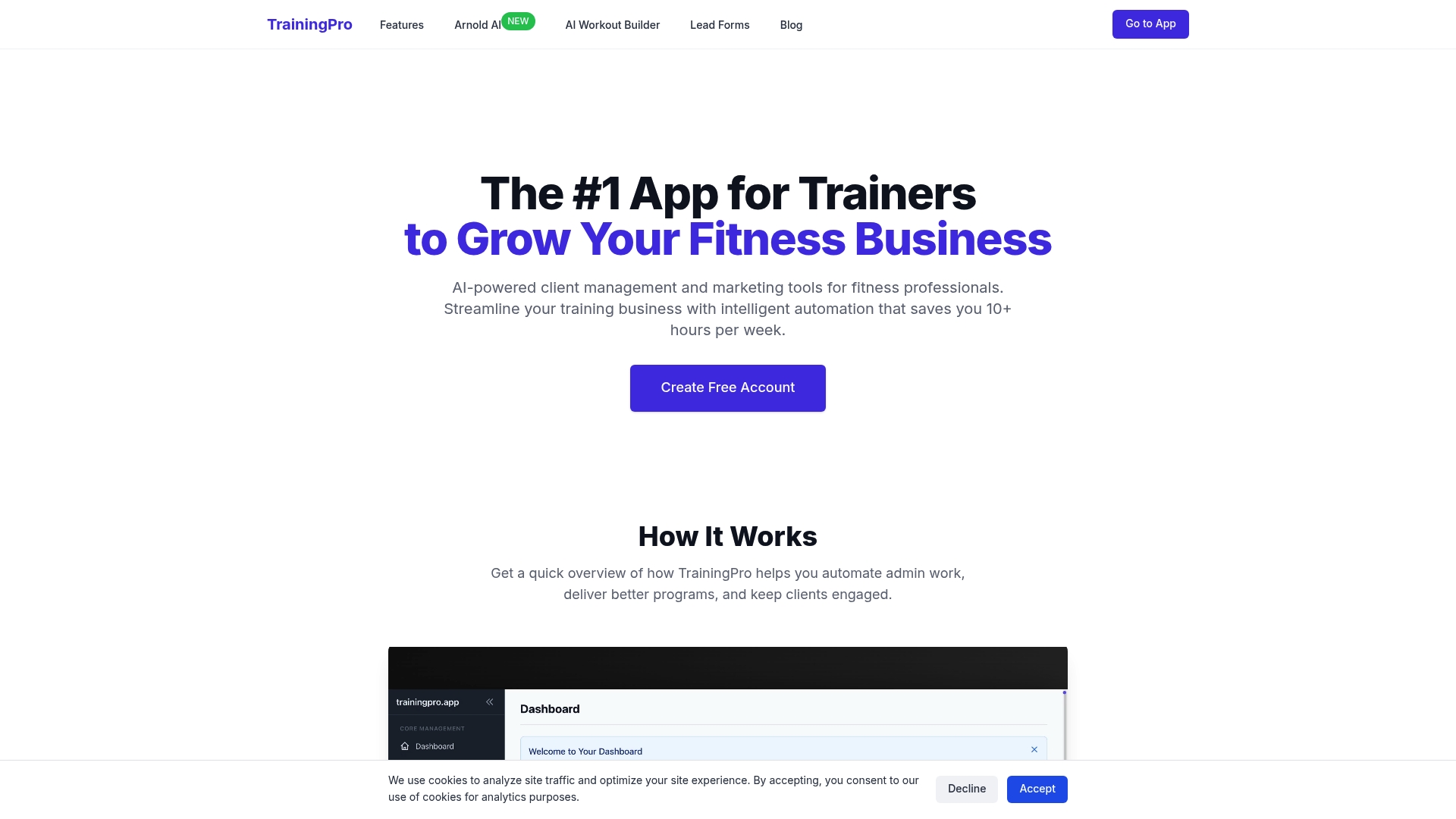
The Arnold AI assistant considers individual client needs, injuries, and training styles to generate personalized programs in minutes. You review and refine the suggestions, adding your coaching expertise to create programs that reflect both science and your unique approach. Marketing features like lead capture forms and branded pages help you grow your client base while delivering exceptional service.
Discover how TrainingPro streamlines your workflow with our comprehensive AI-Powered Workout Builder Guide. Learn strategies that top trainers use to scale their businesses without sacrificing the personalized attention that drives client success.
Ready to Transform Your Fitness Business?
Join thousands of trainers using TrainingPro to automate admin, grow their client base, and focus on what they love—coaching.
Start your 14-day free trial • Cancel anytime
Frequently asked questions
Training program creation is the systematic process of designing individualized exercise plans based on client assessments, goals, and capabilities. It involves selecting appropriate exercises, determining training variables like sets and reps, structuring periodization phases, and planning progression strategies. Effective program creation balances scientific principles with client preferences to maximize adherence and results.
Personalized programs address individual limitations, goals, and recovery capacity rather than applying generic templates. This individualization increases adherence by 20-30% because clients feel the program was designed specifically for them. Better adherence combined with appropriately matched training stimulus produces superior fitness outcomes, with studies showing 15-25% better results compared to one-size-fits-all approaches.
Formal reassessments should occur every 3-4 weeks minimum to evaluate progress and modify training variables. However, monitor performance weekly for signs that adjustments are needed sooner. If clients plateau, report unusual fatigue, or experience pain, immediate modifications prevent setbacks. Technology enables real-time tracking that supports more responsive programming without additional administrative burden.
Technology reduces program design time by 30-80% through automation and AI-powered suggestions while maintaining personalization quality. Platforms handle exercise database management, progression tracking, and data analysis, freeing trainers to focus on coaching relationships. AI tools can generate customized programs considering goals, limitations, and equipment access, which trainers then refine with their expertise. This combination scales personalized service without sacrificing quality.
The most frequent errors include inadequate client assessment leading to inappropriate program difficulty, failing to track progress objectively, neglecting regular program adjustments when clients plateau, copying generic templates without individualization, and ignoring client feedback about exercise enjoyment. Poor volume and intensity balance causes either overtraining or insufficient stimulus. Avoiding these pitfalls requires systematic assessment, consistent monitoring, and willingness to modify approaches based on individual client responses.
Recommended
- How to create workout programs fast using AI in 2026 | TrainingPro
- How to Create Your First Group Training Program (Step-by-Step) | TrainingPro
- Personal training checklist 2026: streamline success | TrainingPro
- What is Personal Training Software? (A 2026 Guide) | TrainingPro
- Personal Training Ablauf: Schritt für Schritt zum Fitnessziel


