
What is professional fitness branding: guide for trainers

Most fitness professionals believe branding is simply picking a logo color or posting consistently on social media. The reality is far more strategic. Professional fitness branding represents your complete identity as a trainer, encompassing your values, client experience, and unique positioning in a competitive market. This comprehensive approach determines whether potential clients choose you over countless other trainers. Understanding and implementing professional branding isn’t optional anymore. It’s the foundation that attracts your ideal clients, builds lasting trust, and creates a sustainable fitness business that stands out.
Table of Contents
- Key takeaways
- Understanding professional fitness branding
- How professional fitness branding differs from marketing and why it matters
- Core elements of a professional fitness brand and how to build them
- Applying your professional fitness branding to attract and retain clients
- How TrainingPro supports your professional fitness branding
- Frequently asked questions
Key takeaways
Understanding professional fitness branding
Professional fitness branding creates unique identity that represents everything you stand for as a trainer. It’s not a logo on your business card or a catchy Instagram bio. Your brand encompasses the complete experience clients have with you, from their first impression to their transformation journey. This identity communicates your expertise, values, and the specific results you deliver.
The core components work together to form your complete brand:
- Visual identity includes your logo, color palette, typography, photography style, and overall aesthetic presentation across all platforms
- Messaging encompasses your unique value proposition, brand voice, tagline, and how you articulate your training philosophy
- Client experience covers service delivery quality, communication style, program personalization, and follow-up consistency
- Reputation management involves testimonials, reviews, case studies, and social proof that validate your expertise
Many trainers confuse branding with surface-level marketing tactics. Your brand is the promise you make and consistently deliver to every client. When you select your personal training niche, your brand communicates why you’re the perfect fit for that specific audience. A strength coach for powerlifters projects a vastly different brand than a prenatal fitness specialist, even if both are exceptional trainers.
Branding directly relates to your market positioning. Your brand tells potential clients where you fit in the fitness landscape and why they should care. Are you the budget-friendly option for beginners, or the premium choice for serious athletes? Your brand answers this question before clients even contact you. This positioning must align with professional standards in online coaching to maintain credibility and trust.
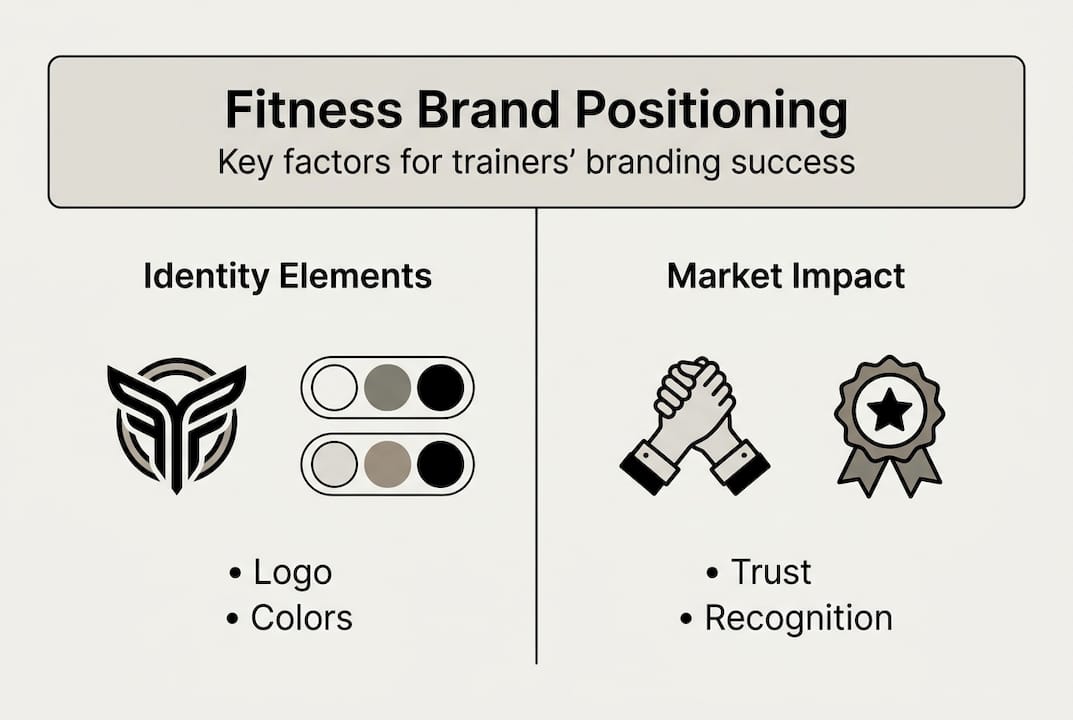
Authenticity separates powerful brands from forgettable ones. Your brand should reflect who you genuinely are as a trainer, not who you think clients want you to be. Clients detect inauthenticity immediately, and it destroys trust faster than any marketing mistake. Build your brand around your actual strengths, training philosophy, and the specific transformations you consistently deliver.
How professional fitness branding differs from marketing and why it matters
Branding establishes long-term identity while marketing promotes your services through specific campaigns. This distinction fundamentally changes how you approach client acquisition. Your brand is who you are. Marketing is how you tell people about it. Think of branding as your reputation and marketing as your megaphone.
Branding builds trust and recognition over time through consistent delivery of your promise. Marketing drives immediate action through targeted campaigns, promotions, and calls to action. Both are essential, but they serve different purposes in your business growth strategy. A strong brand makes every marketing effort more effective because people already recognize and trust you.
Consistent branding across all client touchpoints creates loyalty that transcends individual marketing campaigns:
- Your website, social media, email communications, and in-person interactions should all reflect the same brand identity
- Clients should experience the same quality, communication style, and professionalism regardless of how they interact with you
- Brand consistency builds familiarity, which builds trust, which builds long-term client relationships
The biggest misconception is that aggressive marketing alone builds a successful fitness business. Reality check: marketing without strong branding is like shouting into a void. You might get attention, but you won’t build lasting client relationships. Your brand gives marketing campaigns context and credibility. When potential clients see your ad or social post, your established brand determines whether they take action or scroll past.
Branding plays a crucial role in positioning you distinctively in an oversaturated fitness market. Thousands of trainers offer similar services, certifications, and promises. Your brand is what makes you memorable and different. It communicates your unique approach, personality, and the specific transformation clients can expect. This positioning allows you to scale your fitness business through automation while maintaining your distinctive identity.
Pro Tip
Document your brand guidelines in a simple one-page document. Include your core values, target client description, brand voice characteristics, and visual style preferences. Reference this document before creating any client-facing content to maintain consistency.
Core elements of a professional fitness brand and how to build them
Key elements include visual identity, messaging, client experience, and reputation management. Each component requires deliberate development and consistent application across your business. These elements work together to create the complete brand experience that attracts and retains your ideal clients.

Visual identity creates immediate recognition and professionalism. Your logo doesn’t need to be expensive or complex, but it must be clean, professional, and consistently applied. Choose a color palette of 2-3 primary colors that reflect your brand personality. Select fonts that are readable and appropriate for your niche. Your photography style should showcase real clients, authentic training environments, and genuine results rather than stock photos.
Messaging articulates what makes you different and valuable:
- Your unique value proposition answers why clients should choose you specifically
- Brand voice reflects your personality in all written and spoken communication
- Your tagline captures your core promise in a memorable phrase
- Training philosophy explains your approach to fitness and client transformation
Client experience encompasses every interaction from first contact to ongoing training. This includes response time to inquiries, onboarding process quality, program delivery method, communication frequency, and how you handle challenges or setbacks. Your personal training checklist should reflect your brand standards at every touchpoint.
Building each element requires a systematic approach:
- Define your target client with specific demographics, goals, challenges, and values that align with your expertise
- Identify your unique strengths, training philosophy, and the specific results you consistently deliver better than competitors
- Develop visual identity elements that appeal to your target client and reflect your brand personality authentically
- Create messaging templates for common communications that maintain consistent voice and reinforce your value proposition
- Document client experience standards and systems to ensure every client receives the same quality regardless of circumstances
- Implement reputation management processes to consistently gather and showcase client success stories and testimonials
Authenticity matters more than perfection in brand building. Your brand should feel natural to maintain because it genuinely reflects who you are as a trainer. Trying to project a brand that doesn’t match your actual personality or approach creates exhausting inconsistency. Clients appreciate genuine expertise and personality over polished perfection. Focus on selecting a niche where your authentic strengths shine rather than forcing yourself into a brand that doesn’t fit.
Pro Tip
Create a brand mood board with images, colors, and words that capture the feeling you want clients to experience. Use this visual reference when making design decisions to maintain consistent aesthetic appeal across all materials.
Applying your professional fitness branding to attract and retain clients
Strategic branding boosts client trust, recognition, and loyalty, leading to sustainable business growth. Application is where brand strategy transforms into tangible results. Your carefully crafted brand identity must appear consistently across every channel and interaction to maximize its impact on client acquisition and retention.
Consistent brand presentation across online and offline channels creates powerful recognition. Your website, social media profiles, email signature, business cards, and training space should all reflect the same visual identity and messaging. When potential clients encounter your brand multiple times across different platforms, consistent presentation builds familiarity and trust. Inconsistency creates confusion and undermines credibility.
Leveraging social proof amplifies your brand’s credibility and attractiveness:
- Feature client testimonials that highlight specific transformations and your unique approach
- Create detailed case studies showing your methodology and results for different client types
- Share before and after photos with compelling stories that demonstrate your expertise
- Encourage video testimonials that capture authentic client enthusiasm and gratitude
Branded visual and messaging elements should appear in all marketing and client communications. Your email templates, workout programs, progress reports, and social media posts should instantly be recognizable as yours. This consistency reinforces your professional image and keeps you top of mind when clients need training services or refer friends.
Five practical steps to reinforce branding with current and potential clients:
- Create branded program templates that showcase your visual identity while delivering exceptional training content and personalized programming
- Develop email sequences for different client journey stages that maintain consistent voice while providing valuable fitness education and motivation
- Design a signature client onboarding experience that reflects your brand promise and sets clear expectations for the transformation journey
- Implement regular check-ins using branded communication templates that demonstrate your commitment to client success and accountability
- Request testimonials and reviews at strategic milestones using branded forms that make it easy for satisfied clients to share their experience
Ongoing brand evaluation and adaptation ensure your brand stays relevant and effective. Review your brand quarterly to assess whether it still accurately represents your business and resonates with your target clients. As you gain experience and expertise, your brand may need refinement to reflect your evolution. Market conditions change, client preferences shift, and your business grows. Your brand should evolve thoughtfully while maintaining core identity elements.
Avoid common branding pitfalls that undermine your professional image. Don’t copy competitor brands or try to appeal to everyone. Resist the temptation to constantly rebrand based on trends or temporary inspiration. Stay away from inconsistent messaging that confuses potential clients about what you offer. Never make brand promises you can’t consistently deliver. These mistakes damage credibility and waste the effort you’ve invested in building recognition.
Your brand becomes more valuable as you consistently apply it across business growth strategies and operations. The compound effect of consistent branding creates exponential returns over time. Clients remember you, refer you, and return to you because your brand has become synonymous with specific results and experiences. This is how professional fitness branding transforms from a marketing concept into a business asset that drives sustainable growth and helps you scale through automation.
How TrainingPro supports your professional fitness branding
Building and maintaining a professional brand requires systems that consistently deliver your promise while saving you time. TrainingPro’s AI workout builder creates personalized programs that reflect your training philosophy and brand standards without hours of manual work. Every program you create reinforces your unique approach while meeting individual client needs, injuries, and goals.
Your brand attracts clients when they can easily discover and connect with you. TrainingPro’s lead generation forms capture potential clients while maintaining your professional brand presentation. The platform integrates your branding into client-facing tools, from workout delivery to progress tracking, ensuring every interaction reinforces your identity. Our AI-powered workout builder guide shows you how to leverage automation while maintaining the personal touch that defines your brand. This seamless integration of branding and business operations helps you deliver consistent client experiences that build loyalty and referrals.
Frequently asked questions
Professional fitness branding is the complete identity you create as a trainer, encompassing your visual presentation, messaging, client experience, and reputation. It’s not just your logo or social media presence. It’s the promise you make to clients and consistently deliver through every interaction, program, and result.
Branding establishes who you are and what you stand for, while marketing promotes your services to potential clients. Your brand is your long-term identity and reputation. Marketing consists of specific campaigns and tactics to attract attention. Strong branding makes all your marketing efforts more effective because people already recognize and trust you.
Start by clearly defining your target client and what makes your training approach unique. Then develop consistent visual identity elements like colors, fonts, and photography style. Create messaging that articulates your value proposition and training philosophy. Finally, document your client experience standards to ensure consistent delivery of your brand promise.
Building brand recognition typically requires 6-12 months of consistent application across all client touchpoints. You need repeated exposure through multiple channels before potential clients recognize and remember your brand. Consistency matters more than speed. Focus on delivering your brand promise reliably rather than rushing to gain visibility.
You can refine and evolve your brand as your business grows, but complete rebrands should be rare and strategic. Minor updates to visual elements or messaging are normal as you gain clarity about your niche and ideal clients. Major changes risk losing the recognition you’ve built. Evolve your brand thoughtfully while maintaining core identity elements that clients already associate with you.
Strong branding creates emotional connection beyond just workout programming. When clients identify with your brand values and consistently experience your brand promise, they develop loyalty that transcends price or convenience. Your brand becomes part of their identity and transformation story, making them far less likely to switch trainers or discontinue training.
Recommended
- Professional standards in online fitness coaching: 2026 | TrainingPro
- Business growth strategies for trainers in 2026 | TrainingPro
- How to Start a Personal Training Business: Step-by-Step Guide (2026) | TrainingPro
- TrainingPro Early Access Program | TrainingPro
- Online Personal Training Guide: Platforms,… - Finegym
Ready to Transform Your Fitness Business?
Join thousands of trainers using TrainingPro to automate admin, grow their client base, and focus on what they love—coaching.
Start your 14-day free trial • Cancel anytime


