
Step-by-step fitness program design: boost results
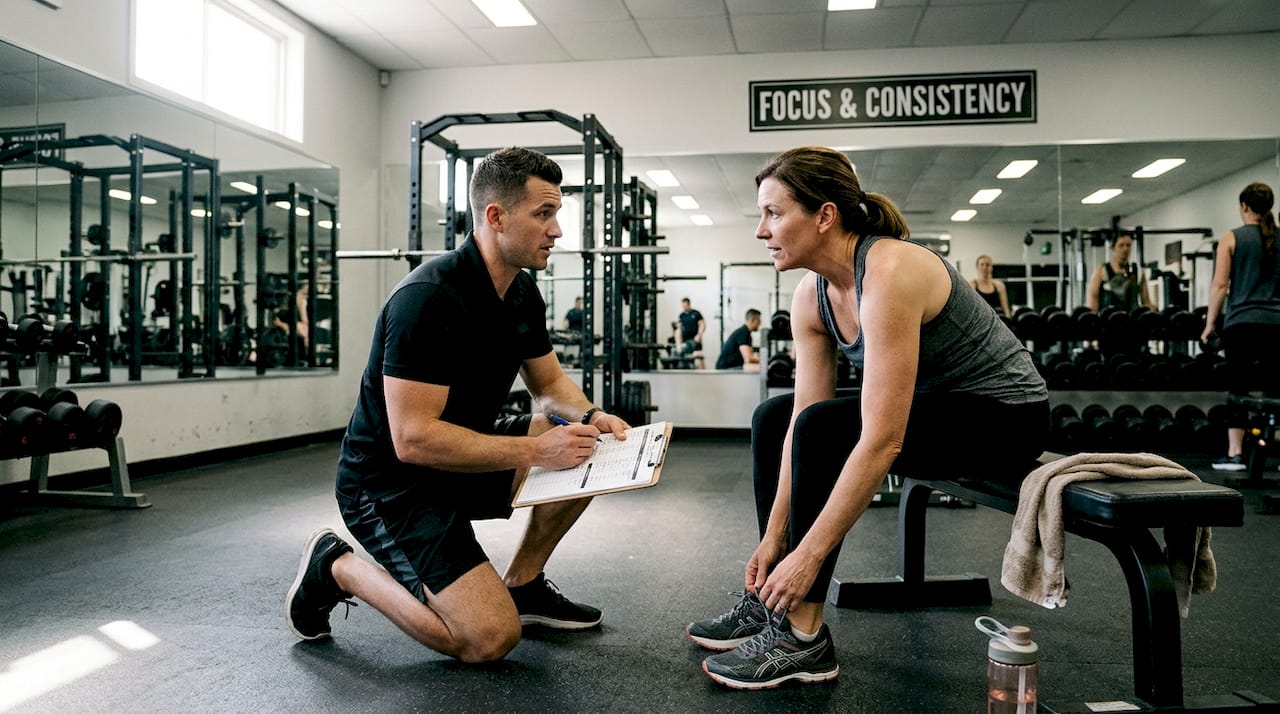
Generic programs are the fastest way to lose a client’s trust. When a trainer hands over a cookie-cutter plan, clients feel like a number, not a person, and motivation drops fast. The good news? A structured, step-by-step approach to fitness program design changes everything. It keeps clients engaged, drives measurable progress, and positions you as the professional who actually gets results. This article walks you through the full process, from initial assessment to periodization, so you can build programs that stick and clients who stay.
Table of Contents
- Assessing client needs and performance
- Warm-up and flexibility protocols
- Designing training components for optimal results
- Integration, progression, and special populations
- Our take: What most fitness programs miss
- Take your fitness program design to the next level
- Frequently asked questions
Key Takeaways
| Point | Details |
|---|---|
| Assessment first | Start every program with a detailed client needs assessment and baseline testing. |
| Warm-up matters | Tailor dynamic warm-ups and flexibility work to each client’s goals and performance needs. |
| Use FITT-VP | Apply the FITT-VP framework for systematic, personalized exercise prescription. |
| Progression and adaptation | Integrate periodization and progressive overload while modifying for special populations. |
| Consistency counts most | Regular training and ongoing assessment drive the best engagement and results. |
Assessing client needs and performance
Before you write a single exercise, you need to know who you’re programming for. Skipping this step is the most common mistake trainers make, and it’s the one that costs them clients down the road. Program customization benefits are only possible when you have real data to work with.
Thorough assessment of goals, fitness, and history is where every strong program begins. That means gathering information across four key areas: client goals, current fitness level, medical history, and baseline performance testing. Each one informs your decisions and protects your client.
Assessment checklist:
| Category | What to collect |
|---|---|
| Goals | Short-term, long-term, performance vs. aesthetic |
| Fitness level | Current activity, training history, experience |
| Health screening | PAR-Q, physician clearance if needed |
| Prior injuries | Location, severity, current limitations |
| Performance tests | VO2 max estimate, 1RM, flexibility, balance |
Once you have this data, you’re not guessing anymore. You’re designing. This is also where custom training programs become genuinely valuable, because the customization is built on a real foundation.
Common assessment mistakes to avoid:
- Skipping health screening for apparently healthy clients
- Relying only on self-reported fitness levels
- Forgetting to document prior injuries in detail
- Treating the assessment as a one-time event instead of an ongoing process
- Ignoring lifestyle factors like sleep, stress, and nutrition habits
Your consultation workflow should make this process feel natural, not clinical. Clients open up when they feel heard, and that trust becomes the foundation of long-term engagement.
Pro Tip
Log every assessment data point in a client management system. Revisiting baselines every 4 to 6 weeks gives you objective proof of progress, which is one of the most powerful retention tools you have.
Warm-up and flexibility protocols
Having assessed your client’s needs, setting up the right warm-up ensures readiness for the main workout. This step is often rushed or skipped entirely, and that’s a problem.
Dynamic warm-ups and static stretching each serve a distinct purpose. Dynamic warm-ups, think leg swings, arm circles, and light cardio, elevate heart rate, increase tissue temperature, and activate the neuromuscular system. Static stretching, where you hold a position for 20 to 60 seconds, is better placed after training when muscles are already warm and pliable.
The warm-up you design should match the session’s goal. Here’s a quick breakdown:
- Strength-focused sessions: 5 to 8 minutes of dynamic movement, activation drills for target muscle groups, and a few ramp-up sets
- Endurance sessions: 8 to 10 minutes of low-intensity cardio building to moderate effort, with light dynamic stretching
- Agility and speed work: Skips, shuffles, high knees, and sport-specific movement patterns to prime the nervous system
- Older adult or rehab clients: Longer warm-up windows (10 to 15 minutes), prioritizing joint mobility and low-impact activation
Your exercise library should include a dedicated section for warm-up movements, tagged by goal and population. That way, you’re not reinventing the wheel every session.
Pro Tip
Use your assessment findings directly here. If a client showed limited hip mobility in testing, their warm-up should include targeted hip mobility drills before every lower-body session. Tailor it, don’t template it.
Safety note
Skipping the warm-up isn’t just inefficient, it’s a liability. Unprepared tissues are more vulnerable to strain and injury, especially under load. Build the warm-up into the program structure so it’s never optional.
Designing training components for optimal results
With your client warmed up, structured training begins with targeted, evidence-backed choices. This is where most trainers either shine or fall into the trap of complexity for its own sake.
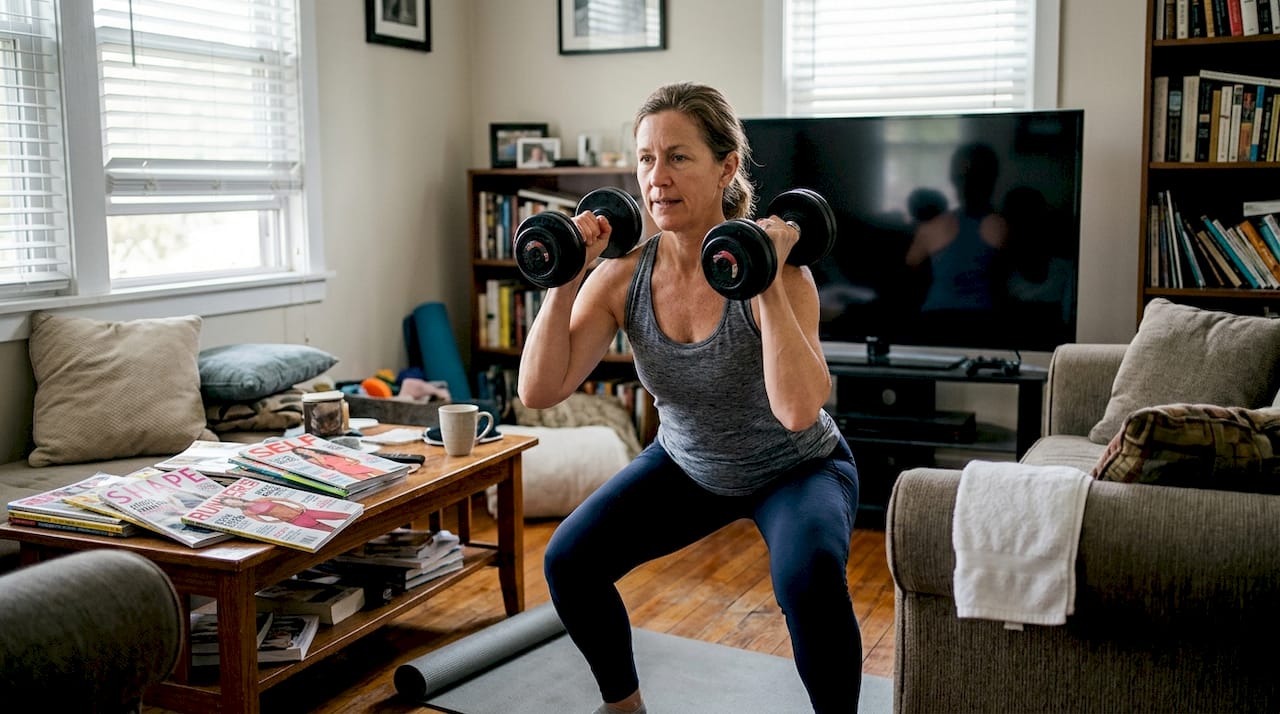
Tailoring programs for each fitness component means making deliberate decisions about resistance, power, endurance, agility, speed, and stability. The FITT-VP framework (Frequency, Intensity, Time, Type, Volume, Progression) gives you a systematic way to prescribe each component without guessing.
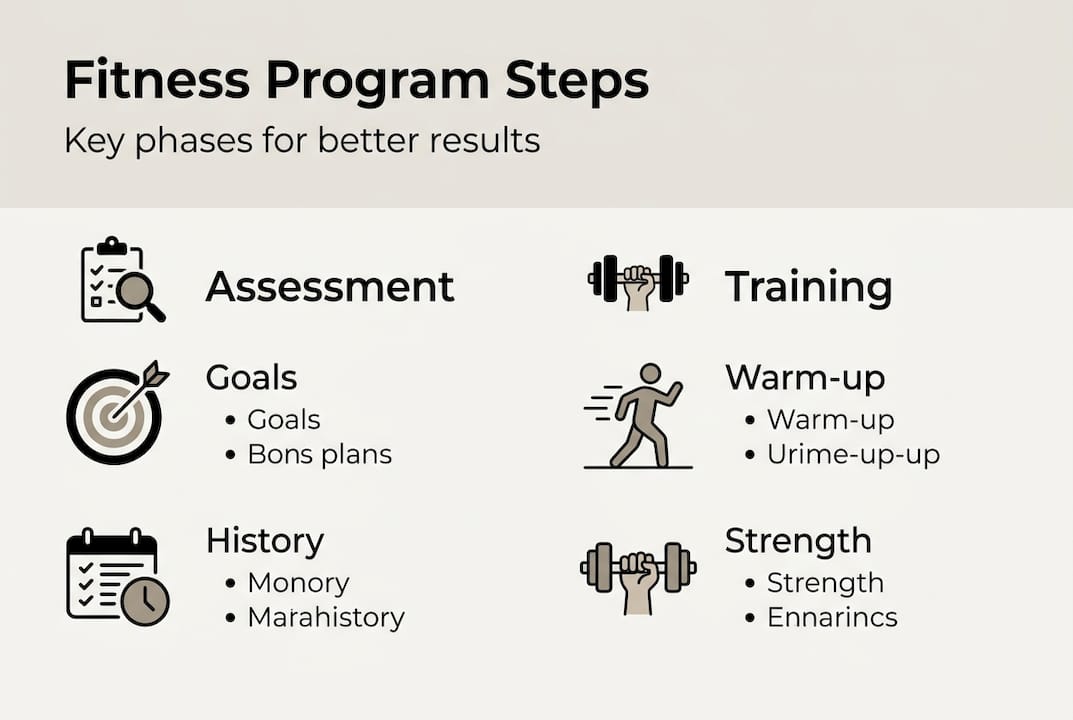
Training component comparison:
Here’s a stepwise approach to prescribing each component:
- Identify the client’s primary goal and rank components by priority
- Apply FITT-VP to the primary component first
- Layer secondary components without exceeding recovery capacity
- Set a baseline week and plan progression over 4 to 6 week blocks
- Review and adjust based on client response and performance data
ACSM resistance guidelines recommend training major muscle groups at least twice per week. For strength, target 80% of 1RM with 2 to 3 sets. For hypertrophy, aim for roughly 10 sets per muscle group per week. For power, use 30 to 70% of 1RM with a fast concentric phase. The key insight: consistency beats complexity every time. Any resistance training is better than none.
For periodization, you have three main options. Linear periodization increases intensity over time in a predictable pattern. Undulating periodization varies intensity and volume within a week. Block periodization focuses each training phase on one primary quality. Choose based on your client’s experience level and goal timeline. A personalized program creation approach means selecting the right model for the right client, not defaulting to what’s familiar.
Integration, progression, and special populations
Once core training is designed, integrating and progressing ensures results while adapting for special populations. This is where the program becomes a living system rather than a static document.
Integrating components into a cohesive program using periodization is how you prevent plateaus and reduce injury risk over a full training year. Here’s how to structure it:
- Microcycle (1 week): Organize daily sessions by component priority and recovery needs
- Mesocycle (3 to 6 weeks): Focus on a specific training goal with progressive overload built in
- Macrocycle (3 to 12 months): Map out phase shifts from general preparation to peak performance or goal achievement
Progressive overload via FITT adjustments is the engine behind adaptation. Gradually increase volume, intensity, or frequency based on how your client responds, not on a fixed schedule. Overload that outpaces recovery leads to injury. Underload leads to stagnation.
Progression tactics by population:
- General adults: Increase load by 2 to 5% when a client can complete all reps with good form across two consecutive sessions
- Beginners: Prioritize full-body sessions 3 times per week with high frequency and low fatigue to build the movement foundation
- Older adults: Screen for frailty using a CGA-like (Comprehensive Geriatric Assessment) approach. High-intensity resistance training is safe and effective for this group when properly supervised
- Post-injury clients: Use program modification strategies to work around limitations while maintaining training stimulus
You can also draw on sample workout programs and program adaptation tips to see how these principles apply across different training styles.
Key principle: No two clients are the same. The most effective program is the one designed for this person, at this stage, with these goals. Individualization isn’t a bonus feature. It’s the whole point.
Our take: What most fitness programs miss
Here’s the honest truth after years of watching trainers build programs: most of the work happens in the first session, and then individualization quietly disappears. The assessment gets filed away. The program runs on autopilot. And clients plateau, not because the program was bad, but because it stopped being theirs.
Prioritizing needs assessment and individualization over templates isn’t just good practice. It’s the difference between a client who stays for six months and one who stays for six years. Periodization prevents plateaus and injury, but only if you’re actually adjusting based on real data.
The other thing most trainers underestimate? Simplicity wins. Any resistance training is better than none, and a consistent moderate program outperforms a complex one that clients can’t sustain. Stop chasing novelty. Chase adherence.
Revisit your program customization process monthly. A quick reassessment doesn’t just improve results. It shows clients you’re paying attention, and that alone drives engagement more than any exercise selection ever will.
Pro Tip
Schedule a monthly check-in as part of every program package. Make it non-negotiable. The data you collect keeps your programming sharp and your clients invested.
Take your fitness program design to the next level
Putting this step-by-step process into practice takes time, but the right tools make it significantly faster. TrainingPro is built specifically for fitness professionals who want to design better programs without the manual grind.
With TrainingPro’s AI workout builder, you can generate personalized programs in minutes, factoring in client goals, injuries, and training history. The platform’s lead generation forms capture client data upfront so your assessment process starts before the first session. And with TrainingPro’s fitness business software, you manage clients, track progress, and automate follow-ups all in one place. Less admin. More coaching. Better results for everyone.
Frequently asked questions
Assessment, warm-up, and systematic prescription form the backbone of effective program design, followed by periodization and progressive overload to sustain long-term client engagement and results.
Screen for frailty using CGA-like assessment and apply high-frequency, low-fatigue full-body routines. High-intensity resistance training is safe for this population when properly supervised and progressed.
FITT-VP stands for Frequency, Intensity, Time, Type, Volume, Progression, a structured model that helps trainers prescribe exercise systematically and adjust programs based on client response.
ACSM recommends at least twice per week for each major muscle group. Consistency across those sessions matters more than the specific exercises or load used.
Integrate periodization and progressive overload from the start, and reassess client needs regularly. Adjusting the program based on real performance data is the most reliable way to keep progress moving safely.
Recommended
- Fitness program customization: boost client results in 2026 | TrainingPro
- Effective workout program examples for trainers in 2026 | TrainingPro
- How to create workout programs fast using AI in 2026 | TrainingPro
- Optimize your fitness consultation workflow in 2026 | TrainingPro
Ready to Transform Your Fitness Business?
Join thousands of trainers using TrainingPro to automate admin, grow their client base, and focus on what they love—coaching.
Start your 14-day free trial • Cancel anytime


